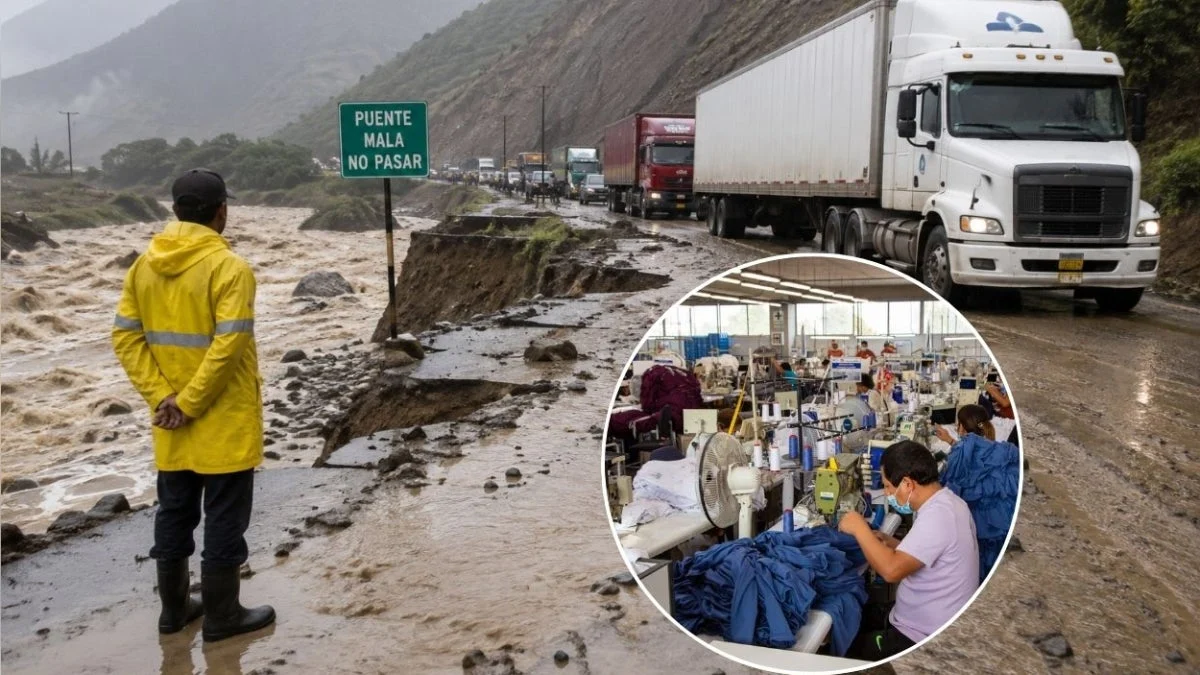
The specter of the El Niño phenomenon is casting a long shadow over Peru’s industrial sector. Beyond the immediate, visceral destruction caused by torrential rains, catastrophic flooding, and devastating landslides, the nation’s manufacturing heartland is preparing for a systemic crisis. According to a comprehensive survey conducted by the Institute of Economic and Social Studies (IEES) of the National Society of Industries (SNI), the country’s productive apparatus faces a precarious future if logistical arteries are severed by climate-driven disasters.
The Core Threat: A Fragile Supply Chain
The primary anxiety among industrial leaders is not merely the damage to physical infrastructure, but the subsequent paralysis of the supply chain. With 60% of surveyed entrepreneurs identifying the interruption of transport routes as their most significant risk, the message is clear: Peru’s industrial continuity is tethered to the integrity of its roads and bridges.
When arterial highways are blocked, the "just-in-time" delivery models that sustain modern manufacturing collapse. This ripple effect creates a bottleneck where raw materials remain stranded at ports or in transit, while finished goods cannot reach domestic markets or export hubs. The IEES study, which surveyed 179 industrial leaders across sectors ranging from food and beverage to metalworking and pharmaceuticals, paints a sobering picture of a sector bracing for impact.
Chronology of Climate Anxiety
The concern regarding El Niño is not a sudden panic but a calculated anticipation based on historical precedents and current meteorological data.
- Initial Forecasts (Q1-Q2): As meteorological agencies began identifying warming patterns in the Pacific, the industrial sector began internal risk assessments.
- Survey Phase (Mid-Year): The SNI launched its Industrial Opinion Survey (EOI) to quantify the level of vulnerability across the nation’s diverse manufacturing base, covering everything from micro-enterprises to large-scale corporations.
- The Consensus Point: By the time the data was aggregated, the consensus was overwhelming: 55% of respondents flagged severe concerns regarding the procurement of raw materials, and 52% expressed fear regarding the distribution of finished products.
- The Present Moment: Industry leaders are transitioning from assessment to active mitigation, as the window for preventative public works narrows with the onset of the seasonal weather patterns.
Supporting Data: Mapping the Vulnerability
The quantitative data provided by the SNI offers a granular look at the potential economic fallout. The survey, which captures the sentiments of 50% large enterprises, 30% Mypes (micro and small businesses), and 20% medium-sized firms, highlights several critical metrics:
The Logistical and Operational Burden
- Supply Shortages: 55% of entrepreneurs expect significant hurdles in securing inputs.
- Logistical Costs: 51% of firms anticipate a spike in transportation and freight costs, including international shipping rates.
- Operational Stoppage: A concerning 28% of business owners admit that a full or partial suspension of their operations is a realistic scenario if the infrastructure fails.
- Production Costs: 40% of manufacturers predict that the scarcity of energy, water, and raw materials will force a rise in production costs, potentially fueling domestic inflation.
The Human and Material Cost
Beyond the supply chain, the direct physical threats remain high. 41% of industrialists view landslides and flooding as an existential threat to their physical plants. Furthermore, 44% fear that any disruption within their broader value chain—even if their own facility remains dry—will effectively ground their production cycles.
Strategic Mitigation: Industry’s Defensive Posture
Faced with the high probability of climate-related disruption, Peruvian industries are not sitting idle. They are proactively restructuring their operations to survive a potential "zero-movement" scenario.
Building Resilience
The most common defensive strategy is the expansion of inventory. 40% of surveyed businesses are choosing to stock up on strategic raw materials now, effectively creating a buffer against future transport blockades. This "inventory hoarding" is a rational response to the fear of prolonged isolation.
Structural Hardening
Simultaneously, 39% of businesses are investing in preventative maintenance. This includes reinforcing plant roofs, clearing drainage systems, and fortifying storage areas to withstand heavy rainfall. These measures are designed to ensure that if the external environment collapses, the internal factory floor remains functional.
Operational Agility
Perhaps the most sophisticated response is the movement toward "continuity planning." 26% of firms are currently formalizing or updating their Business Continuity Plans (BCP), while 23% are actively seeking alternative suppliers. By diversifying their supply base, these companies aim to decouple their operations from a single, potentially vulnerable geographical region.
Official Responses and Calls to Action
The private sector’s position is unequivocal: the burden of protection cannot fall on industry alone. The SNI has signaled that the Government’s role in preventing a national supply chain crisis is paramount.
The Demand for Infrastructure Integrity
The industrial sector has issued a clear mandate for state action:
- Critical Infrastructure Maintenance (68%): A vast majority of leaders demand the immediate shoring up of highways and bridges. They argue that waiting for a disaster to occur before repairing these routes is a strategic failure.
- Hydraulic Management (66%): There is an urgent call for the cleaning and desilting of rivers, drainage systems, and ravines. This "descolmatación" is viewed as a vital defense against the flooding of industrial zones and surrounding urban areas.
The tone from the SNI is one of "cooperative urgency." While businesses are doing their part to protect their assets, the macro-level protection of the country’s logistics requires an aggressive and well-funded state infrastructure campaign.
Implications: A Potential Economic Slowdown
The implications of these findings extend far beyond the boardroom. If the industrial sector—which provides employment to millions and serves as the engine of the Peruvian economy—is forced to reduce production (as 35% of respondents fear) or increase costs (as 40% expect), the macroeconomic consequences will be severe.
The Inflationary Risk
When transportation costs rise and raw materials become scarce, those costs are inevitably passed down to the consumer. A sustained disruption due to El Niño could trigger a period of "climate-induced inflation," where the scarcity of food, household products, and basic industrial goods drives up the cost of living for all Peruvians.
The Impact on Employment
The risk of total or partial operational shutdown, cited by 28% of the survey participants, is particularly alarming for the labor market. If factories cannot operate, the stability of jobs in the textile, food, and chemical sectors—key pillars of the Peruvian economy—could be compromised.
The Long-Term Resilience Gap
The survey serves as a wake-up call regarding the fragility of the Peruvian manufacturing model. While larger companies have the capital to invest in inventory and maintenance, smaller enterprises (the Mypes) are inherently more vulnerable. The disparity in resources could lead to a wave of business failures among smaller players, potentially concentrating market share and reducing competitive diversity within the industrial sector.
Conclusion: A Race Against Time
The data provided by the SNI’s IEES is more than just a series of percentages; it is a roadmap of the risks ahead. The industrial sector has identified the weak points, implemented the internal safeguards, and articulated the necessary public policy interventions.
As the nation looks toward the horizon of the coming months, the success of the Peruvian industry will depend on the synergy between the private sector’s defensive preparations and the state’s ability to maintain the physical infrastructure that connects the country. If the government heeds the 68% who prioritize infrastructure maintenance, the damage may be mitigated. If not, the "industrial paralysis" feared by the nation’s entrepreneurs may become a stark reality, testing the limits of Peru’s economic resilience in the face of nature’s most formidable challenge.