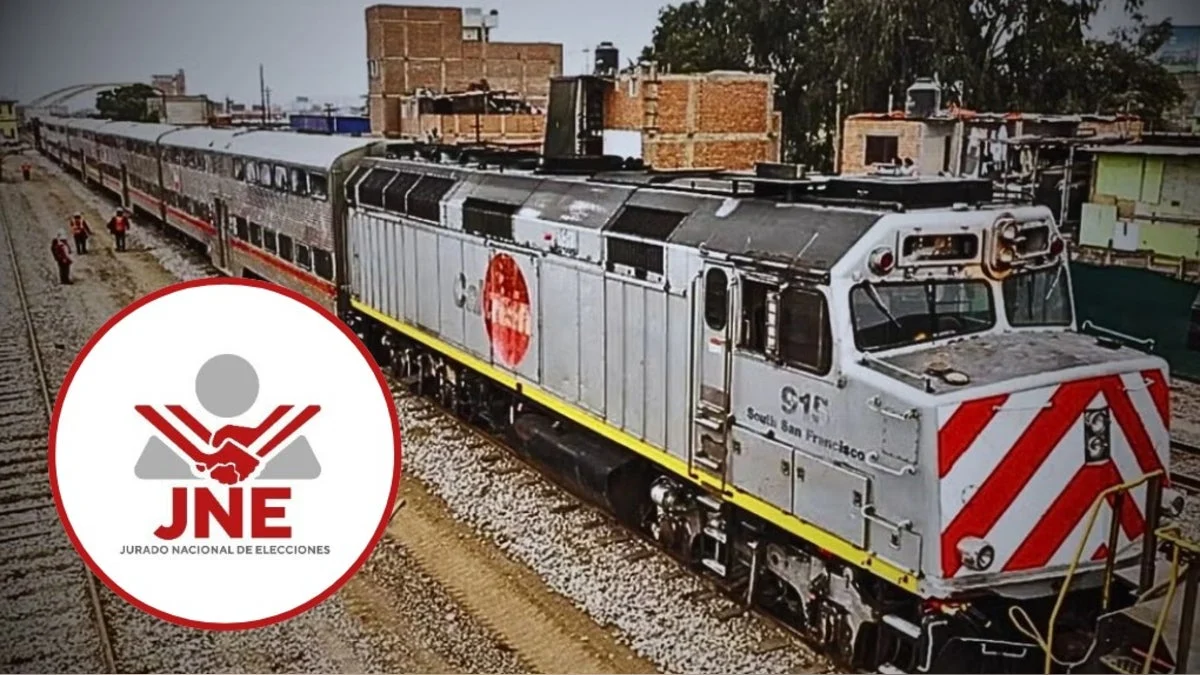
In the heart of Lima’s ongoing infrastructure debate, a technical clarification from the National Jury of Elections (JNE) has shifted the focus from the city’s ambitious transit projects to the boundaries of administrative law. The controversy surrounding the acquisition of trains from Caltrain, a commuter rail service in California, has escalated into a high-stakes political skirmish involving the Municipalidad de Lima, the Ministry of Transport and Communications (MTC), and the country’s highest electoral authority.
At the center of the storm lies Resolution No. 0647-2025-JNE. The Municipalidad de Lima had cited this document as a judicial validation of its claim that the rail equipment was a "donation." However, the JNE has formally stepped forward to debunk this interpretation, asserting that the tribunal’s scope was strictly limited to the conduct of municipal regidores (council members) rather than the commercial or legal nature of the rail transaction itself.
The Core Conflict: Donation or Acquisition?
The friction began when Minister of Transport Rafael Rey publicly challenged the narrative presented by the Municipalidad de Lima. Rey asserted that the transfer of the Caltrain rolling stock was not, in fact, a donation, but rather an acquisition—a distinction that carries significant weight in terms of government procurement laws, transparency, and fiscal responsibility.
Rafael López Aliaga, a central figure in the administration of Lima’s municipal government and a candidate for first regidor, has maintained that the trains were donated. This assertion was bolstered by the municipality’s reliance on the JNE’s resolution to provide a veneer of legal legitimacy to the "donation" narrative. The ministry, however, views the use of this resolution as a misrepresentation of the tribunal’s original intent.
The JNE’s Official Stance: Defining the Scope
Grecia Gentería, spokesperson for the JNE, provided a definitive account of the tribunal’s position during an interview with RPP’s El Poder en tus Manos. She emphasized that the JNE does not possess the mandate to validate commercial contracts, international donation agreements, or the financial nature of municipal asset transfers.
"Our work is essentially electoral," Gentería clarified. "We have not conducted any legal analysis regarding whether this is a contract or a formal acceptance of a donation. That is entirely outside our jurisdictional purview."
The JNE’s intervention highlights a common misunderstanding of how administrative tribunals function. The tribunal’s task was not to audit the acquisition of the trains, but to rule on a petition for the "vacancia" (removal from office) of 21 municipal council members. The core question for the JNE was whether these officials had acted within their legal competencies when they authorized the mayor to pursue the rail project.
Chronology of the Dispute
To understand how this debate reached its current intensity, one must look at the sequence of events that led to the JNE’s ruling:
- Initial Procurement Efforts: The Municipalidad de Lima initiated contact with Caltrain to secure decommissioned rolling stock, intended for the Lima-Chosica route. This process involved multiple sessions of the Municipal Council.
- The Petition for Vacancia: A group of political actors challenged the council members’ actions, arguing that the authorization granted to the mayor exceeded their legal authority. This petition triggered a formal electoral process.
- The JNE Resolution (No. 0647-2025-JNE): The JNE evaluated the council members’ conduct. It concluded that the actions of the regidores were within their normative, fiscalizing, and control-related functions as mandated by law. Consequently, the petition for their removal was declared unfounded.
- Public Misinterpretation: Following the ruling, the Municipalidad de Lima released a statement citing the JNE resolution as proof that the "donation" of the trains had been analyzed and confirmed by the tribunal.
- The MTC Intervention: Minister Rafael Rey countered this claim, leading to a public dispute over the validity of the terminology used by the city.
- The Clarification: Faced with the escalating political narrative, the JNE issued a formal clarification, explicitly separating the legitimacy of the council members’ actions from the commercial nature of the train deal.
Evaluation of Municipal Functions
The JNE’s resolution serves as a textbook example of how judicial bodies narrow their focus to avoid overstepping their authority. When the JNE evaluated the council members, it looked at three specific dimensions:
- Normative Function: Did the regidores have the power to vote on the authorization of the mayor’s transit initiatives?
- Fiscalizing Function: Was the process transparent within the scope of the council’s oversight duties?
- Control Function: Did the council members act in accordance with the municipal bylaws and the Organic Law of Municipalities?
Gentería stressed that the ruling "declared the petition of vacancia unfounded because the act of the regidores was within the legal framework." Crucially, this legal framework only dictates that they are allowed to vote on initiatives, not what the reality of the underlying international agreement is. By conflating the legal validity of a council vote with the legal status of an international asset transfer, the municipal administration created a false equivalency that the JNE has now dismantled.
The Implications for Transparency and Governance
The ramifications of this dispute extend beyond the specific fate of the Caltrain rail cars. It raises critical questions regarding how government entities use judicial and electoral documents in public discourse.
1. The Weaponization of Administrative Rulings
When a municipal government uses a limited electoral ruling to validate a broader, more complex administrative or financial transaction, it erodes public trust. The JNE’s need to issue a public correction suggests that the "donation" narrative was being actively promoted by leveraging the authority of the JNE to silence critics of the project.
2. The Limits of Municipal Autonomy
The disagreement between the MTC and the municipal government highlights a deeper tension between local and national authority. The Ministry of Transport holds overarching jurisdiction over railway infrastructure and national transport policies. If the Municipalidad de Lima is moving forward under the assumption of a "donation" that the Ministry of Transport disputes, it suggests a lack of coordination that could delay, or even jeopardize, the implementation of the Lima-Chosica train route.
3. Procedural Transparency
For the citizens of Lima, the "donation versus purchase" distinction is not merely semantics. It involves potential costs, legal liabilities, and the necessity of proper import/procurement documentation. If the process is a purchase, it requires specific budgetary approvals and competitive bidding processes. If it is a donation, it requires specific customs and diplomatic protocols. By obfuscating the truth, the municipality hinders the public’s ability to understand the true cost and legal standing of the project.

Perspectives from the Involved Parties
The Municipalidad de Lima’s stance has been consistent: they argue that their actions were authorized and that the electoral tribunal’s ruling validates the legal process they followed. Their statement, particularly point four of their official communication, underscores this: "The donation… was analyzed at a jurisdictional level by the JNE, which ratified that the Municipal Council acted in the exercise of its powers."
Conversely, Minister Rafael Rey and the Ministry of Transport have emphasized that regardless of what a municipal council authorizes, the underlying transaction must be legally transparent and in compliance with national transport laws. The Minister’s intervention is a reminder that a municipal authorization does not override the national requirements for the legal acquisition of transportation assets.
Future Outlook
The JNE’s intervention has effectively stripped away the "judicial shield" that the Municipalidad de Lima had attempted to use to protect its narrative. As the city continues to navigate the complexities of modernizing its transit system, the pressure to provide clarity regarding the Caltrain acquisition will only increase.
Moving forward, stakeholders in the Lima-Chosica project will need to resolve the technical and legal status of the trains through proper channels—namely, through documentation of the transfer, formal import records, and potential inter-institutional agreements between the municipality and the national government.
The lesson from this incident is clear: electoral bodies are not substitutes for administrative oversight, and judicial resolutions should not be treated as blanket endorsements of executive actions. As the political climate in Lima intensifies, the public will likely demand more transparency, less rhetorical maneuvering, and a clearer accounting of how the city’s infrastructure is being built, financed, and managed.
In conclusion, while the JNE has closed the door on the vacancia process, it has simultaneously opened a larger conversation about the necessity of procedural integrity. The Caltrain saga remains a test case for how Lima manages its international projects and how it communicates those processes to a public that is increasingly sensitive to the nuances of governance and the rule of law.