By Financial Correspondent
The landscape for Peru’s sovereign debt has undergone a significant recalibration following the recent change in government. Moody’s Ratings, one of the world’s most influential credit rating agencies, has signaled a reduction in the risks that previously threatened the nation’s financial strength. While the country retains its "investment grade" status, the path back to its historical peak of financial prestige is no longer a matter of mere macroeconomic management—it is a challenge of political maturity and institutional integrity.
The Current State of Peru’s Credit Profile
Moody’s currently maintains Peru’s sovereign credit rating at Baa1 with a "stable" outlook. This rating is a crucial designation, placing Peru firmly within the investment-grade category. For global investors, this is a seal of approval, indicating that the Peruvian state possesses a solid, reliable capacity to meet its debt obligations.
However, beneath the surface of this stable rating lies a more complex narrative. For those observing the long-term trajectory of the Andean nation, the current status is a reminder of lost momentum. In 2014, Peru enjoyed an A3 rating—the highest in its history. That era was characterized by robust growth and a perceived stability that made Peru a darling of emerging market investors. The downgrade in September 2021 to the current Baa1 level was the culmination of years of mounting political friction and a visible erosion of institutional checks and balances. Today, while the fundamentals of fiscal responsibility remain, the "risk premium" attached to Peru is undeniably higher than it was a decade ago.
A Chronology of Credit: From Peak to Stability
To understand why Moody’s is currently cautious, one must look at the timeline of the last ten years:
- 2014 (The Zenith): Peru achieves an A3 rating. The economy is expanding, and fiscal discipline is considered the bedrock of the national strategy.
- 2016–2020 (The Period of Volatility): A series of political crises, including the resignation of presidents and the dissolution of Congress, begins to erode investor confidence. While the macroeconomic team remains professional, the political "noise" becomes a persistent background factor.
- September 2021 (The Downgrade): Moody’s formally downgrades Peru to Baa1. The justification is explicit: the degradation of institutional strength and the surge in political uncertainty make the country’s long-term economic path harder to predict.
- 2024–2026 (The Transition): Following the most recent election cycle, the change in government has provided a "reset" moment. Moody’s notes that the immediate risk of a significant policy pivot has diminished, providing the market with a clearer, albeit still cautious, outlook.
The "Inside LatAm" Perspective: Insights from Renzo Merino
During the Inside LatAm: Peru 2026 event, Renzo Merino, Vice President of the Sovereign Risk Group at Moody’s Ratings, provided a candid assessment of the country’s current standing.
"Happily, the scenario of a sharp decline in our outlook has now a lower probability," Merino stated. He emphasized that the new administration has effectively signaled continuity, dispelling early market fears regarding the economic model. "There are no questions under the new government regarding the economic model or the management of macro-decisions. However, should we see a spike in political polarization, or should that polarization lead to a gridlock that prevents necessary economic reforms, that would be viewed as a negative credit factor."
Merino’s assessment highlights a critical shift in how rating agencies view Peru: the focus has moved from "will they default?" (which is not a concern) to "can they reform?" The agency is watching for the government’s ability to navigate a fragmented Congress to pass legislation that stimulates fiscal growth.
Institutional Strength: The Missing Ingredient
If the economy is stable, why isn’t the rating improving? The answer, according to Moody’s, is the "institutional trap."
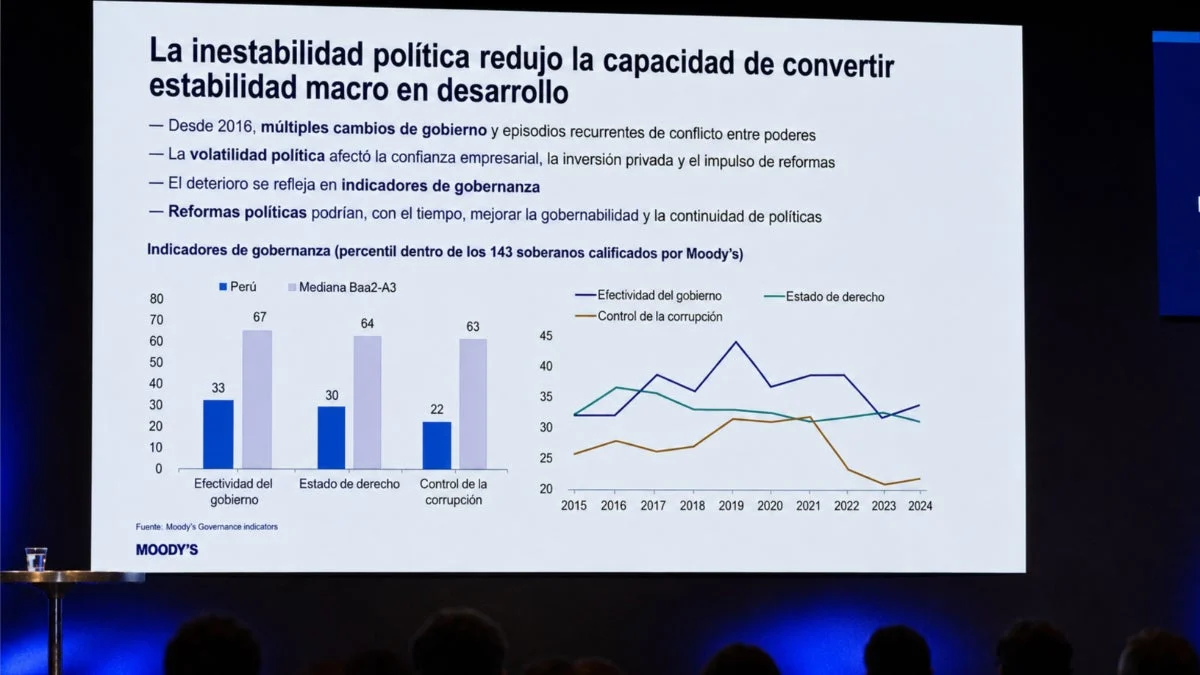
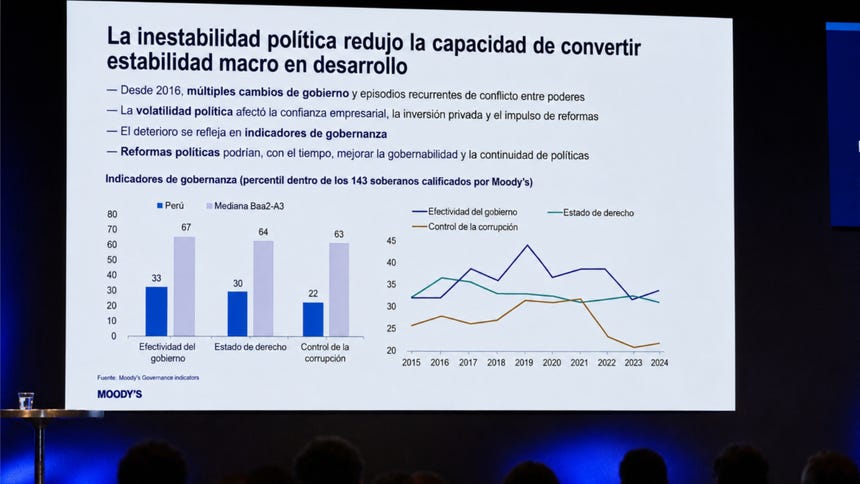
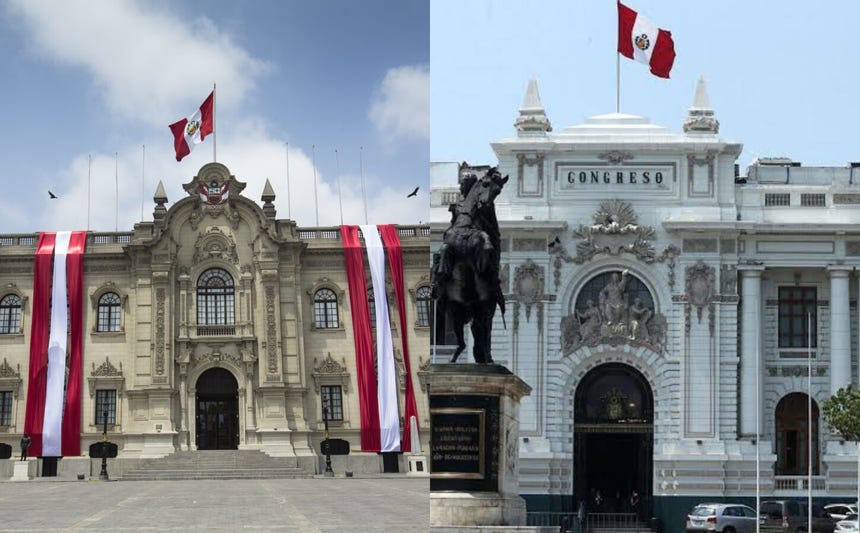
The agency points to the ongoing "imbalance of powers" between the executive and legislative branches. Over the last several years, the frequent friction between these powers has hampered the government’s ability to implement long-term policy. For Moody’s, this is not just a political inconvenience—it is a structural weakness.
"This imbalance of powers that has been observed in recent times is something that deeply affected the credit," Merino explained. "It cost the country a notch in its rating, and unfortunately, it is a structural weakness that has persisted."
For Peru to regain its former rating, the government must demonstrate not just that it can keep the deficit under control, but that it can build institutions that provide legal certainty and consistent policy execution. Without these, the "stable" outlook is likely to remain, but the upward momentum toward the "A" category will remain stalled.
Economic Growth Projections: The 3.5% Target
Despite the political headwinds, the economic outlook provided by Moody’s is unexpectedly optimistic. The agency is currently revising its growth projections for Peru upward, moving from a baseline of nearly 3% to approximately 3.5%.
This revision is anchored in the surprising resilience of private investment during the first half of the year. Despite the intense electoral atmosphere, private sector players largely maintained their investment commitments. For an economy that had seen its trend growth drop below 3% over the previous decade, a move to 3.5% is a significant, albeit modest, success.
However, the agency remains vigilant regarding external and environmental shocks. The El Niño phenomenon is cited as a persistent risk that could disrupt economic performance, particularly in the agricultural and export sectors. If climate conditions worsen, the projected growth could be curtailed, putting additional pressure on the fiscal budget.
Implications for the Future
What does this mean for the average citizen and the investor?
- For the Government: The message is clear—fiscal discipline is the minimum requirement, not the goal. To earn a better rating, the administration must foster a more collaborative relationship with Congress to advance structural reforms.
- For Investors: The "Baa1" rating provides a safety buffer. The current government’s commitment to the established economic model suggests that capital flight is unlikely, provided political polarization remains contained.
- For the Credit Rating: Moody’s is expected to revisit the Peruvian profile in September. However, they have signaled that they are not in a rush to change the status. They require a longer observation period to see if the government’s promises of structural reform turn into concrete legislative achievements.
In conclusion, Peru stands at a crossroads. It has successfully avoided the "worst-case" scenarios that many feared during its period of political turbulence. It remains a "good payer" with robust financial credentials. Yet, to transcend its current status and return to the economic heights of the previous decade, it must solve its institutional riddle. The economy may be growing, but the durability of that growth will depend on whether the nation can move past its cycle of political instability and embrace a more stable, institutionalized governance model. For now, the world is watching, and for Peru, the path forward is as much about political consensus as it is about fiscal policy.