Introduction: A Road to Nowhere or a Road to Ruin?
In a startling revelation that highlights systemic deficiencies in public infrastructure oversight, the Office of the Comptroller General of the Republic (CGR) has exposed a grave administrative anomaly in the province of Pachitea, Huánuco. A critical road improvement project—intended to connect the localities of Molino and Huascapampa—has been found to be operating in a legal and technical "gray zone."
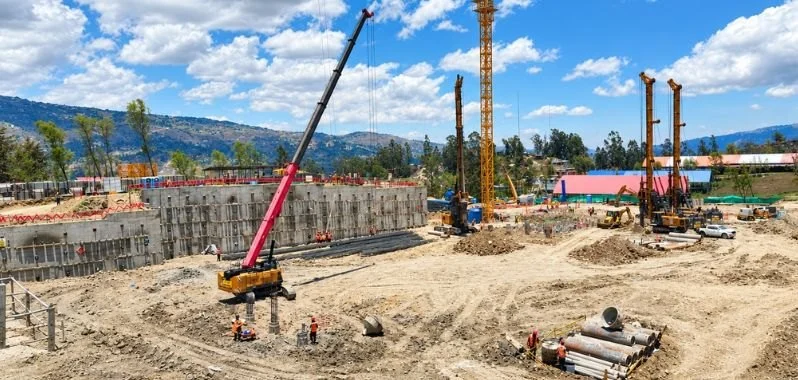
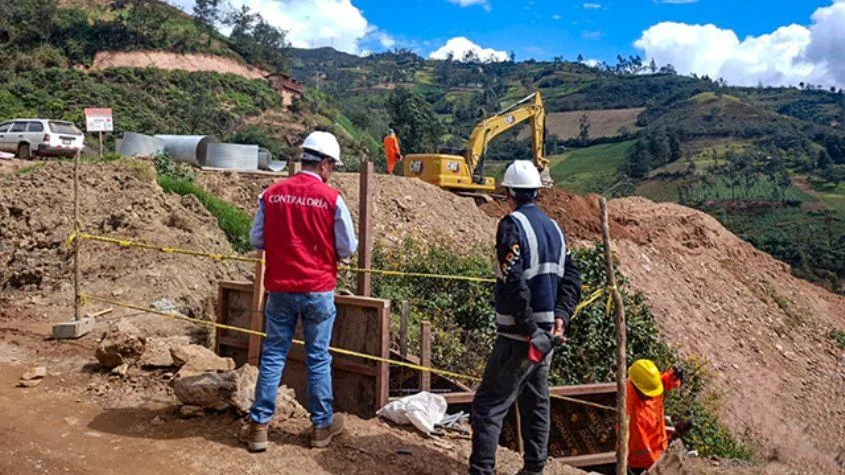
Officially, the project has been suspended since December 2025 due to adverse weather conditions. In practice, however, heavy machinery and construction crews have been observed on-site, performing structural works in the complete absence of a resident engineer or a supervisor. This clandestine construction activity, performed outside the boundaries of institutional oversight, poses a significant threat to the safety of future commuters and represents a severe misappropriation of public funds.
The Core Facts: An Unauthorized Construction Site
The project, titled "Improvement of the Vecinal Road between Molino and Huascapampa (Tramos II and IV)," carries a substantial investment of S/ 4,346,874. The objective was to modernize the transport route to facilitate regional commerce and mobility. However, the reality on the ground contradicts the administrative records maintained by the Municipalidad Provincial de Pachitea.
According to the Comptroller’s Informe de Orientación de Oficio n.° 006-2026-OCI/0404-SOO, which detailed findings from an intensive inspection conducted between June 22 and July 3, 2026, the work has been marred by a series of procedural irregularities:
- Absence of Technical Direction: The ongoing construction of culverts, steel reinforcement for columns, and earth movement are being executed without a site supervisor or a resident engineer. This violates the fundamental principles of civil engineering, which dictate that every phase of public works must be validated by a licensed professional.
- Shadow Construction: Despite the "suspended" status of the project, workers were documented in early summer 2026 actively installing concrete structures. This work is effectively invisible to the official oversight systems, meaning the quality of the materials and the structural integrity of the work remain unverified.
Chronology of the Project’s Stagnation
To understand how this oversight failure occurred, one must look at the timeline of the project’s execution and the subsequent attempts to justify its delays.

Phase 1: Initiation and Early Delays (September 2025 – December 2025)
The project commenced in September 2025 with the intent of completing the road improvement within a 120-day timeframe. However, before major milestones—such as the construction of bridges, drainage systems, and extensive earthworks—could be completed, the municipality declared a formal suspension of the work in December 2025. The justification cited was "climatological factors," specifically citing heavy rainfall that rendered construction impossible.
Phase 2: The "Suspended" Period (January 2026 – May 2026)
During these months, the project remained dormant on paper. However, the contractor continued to claim that weather conditions were the primary obstacle to progress, despite the lack of evidence supporting the necessity of a total halt.
Phase 3: The Discovery of Irregularity (June 2026 – July 2026)
The Comptroller’s audit team arrived on-site in late June 2026. What they discovered was not a stagnant, rain-damaged site, but an active construction zone operating with total impunity. This period serves as the primary basis for the current legal investigation into the municipality’s management.
Supporting Data: Debunking the Meteorological Excuse
A critical component of the Comptroller’s report is the cross-referencing of the contractor’s claims with objective meteorological data. The contractor had consistently used the threat of "constant rainfall" to justify the suspension of the contract.
The audit team compared these claims against the official records provided by the Servicio Nacional de Meteorología e Hidrología del Perú (SENAMHI). The data for May and June 2026 revealed a stark contradiction:

- 41 days of dry weather: Contrary to the contractor’s narrative, there were 41 days during this two-month window with no recorded precipitation.
- 10 days of minor weather: Only 10 days were marked by light to moderate rainfall, which falls well within the normal climatological range for the region and does not constitute an "act of God" or a force majeure event sufficient to justify the suspension of roadworks.
This discrepancy suggests that the "suspension" was not a genuine response to environmental conditions, but a strategic maneuver to evade contractual deadlines and hide the lack of professional oversight.
The Financial Implications: Ghost Payments and Penalties
The implications of this situation extend beyond mere safety risks; they touch upon the fiscal integrity of the Pachitea provincial administration. The Comptroller identified that the municipality has been approving and providing "conformity" (the official sign-off for payment) on work that was either never completed or failed to meet technical specifications.
The Problem of "Valorizaciones" (Progress Payments)
The municipality has allegedly paid for line items that exist only on paper or are structurally deficient. Specific examples include:
- Project Signage: The identification boards for the project were paid for despite failing to meet the standards defined in the technical file.
- Guardrails: Metallic safety barriers were documented as paid for, yet their installation and material quality deviate from the required specifications.
By approving these payments, the municipality is essentially inflating the cost of the project and draining public coffers for substandard work.
The Penalty Trap
Perhaps the most damaging legal consequence is the municipality’s current inability to enforce contract penalties. The project was meant to be completed within 120 days. With only 29 days remaining in the contractual timeline, the project is significantly behind schedule. Because the municipality allowed the contractor to continue working in an informal, unsupervised manner, they have effectively compromised their legal standing to penalize the company for these delays. By condoning the informal work, the municipality has forfeited its right to demand accountability, leaving the province in a legal deadlock.

Official Responses and Next Steps
The findings of the Comptroller General have been formally communicated to the titular head of the Municipalidad Provincial de Pachitea. The demand is clear: the administration must move beyond passive observation and take immediate, corrective, and preventive actions.
What Must Happen Next:
- Reinstatement of Supervision: The municipality must immediately appoint a qualified supervisor and resident engineer to evaluate the work done during the "shadow" period. Any concrete work found to be substandard must be demolished and reconstructed at the contractor’s expense.
- Audit of Payments: A full forensic audit of all payments made since December 2025 is required to identify the individuals responsible for approving fraudulent or inaccurate valorizaciones.
- Strict Enforcement: The municipality must determine whether the contract should be terminated due to breach of trust and failure to adhere to the technical specifications, or if it can be salvaged through strict, transparent management.
The Broader Implications for Peruvian Public Works
This case in Pachitea serves as a microcosm of the challenges facing decentralized public infrastructure in Peru. When local municipalities lack the resources or the political will to enforce rigorous oversight, the public is left with roads that are not only incomplete but potentially dangerous.
The Pachitea case demonstrates that "suspensions" are often misused as a tool to bypass scrutiny. As the investigation proceeds, the spotlight will remain on the local authorities to see if they prioritize the long-term safety and connectivity of their citizens over the short-term conveniences of contractors. Failure to act will not only result in a wasted investment of nearly S/ 4.5 million but will also erode the public’s trust in the municipal government’s capacity to manage the infrastructure that is vital to their daily lives.
The road between Molino and Huascapampa remains a testament to the necessity of constant, unwavering vigilance in public administration. Until the municipality takes decisive action, the project stands as a warning of what happens when oversight is traded for administrative silence.