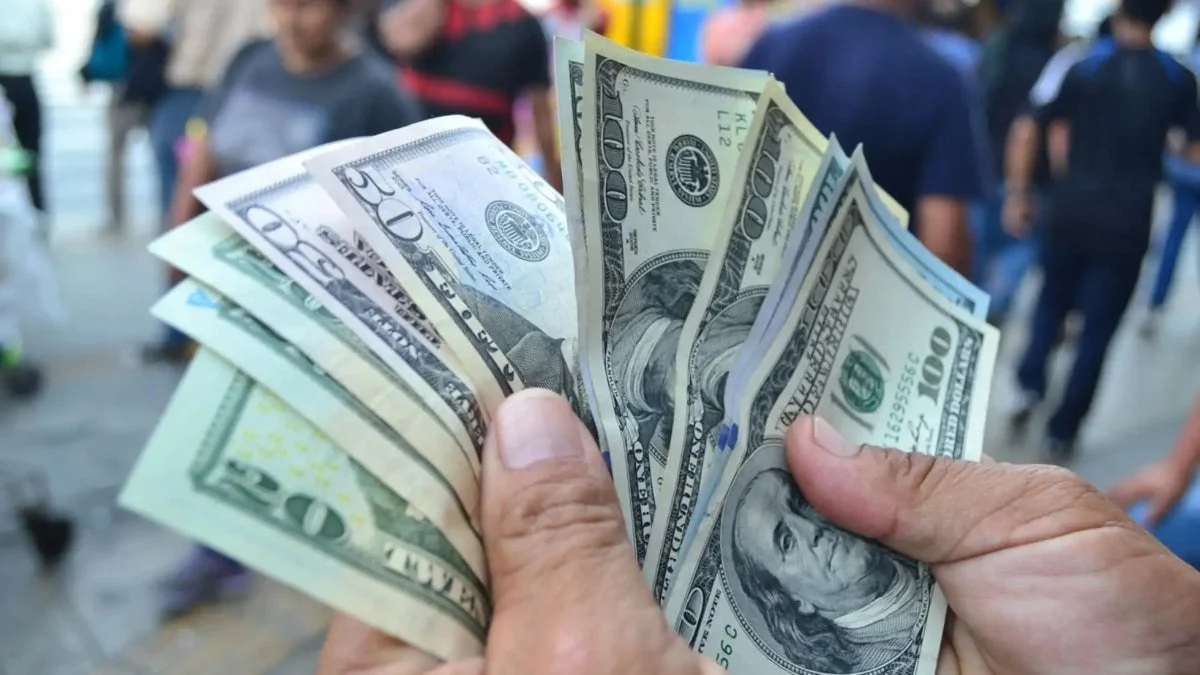
On Friday, August 7, the Peruvian currency reached a significant milestone. The U.S. dollar, a constant barometer for the stability of emerging markets, plummeted to S/3.378, its lowest valuation since April. This sharp decline, confirmed by the Central Reserve Bank of Peru (BCRP), has sent ripples through the domestic economy, impacting everything from import costs to the sentiment of local investors. While the Peruvian sol has shown resilience, analysts suggest the primary catalyst for this shift lies thousands of miles away, within the corridors of the United States economy.
The Chronology of a Four-Month Low
The descent of the dollar did not happen in a vacuum. Throughout July and the initial days of August, the exchange rate had remained relatively stagnant, hovering between S/3.39 and S/3.38. This period of stability followed a volatile spring, during which the dollar had climbed to a peak of S/3.52 at the end of April.
The movement observed on August 7 represents a recalibration of market expectations. For the average citizen, the change is palpable: in currency exchange houses, the dollar is now trading at approximately S/3.36 for purchase and S/3.39 for sale. In the banking sector, the fluctuations are slightly wider, with buying rates near S/3.34 and selling rates around S/3.43. This trend marks a decisive shift in momentum, moving the sol into a stronger position against the global reserve currency.
The U.S. Labor Market: The Catalyst for Change
The primary driver of this fluctuation is a fundamental shift in the perception of U.S. economic health. For months, the markets operated on the assumption of a robust American economy. However, the latest labor data shattered that narrative.
Javier Pineda, General Manager of Billex, noted that the market was caught off guard by the latest employment report. Analysts had projected the creation of roughly 83,000 jobs in July; instead, the economy reported a contraction, with a loss of 23,000 jobs.
"The perception is that the American economy is weakening," Pineda explained. "Since the dollar acts as a mirror to the health of the U.S. economy, the currency weakens in tandem. Consequently, the global demand for dollars has softened, leading to a depreciation in the exchange rate."
This data point served as a wake-up call for institutional investors who had been pricing in a more aggressive stance from the Federal Reserve.
The Fed’s Dilemma: Implications for Global Markets
The connection between U.S. labor statistics and the Peruvian exchange rate is mediated through the Federal Reserve’s monetary policy. Hugo Perea, Chief Economist at BBVA Research, highlighted that the disappointing job figures have forced investors to rapidly re-evaluate their outlook on future interest rate hikes.
"The market had begun to price in the possibility that the Fed would continue to raise interest rates to combat inflation," Perea noted. "However, a weak labor market changes the calculus entirely."
When the Federal Reserve maintains or lowers interest rates, the dollar generally loses its appeal as a high-yield asset. Conversely, when rates rise, the dollar strengthens as capital flows toward U.S. Treasuries and other dollar-denominated assets. By signaling that the U.S. economy may not be as robust as previously thought, the labor data has diminished the likelihood of aggressive rate hikes, thereby putting downward pressure on the dollar worldwide.
Supporting Data: Domestic Strength vs. External Risks
Despite the external pressures, the Peruvian economy currently displays internal indicators that bolster the sol. Business confidence remains stable, and consistent export inflows continue to provide a steady supply of foreign currency to the local market. This surplus has acted as a buffer, allowing the sol to maintain its value even as global tides shift.
However, the outlook is not entirely devoid of challenges. While the current account surplus is a strength, analysts are keeping a close eye on the horizon. The primary domestic risk identified by experts is the potential impact of the El Niño phenomenon.
The El Niño Factor
The agricultural and fishing sectors—the pillars of Peru’s export economy—are uniquely vulnerable to climate patterns. If El Niño disrupts these industries, it would not only impact GDP growth but also lead to a reduction in the influx of foreign currency. A contraction in exports could force a reversal in the current strength of the sol, potentially leading to a higher exchange rate by the end of the year. Projections from Billex suggest the dollar could claw back some of its losses, potentially closing the year near S/3.45.
The Geopolitical Landscape: Is the Conflict in the Middle East Fading?
For much of the year, the conflict in the Middle East acted as a primary source of volatility for global markets, often driving investors toward the "safe haven" of the U.S. dollar. However, both Pineda and Perea agree that the market has begun to discount these geopolitical tensions.
While the friction between the United States and Iran remains a point of concern, there has been a noticeable period of relative calm in recent weeks. Without further significant escalations, the market has ceased to react with the same intensity it demonstrated in the spring.
"The impact of the conflict is already baked into the current prices," Pineda observed. Nevertheless, he warned that the long-term effects on energy markets—specifically oil prices—remain a critical variable. While the currency markets may have grown accustomed to the regional tensions, any sudden spike in the cost of petroleum could reintroduce inflationary pressures, complicating the economic recovery for both Peru and the United States.
Future Outlook: A Balancing Act
The current trajectory of the U.S. dollar in Peru is a classic case study in global economic interconnectedness. Peru’s ability to maintain a strong sol is currently a beneficiary of American economic uncertainty. As the Federal Reserve navigates a path between fighting inflation and preventing a recession, emerging markets like Peru must remain vigilant.
The path forward will likely be defined by two key factors:
- The Evolution of U.S. Monetary Policy: Whether the Fed chooses to pause or pivot will dictate the flow of capital globally.
- Domestic Resilience: The ability of the Peruvian government to manage the potential agricultural and fishing shocks caused by climate anomalies will be the true test of the sol’s long-term stability.
For now, the downward trend in the dollar offers a reprieve for importers and a sign of relative domestic stability. However, as the global economy faces ongoing structural shifts, the current exchange rate of S/3.378 serves as a reminder of how quickly international sentiment can change. As we head into the final quarter of the year, all eyes remain fixed on Washington—and the skies over the Pacific.