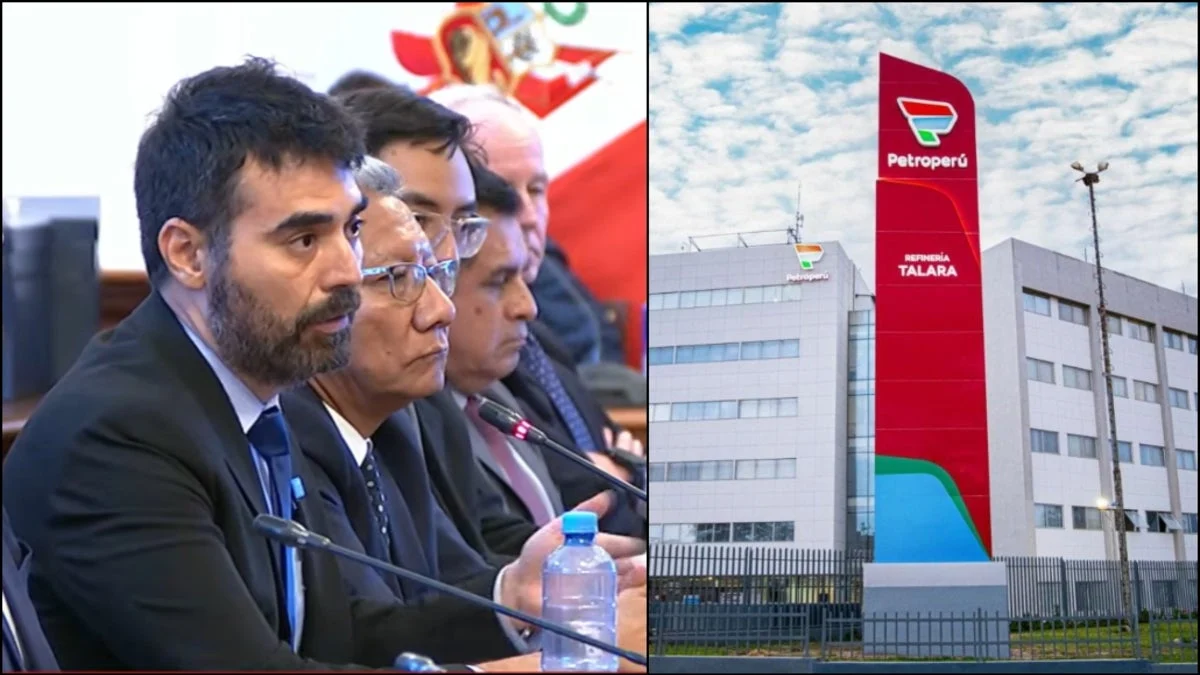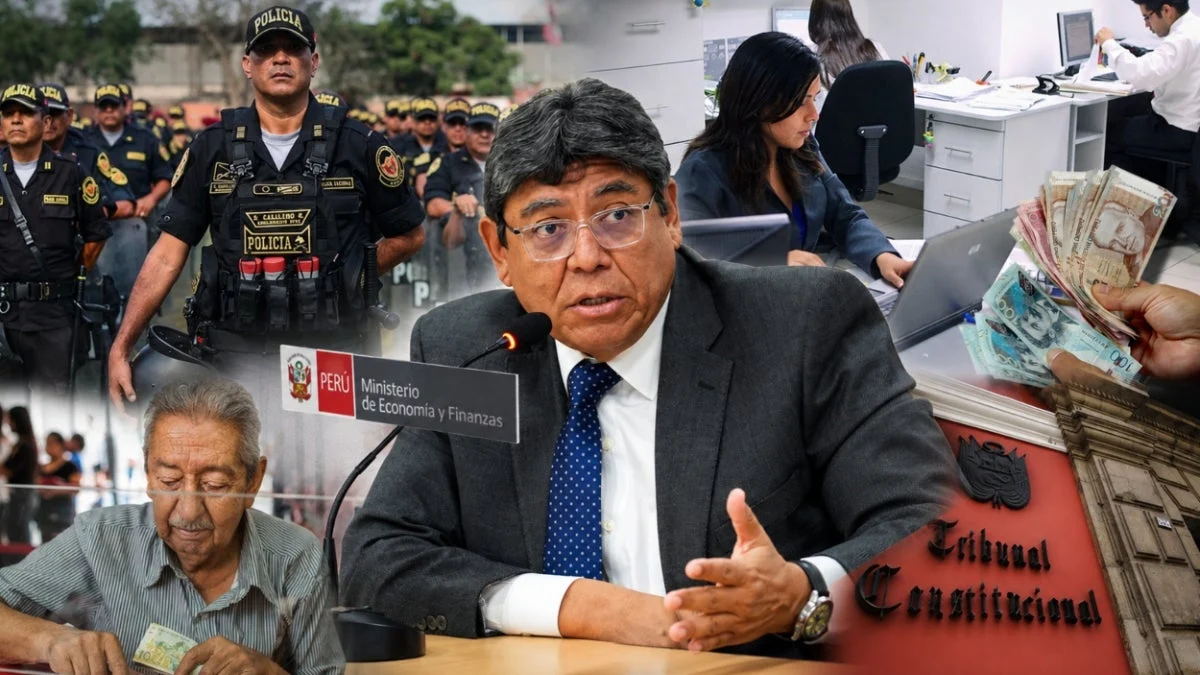
In a high-stakes move to preserve the long-term fiscal solvency of the Peruvian state, Minister of Economy and Finance Elmer Cuba has announced an aggressive legal strategy aimed at dismantling four major legislative "time bombs" left behind by the previous Congress. In an exclusive interview with RPP, Cuba signaled that the current administration is prepared to challenge these measures before the Constitutional Tribunal (TC), arguing that they represent an unsustainable burden on the national treasury.
The Minister’s announcement comes at a critical juncture for Peru, as the country seeks to balance social demands with the strict fiscal discipline required to maintain its investment-grade status. The government’s intervention targets legislative initiatives that, if left unchecked, threaten to balloon the fiscal deficit and jeopardize the country’s credit rating for years to come.
The Core of the Conflict: Legislative Overreach
At the heart of the dispute is a fundamental disagreement regarding the separation of powers. Minister Cuba was unequivocal in his critique of the previous legislative body, accusing it of violating the principle that only the Executive branch possesses the authority to propose public spending.
"The Congress does not have the initiative for public spending anywhere in the world. The budget and the treasury are managed by the Executive," Cuba stated during the Enfoque de los Sábados program. He attributed the current predicament to a "reading comprehension error" in a 2022 Constitutional Tribunal ruling, which the previous Congress interpreted as a mandate allowing them to approve high-cost populist measures without the backing of the Finance Ministry.
The four norms under scrutiny are not merely minor administrative changes; they are structural shifts in how the state manages its payroll, pension obligations, and internal assistance funds. By challenging these laws, the Ministry of Economy and Finance (MEF) is attempting to reclaim its constitutional mandate as the sole steward of the national purse.
Chronology of the Fiscal Crisis
To understand the urgency of the current situation, one must look at the timeline of events that led to the present impasse:
- 2022: The Constitutional Tribunal issues a ruling that, according to current authorities, was misinterpreted by the Legislature to justify the creation of new public expenditures.
- 2023–2025: The former Congress passes a series of laws expanding benefits for various public sectors, including military, police, teachers, and administrative staff (CAS), despite warnings from the Consejo Fiscal regarding their long-term viability.
- Early 2026: The full impact of these laws begins to materialize in the national budget. The Consejo Fiscal warns that these legislative actions create permanent expenditure obligations exceeding S/ 11.4 billion annually.
- August 2026: Minister Elmer Cuba assumes his role and, following a review of the "inherited" laws, identifies the four most damaging norms for immediate legal challenge.
- Present Day: The government initiates the process to bring these cases to the Constitutional Tribunal, while the Colegio de Economistas del Perú assumes the lead in challenging the pension-related statutes.
Supporting Data: The Cost of Populism
The numbers provided by the Ministry of Economy and Finance and the Consejo Fiscal present a stark picture of the fiscal damage caused by these laws.
The Pension Burden
The most significant long-term impact comes from the pension reforms for teachers and security forces. The legislation governing retired teachers forces a link between their pensions and the Remuneración Íntegra Mensual (RIM) of active teachers in the first career scale. With a cost estimated by the Consejo Fiscal at roughly S/ 8 billion annually, this measure creates a structural deficit that grows in lockstep with teacher salary negotiations.
Similarly, the reform of the military and police pension regime has an estimated net fiscal impact of S/ 46 billion in present value. These are not one-time costs; they are permanent obligations that, if maintained, would effectively "crowd out" other critical investments in infrastructure, health, and education.
CAS and CAFAE: The Administrative Drain
The government is specifically targeting two other areas:
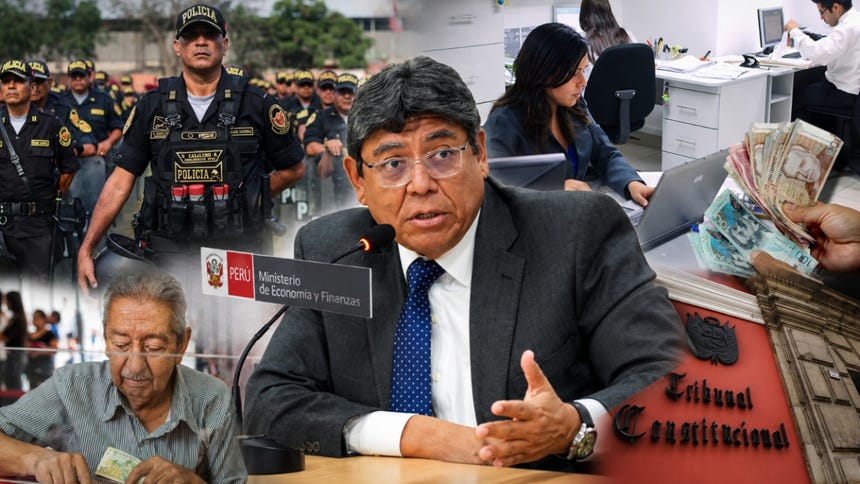
- CAS Gratifications: Law No. 32563 mandates that public workers under the CAS regime receive additional benefits, including holiday bonuses and severance pay (CTS). While the implementation is phased—starting at 10% in 2026 and reaching 100% by 2030—the eventual cost is estimated at S/ 3 billion annually.
- CAFAE Homogenization: The Committee for the Administration of the Assistance and Incentive Fund (CAFAE) faces challenges due to a law that forces the standardization of incentives for regional public workers. This move alone adds an estimated S/ 2.6 billion per year to the state payroll.
Official Responses and Legal Strategy
The government has opted for a "divide and conquer" approach regarding the legal challenges. Minister Cuba clarified that the MEF will focus its direct legal challenges on the CAS and CAFAE norms, as these are administrative and payroll-related matters directly under the ministry’s financial management.
Regarding the highly sensitive pension issues, the administration is coordinating with the Colegio de Economistas del Perú to challenge these at the Constitutional Tribunal. By distancing the government from the direct legal action against military and teacher pension laws, the administration may be attempting to manage the political fallout while ensuring the legal challenges proceed through an independent professional body.
The Consejo Fiscal, an autonomous technical body, has served as the government’s primary ally in this fight, providing the independent data necessary to prove that these laws are not only "inconvenient" but fiscally ruinous.
Macroeconomic Implications: The Threat of Downgrade
The most alarming takeaway from Minister Cuba’s statements is the potential for a sovereign credit rating downgrade. The Minister warned that if the status quo remains, the fiscal deficit would inevitably climb from its current target of 1.8% to 3% of GDP by 2027.
"If we do nothing, in a passive scenario, we would have to increase the fiscal deficit from 1.8% to 3% next year. It would stay at 3% for the remainder of this government, and debt would begin to spiral," Cuba explained.
The implications of a 3% deficit are not just mathematical; they are psychological for international investors. Peru has long been lauded in Latin America for its fiscal sobriety. A sustained, high deficit would signal to international credit agencies that the country is drifting toward the same populist traps that have plagued its neighbors.
"That would mean losing our investment-grade status at some point," Cuba warned. The loss of investment-grade status would trigger higher borrowing costs for the Peruvian state, a depreciation of the local currency, and reduced Foreign Direct Investment (FDI), ultimately hurting the very workers the previous Congress sought to benefit through these laws.
Conclusion: The Path Ahead
The legal battle against these four laws is the first true test of the current government’s commitment to macroeconomic stability. By choosing to confront the legislature through the Constitutional Tribunal, the administration is making a definitive statement: the state cannot operate as an infinite resource for populist legislative initiatives.
As the Constitutional Tribunal prepares to hear these cases, the business community, international analysts, and the public will be watching closely. The outcome of these legal proceedings will likely define the economic trajectory of Peru for the remainder of the decade. Whether the government succeeds in striking down these laws or fails to rein in the runaway spending will determine if Peru maintains its hard-won reputation as a stable, predictable, and responsible economy in a volatile region.
The "four needles" that could move the fiscal gauge are now in the hands of the magistrates. For the Peruvian economy, the stakes could not be higher.