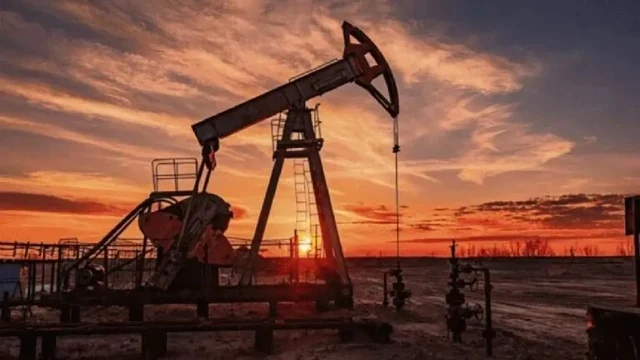
Lima, Peru – The Peruvian state has witnessed a substantial influx of revenue from its burgeoning hydrocarbon sector, with a reported $593 million collected in the first half of 2026. This figure underscores the critical role that natural gas, natural gas liquids, and crude oil play in bolstering the nation’s economy. The data, released by the state-owned entity PERUPETRO S.A., reveals a dynamic picture of resource extraction and its fiscal impact.
Key Revenue Streams Highlighted
The breakdown of the $593 million in revenues paints a clear picture of the sector’s composition. Natural gas production emerged as the dominant contributor, generating $299.86 million. This is followed by natural gas liquids (NGLs), which brought in $172.47 million, and crude oil, contributing $121.45 million. These figures reflect not only the volume of production but also the prevailing market valuations for these commodities during the January-June 2026 period.
The significance of these revenues is further amplified when examining monthly contributions. In June alone, royalties—the direct economic compensation paid to the state for the right to exploit hydrocarbon resources—amounted to $121.72 million. Natural gas again led the pack with $72.53 million, followed by NGLs with $31.21 million, and crude oil with $17.97 million. This consistent flow of income highlights the sustained operational tempo within Peru’s hydrocarbon extraction activities.
Understanding Royalty Payments
The royalty system is the cornerstone of the state’s direct financial benefit from hydrocarbon exploitation. As defined by Peruvian law, royalties represent the economic consideration companies must pay for the privilege of extracting oil and gas. These payments are intricately calculated, directly tied to the valuation of production and the specific royalty percentage stipulated in each concession contract. This mechanism ensures that the value derived from the nation’s natural resources directly benefits the Peruvian people through state coffers.
A Legacy of Resource Contribution
The financial impact of the hydrocarbon sector extends far beyond the recent half-year figures. Since 1993, the cumulative income from royalties and other remunerations generated by hydrocarbon production has reached an impressive $27,969 million. This long-term perspective demonstrates the enduring economic significance of oil and gas extraction for Peru, providing a consistent and substantial source of funding for public services and national development initiatives over several decades.
About PERUPETRO S.A.
At the helm of managing Peru’s hydrocarbon resources is PERUPETRO S.A., a state-owned entity operating under private law. Its mandate is to administer these valuable resources, ensuring their sustainable exploitation for the ultimate benefit of the nation. PERUPETRO plays a crucial role in negotiating contracts, overseeing exploration and production activities, and ensuring that the state receives its rightful share from these operations.
H2: Deeper Analysis of Mid-2026 Hydrocarbon Revenue Streams
The $593 million in state revenue collected from Peru’s hydrocarbon production during the first half of 2026 is a significant indicator of the sector’s economic vitality. This figure is not merely a sum of money; it represents a complex interplay of global commodity prices, production volumes, contractual agreements, and the fiscal policies implemented by the Peruvian government.
H3: Natural Gas: The Leading Revenue Generator
The dominant contribution of natural gas to state revenue, accounting for $299.86 million, highlights its paramount importance in Peru’s energy landscape. Natural gas is not only a crucial fuel source for domestic consumption, powering industries and homes, but also a significant export commodity. Its extraction and processing involve sophisticated technologies, and the revenue generated reflects the value of this cleaner-burning fossil fuel in both domestic and international markets. The robust performance in this segment suggests sustained demand and efficient operational capacities.
H3: Natural Gas Liquids (NGLs): A Valuable Byproduct
The $172.47 million generated from Natural Gas Liquids (NGLs) demonstrates the economic significance of these valuable hydrocarbons, which are extracted during the natural gas processing. NGLs, such as ethane, propane, and butane, are essential feedstocks for the petrochemical industry and are also used as fuels. Their substantial contribution indicates that Peru’s gas production is not just about energy but also about providing critical raw materials for various industrial applications, further diversifying the economic benefits derived from the hydrocarbon sector.
H3: Crude Oil: A Steadfast Contributor
While accounting for the smallest portion of the revenue breakdown, the $121.45 million from crude oil production remains a vital component. Crude oil is a fundamental commodity in the global economy, serving as the primary source for gasoline, diesel, and numerous other petroleum products. Its consistent contribution, even if smaller than natural gas, underscores the continued relevance of Peru’s oil reserves and the operational efficiency of its oil extraction activities. Fluctuations in global oil prices can significantly impact this revenue stream, making it a key area to monitor.
H2: Monthly Royalty Dynamics: A Closer Look at June 2026
The monthly royalty figures provide a granular view of the revenue generation process. The $121.72 million collected in June 2026 is a testament to the ongoing activity and the direct financial returns to the state.
H3: Natural Gas Dominance in Monthly Royalties
The $72.53 million from natural gas in June reinforces its leading role. This figure reflects the daily production and the prevailing market price of natural gas during that month. It also signifies the contractual obligations of the companies operating in this segment to remit their share to the state promptly.
H3: NGLs and Crude Oil’s Consistent Monthly Contributions
The $31.21 million from NGLs and $17.97 million from crude oil in June further illustrate the steady income these sub-sectors provide. These consistent monthly payments are crucial for the government’s fiscal planning, allowing for predictable budgeting and resource allocation for public projects and services.
H2: The Mechanics and Importance of Royalty Payments
The concept of royalties is fundamental to understanding how the state benefits from its natural resources.
H3: Royalty as a Financial Counterpart to Resource Exploitation
The legal definition of royalties as the "economic counterpart" is critical. It signifies that the right to extract finite natural resources is not granted freely but comes with a financial obligation. This ensures that the value extracted from the earth is shared with the nation that owns those resources.
H3: Calculation Basis: Production Valuation and Contractual Percentages
The method of calculation—based on the "valuation of production" and "percentage of royalty established for each contract"—is key to transparency and fairness. The valuation process ensures that the market price or an agreed-upon price for the extracted hydrocarbons is used. The contractual percentage, negotiated between the state and the operating companies, determines the state’s share. This ensures that the terms are clearly defined and legally binding, minimizing disputes and maximizing state returns.
H2: Historical Perspective: A Legacy of Hydrocarbon Revenue
The cumulative figure of $27,969 million in royalties and remunerations since 1993 is a powerful testament to the long-term economic contribution of Peru’s hydrocarbon sector.
H3: Decades of Fiscal Support
This substantial sum has undoubtedly played a significant role in funding various government initiatives, infrastructure projects, and social programs over nearly three decades. It highlights the strategic importance of managing these resources effectively to ensure sustained economic development.
H3: Implications for Future Resource Management
The historical data also serves as a benchmark for future negotiations and resource management strategies. Understanding past performance can inform decisions regarding exploration rights, contract terms, and the optimal balance between resource extraction and environmental sustainability.
H2: PERUPETRO S.A.: Steward of National Hydrocarbon Wealth
The role of PERUPETRO S.A. is central to the effective management and exploitation of Peru’s hydrocarbon resources.
H3: Mandate for Sustainable Exploitation
As a state-owned entity with a mandate for "sustainable exploitation," PERUPETRO is tasked with ensuring that the benefits derived from hydrocarbons are long-term and do not compromise future generations. This involves balancing economic objectives with environmental considerations and social responsibility.
H3: Key Functions and Responsibilities
PERUPETRO’s responsibilities likely encompass a broad range of activities, including:
- Contract Negotiation and Administration: Securing favorable terms for the state in exploration and production contracts.
- Oversight of Operations: Monitoring the activities of oil and gas companies to ensure compliance with contracts and regulations.
- Promotion of Investment: Attracting domestic and foreign investment in the exploration and development of hydrocarbon reserves.
- Resource Assessment: Evaluating and quantifying Peru’s hydrocarbon potential.
- Revenue Collection and Management: Ensuring timely and accurate collection of royalties and other payments.
- Environmental and Social Safeguards: Working to ensure that operations adhere to stringent environmental and social standards.
The efficient and transparent functioning of PERUPETRO is crucial for maximizing the benefits of the hydrocarbon sector for the Peruvian people. Its strategic decisions and operational effectiveness directly influence the state’s revenue and the long-term sustainability of resource utilization. The mid-2026 revenue figures provide a positive snapshot, but continued diligence and strategic foresight will be essential for navigating the future of Peru’s hydrocarbon industry.