Executive Summary: A Strategic Response to Urban Vulnerability
In a decisive move to fortify Mexico City’s urban resilience, the local government has launched an ambitious, multi-faceted hydraulic infrastructure project in the San José neighborhood of the Tláhuac district. Led by Chief of Government Clara Brugada Molina, this initiative marks a critical shift in how the capital manages its complex hydrological challenges. By deploying nine distinct infrastructure projects, the administration aims to protect over 36,000 residents who have historically suffered from the devastating effects of seasonal flooding.
The project represents more than just routine maintenance; it is a structural redesign of the area’s water management capacity. Through the integration of advanced drainage systems, massive collector pipes, and strategic containment walls, the city seeks to mitigate the risks posed by the overflowing Canal Riachuelo Serpentino and the region’s notoriously difficult subsoil conditions.
The Core Infrastructure: Engineering Against the Elements
The technical complexity of the San José intervention cannot be overstated. Given the region’s topography and the historical failure of previous drainage systems, engineers have designed a robust solution focused on both volume capacity and flow control.
The New Collector System
Central to the project is the construction of a high-capacity collector pluvial. This engineering marvel is specifically designed to manage extreme rainfall, boasting a capacity to capture and redirect up to 7 million liters of water per hour. By diverting this volume away from residential zones, the city aims to eliminate the pooling that has traditionally paralyzed the neighborhood during the peak of the rainy season.

Canal Riachuelo Serpentino Optimization
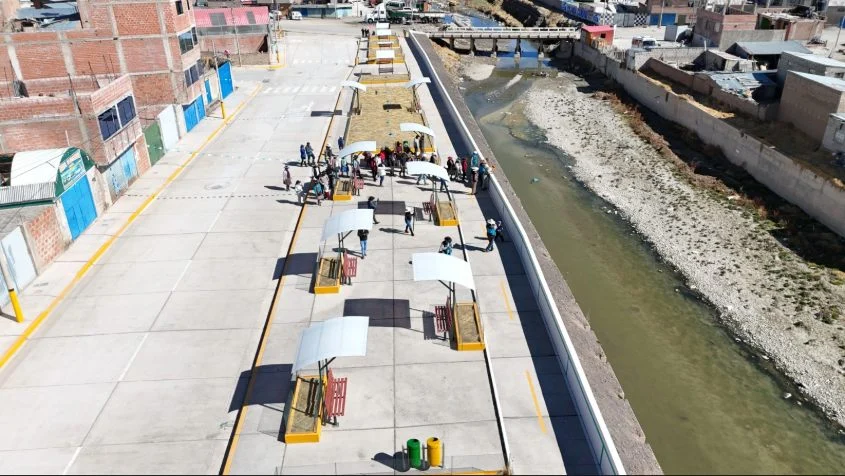
The Canal Riachuelo Serpentino has long been the primary source of flooding for the Tláhuac region. To address this, the government is installing a transverse gabion—a wire-mesh container filled with rocks—that serves as a hydraulic regulator. This structure effectively slows the velocity of the water, preventing the chaotic surges that lead to bank overflows. Complementing this is a one-kilometer-long containment barrier, acting as a final line of defense to shield the urban footprint of San José from sudden run-off.
Chronology: A Path to Modernization
The road to this intervention has been marked by years of community advocacy and mounting technical data.
- Pre-2025: The Baseline of Need. For decades, the San José community faced recurring damage to property and public health hazards due to stagnant water and sewage overflow. The aging infrastructure, built for a smaller population, proved inadequate for current climate patterns.
- Early 2026: Technical Assessment. Following the change in administration, hydraulic engineers conducted a thorough assessment of the Tláhuac subsoil and canal integrity. The data confirmed that simple dredging would not suffice; a full structural overhaul was required.
- August 2026: The Announcement. During a high-level site inspection, Chief of Government Clara Brugada Molina formally unveiled the nine-point action plan. The announcement signaled a move from reactive emergency response to proactive, long-term civil engineering.
- Current Phase (Late 2026): Active Construction. Work is currently in full swing, with specialized teams focusing on the rehabilitation of pumping stations and the laying of new impulse lines to ensure the continuous movement of water through the system.
Supporting Data: Why Tláhuac Matters
The Tláhuac district represents a unique challenge for urban planners in Mexico City. The soil composition, characterized by high clay content and subsidence, makes the placement of heavy infrastructure a delicate task.
- Beneficiary Count: 36,000 direct beneficiaries, encompassing families, small businesses, and local schools.
- Hydraulic Capacity: The new system’s ability to process 7 million liters/hour is a 40% increase over the previous infrastructure’s theoretical peak performance.
- Risk Mitigation: The project focuses on a "zero-overflow" strategy for the Canal Riachuelo Serpentino, which has historically exceeded its capacity an average of three times per rainy season.
Official Responses and Strategic Vision
During the recent site visit, Chief of Government Clara Brugada Molina emphasized that the project is not an isolated effort, but part of a broader "Water Resilience Plan" for the capital.

"We are moving beyond patches and temporary solutions," Brugada noted during her address to the local community. "The residents of Tláhuac deserve to live without the fear that a heavy afternoon rain will destroy their livelihoods. This is a commitment to the dignity and safety of every family in San José."
The engineering teams have highlighted the importance of inter-agency cooperation, involving the Department of Public Works and the local Water Authority, to ensure that the maintenance of these nine projects is sustainable over the next two decades.
Implications for Mexico City’s Future
The success of the Tláhuac project holds significant implications for the rest of the metropolitan area. As climate change continues to alter rainfall patterns, making storms more intense and unpredictable, the model being tested in San José could serve as a template for other vulnerable zones.
1. Urban Planning and Sustainability
The reliance on nature-based solutions like gabions combined with high-tech collectors represents a modern approach to "Sponge City" concepts—allowing the city to manage water as a resource rather than a nuisance.

2. Economic Stability
Flooding is an economic drain. By preventing property damage and the subsequent need for disaster relief funds, the government is essentially investing in the long-term economic stability of Tláhuac. Small businesses in the area, which previously faced losses during the wet season, can now operate with the assurance of structural protection.
3. Public Health
Stagnant water is a vector for disease and a source of environmental degradation. By improving the drainage infrastructure, the project contributes directly to the sanitation of the neighborhood, reducing the prevalence of waterborne illnesses and improving the quality of life for the elderly and young children living in the area.
Conclusion: A Turning Point for Community Resilience
The nine hydraulic projects currently underway in Tláhuac are more than just pipes and concrete; they are the physical manifestation of a government’s commitment to its most vulnerable populations. As the construction continues, the focus will shift toward final testing and the integration of these systems into the city’s broader hydraulic network.
For the 36,000 residents of San José, the future looks significantly drier and more secure. This project stands as a testament to the fact that with proper investment, strategic planning, and a commitment to engineering excellence, even the most persistent environmental challenges can be managed. As Mexico City looks toward a future of climate adaptation, the lessons learned in the soil of Tláhuac will undoubtedly play a vital role in the city’s ongoing survival and growth.