By Editorial Staff
Date: July 31, 2026
Source: RPP/Economic Analysis Desk
Executive Summary: The Balancing Act of Labor Reform
The Peruvian economic landscape faces a pivotal moment as the government, under the administration of President Keiko Fujimori, signals a move to increase the Remuneración Mínima Vital (RMV)—the national minimum wage—to S/ 1,300. While the policy aims to bolster the purchasing power of the average worker in an inflationary environment, it has ignited a fierce debate regarding the viability of formal employment.
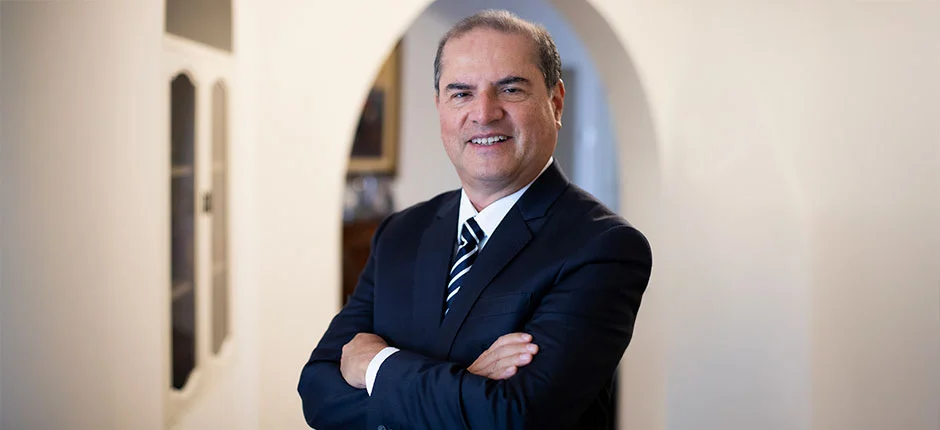
Jorge Zapata Ríos, president of the Confederación Nacional de Instituciones Empresariales Privadas (CONFIEP), has emerged as the leading voice for the private sector, asserting that a wage hike without concurrent structural labor reforms could prove counterproductive. The core of the business sector’s argument lies not in the wage itself, but in the "hidden" costs of formalization—burdens that currently drive small and medium-sized enterprises (SMEs) further into the shadows of the informal economy.
Chronology of the Policy Proposal
The trajectory of this policy shift began as a cornerstone of the administration’s social agenda, aimed at addressing the erosion of real wages.
- Initial Announcement: Following internal executive deliberations, the Fujimori administration proposed elevating the RMV to S/ 1,300, a move presented as a necessary adjustment to reflect current market conditions.
- The Consensus Building Phase: Minister of Labor Juan Sheput confirmed that the announcement was, at its inception, a political decision. He noted that the figure is not yet set in stone and must undergo rigorous debate within the National Labor Council (Consejo Nacional del Trabajo).
- The Private Sector Pushback: Following the official announcement, CONFIEP requested an immediate audience to discuss the macroeconomic implications, emphasizing that the "political" nature of the hike must be tempered by "technical" realities.
- Ongoing Deliberations: As of late July 2026, the proposal remains in a state of flux, awaiting a tripartite consensus between the government, labor unions, and private employers.
Supporting Data: The Hidden Costs of Formalization
To understand the gravity of Zapata Ríos’s warnings, one must look at the mathematical reality of hiring in Peru. According to CONFIEP, the cost of an employee to a business goes far beyond the monthly salary.
The 45% Premium
Zapata Ríos highlighted a startling reality: for every unit paid to an employee, the employer incurs an additional 40% to 45% in mandatory social contributions, insurance, and labor benefits. "If you pay a worker 1, the employer pays 1.45," Zapata explained. This "labor tax" acts as an invisible barrier to entry for the millions of micro and small enterprises (mypes) that constitute the backbone of the Peruvian economy.
The Productivity Gap
The correlation between productivity and wage floors is the primary concern for the business sector. In sectors where the marginal productivity of labor is low, a legislated increase in the RMV creates a "productivity gap." When a worker’s output does not match the cost of their formal employment, businesses face two choices: automate, reduce staff, or revert to the informal sector. For a micro-enterprise operating on thin margins, the latter is often the only path to survival.
Official Responses and the Role of the National Labor Council
Minister of Labor Juan Sheput has attempted to position the government as a mediator. In his recent interview with RPP, Sheput emphasized that the administration is aware of the risks. "This is a decision that requires broad consensus," Sheput stated, noting that the government is exploring mechanisms to mitigate the transition for small businesses.
The Proposal for a Temporal Bonus
One of the most debated solutions currently on the table is the government’s plan to offer a "temporal bonus" or subsidy to micro and small enterprises to offset the immediate impact of the S/ 1,300 floor. However, the business community remains skeptical.
"We need to see the fine print," says Zapata Ríos. "How will this bonus be applied? By what mechanism will it be distributed, and for how long? If it is a temporary patch on a structural wound, it will not prevent the eventual return to informality."
Implications: The Trap of Informality
The central fear expressed by the private sector is that the policy, while well-intentioned, could inadvertently exacerbate Peru’s already high rates of labor informality.
1. The Disincentive for Growth
When a business grows, it inevitably reaches a threshold where it must formalize. If the cost of that formalization is perceived as punitive, businesses will intentionally remain small or operate "off the books." This limits tax revenue for the state and denies workers access to social security and pension systems.
2. The Cycle of Inevitability
Zapata Ríos pointed out a recurring cycle: a small business attempts to formalize, gets crushed by the 45% overhead, realizes it cannot sustain the cost with its current productivity level, and eventually shuts down or returns to the informal market. Breaking this cycle requires not just a minimum wage increase, but a re-evaluation of the entire labor cost structure.
3. Macroeconomic Stability
Beyond the micro-level, there is the risk of inflationary pressure. If businesses pass the increased labor costs onto consumers in the form of higher prices for goods and services, the real-world purchasing power of the S/ 1,300 salary may be negated, leading to a wage-price spiral.
Looking Forward: A Path to Consensus?
As the National Labor Council prepares for its upcoming sessions, the tension between social justice and economic pragmatism remains palpable. The government is under pressure to deliver on its promise to workers, while the private sector is under pressure to maintain the viability of its businesses.
The solution, according to experts consulted by the business press, may lie in a "multi-tier" approach. This could involve:
- Differential Wage Increases: Varying the rate of the increase based on firm size or industry productivity.
- Structural Tax Reform: Trading a lower employer-side social security contribution for a higher minimum wage, effectively shifting the burden without increasing the total cost of labor.
- Digital Formalization: Simplifying the bureaucratic processes of payroll and taxation to reduce the "hidden" administrative costs that often burden SMEs more than the wages themselves.
Conclusion: The Stakes for the Future
The decision regarding the S/ 1,300 minimum wage will serve as a bellwether for the Keiko Fujimori administration’s economic strategy. Will it prioritize a rapid, politically popular boost to wages, or will it pursue the more difficult, long-term path of labor market liberalization?
For Jorge Zapata Ríos and the members of CONFIEP, the choice is clear: "We are not against better wages for workers. We are against a system that makes formal work a luxury that most Peruvian businesses simply cannot afford." As the debate moves into the halls of the National Labor Council, the nation watches, waiting to see if the government can bridge the divide between the aspirations of the worker and the limitations of the entrepreneur.
The path forward requires a delicate recalibration of the social contract. Whether that happens through a targeted subsidy, a reduction in labor burdens, or a rethink of the wage hike itself remains the defining question of the current economic cycle. The result of these deliberations will not only shape the monthly paychecks of millions but will fundamentally dictate the pace of formalization and economic growth in Peru for years to come.