Overview: A Narrow Victory and a Fractured Opposition
The political landscape of the Peruvian Senate faced a seismic shift on July 26, 2026, as the legislative body concluded its election for the new Mesa Directiva (Directing Board) for the 2026-2027 period. In a razor-thin margin that has left the opposition reeling, the "Lista 1"—a coalition spearheaded by the conservative forces of Fuerza Popular and Renovación Popular—secured the presidency of the Upper House.
With 30 votes in favor against 29 for the opposition’s "Lista 2," the officialist bloc managed to clinch the leadership, installing Miguel Torres as the President of the Senate. However, the narrow one-vote victory has been overshadowed by allegations of sabotage, lack of transparency, and internal betrayal, turning a routine administrative election into a scandal that threatens to destabilize the Senate’s legislative agenda for the coming year.
Chronology of the Election
The day began with high expectations from the opposition coalition, which included the party Obras, Juntos por el Perú, Ahora Nación, and the Partido del Buen Gobierno. Led by Senator Daniel Barragán, the opposition had campaigned on a platform of reform and legislative autonomy.
The Voting Procedure
The electoral process took place behind closed doors, a decision that has since become a focal point of contention. Due to the restriction of press access to the chamber, verification of the voting process became difficult, leading to the current disputes regarding transparency.
During the second round of voting, a specific procedural norm required members of the coalition to exhibit their ballots to ensure party discipline—a common, albeit controversial, practice in high-stakes legislative elections. It was during this phase that the unity of the "Lista 2" allegedly fractured. While all other members complied with the show-of-hands protocol, one senator refrained from displaying her ballot.
The Immediate Aftermath
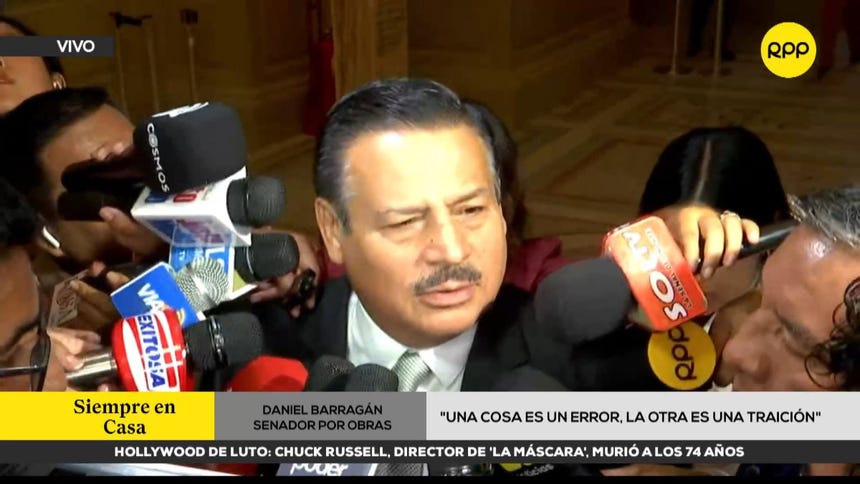
As the final count was announced—30 to 29—the reality of the defeat hit the opposition camp. Daniel Barragán, visibly frustrated, addressed the press shortly after the results were made public. He called for a "responsible Congress" while simultaneously lamenting the outcome, noting that in politics, "when there are betrayals, once is an error, but twice is a pattern."
The "Betrayal" Narrative: Accusations and Counter-Accusations
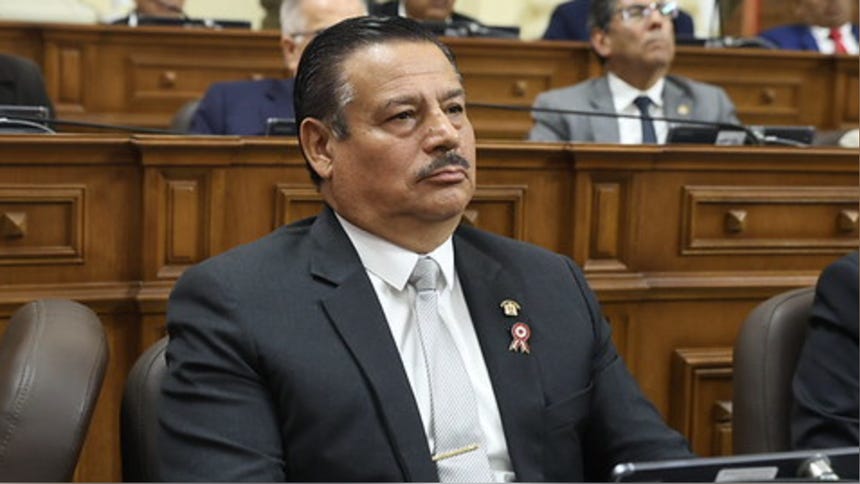
The heart of the current political crisis lies in the identity of the individual who failed to display their ballot. Senator Daniel Barragán, while initially refraining from naming names, pointedly highlighted the anomaly during his press briefing.
Daniel Barragán’s Stance
"Everyone showed their vote. Everyone, except for one person. You should investigate who that was," Barragán stated when pressed by reporters. His comments strongly implied that the failure to exhibit the ballot was not merely a procedural oversight, but a deliberate act of sabotage that allowed for a cross-party vote in favor of the fujimorista-led coalition.
Barragán emphasized that he lacks concrete, documentary evidence to label the act as a "betrayal," yet he maintained that the atmosphere of distrust within the coalition is palpable. "Normally, betrayal is surreptitious; we don’t know who does it. I don’t know if it was on purpose or a mistake, but it happened, and it cost us the board."
Silvana Robles’ Defense
The finger of suspicion quickly turned toward Senator Silvana Robles of Juntos por el Perú. Responding to the mounting pressure, Robles took to social media and held a press conference to vehemently deny allegations that she had defected to the fujimorista side.
"I reject outright the claim that I gave my vote to Fujimorismo," Robles declared. She attributed her failure to show her ballot to a "simple oversight" during the chaotic proceedings. Furthermore, she criticized the lack of press access to the chamber, arguing that the restrictive environment created the perfect conditions for the "artifices" and "nefarious maneuvers" typical of the opposition’s political rivals.
"My vote was for List 2," she insisted. "Those who know my convictions know that I would never vote for the Fujimorismo to preside over the Senate."
Analysis: Why the Senate Presidency Matters
The Mesa Directiva is not merely a ceremonial position; it holds the power to set the legislative agenda, control the chamber’s budget, and influence the priority of bills reaching the floor. For the Fuerza Popular and Renovación Popular alliance, maintaining control of this board is essential to protecting their policy interests and managing the legislative timeline.
For the opposition, the loss represents a significant strategic failure. Had they secured the 30th vote, the balance of power would have shifted, potentially forcing the government into a more conciliatory stance. The failure to unify their ranks, whether due to actual betrayal or a technical oversight, reveals a fragile coalition that may struggle to mount a credible challenge to the government in the future.
Implications for the 2026-2027 Legislative Session
The fallout from this election carries several critical implications:
1. Increased Polarization
The rhetoric surrounding "betrayal" and "nefarious arguments" signals a deepening divide within the Senate. If the opposition cannot trust its own members, the ability to form a united front on critical national issues becomes nearly impossible.
2. Erosion of Public Trust
The fact that the election occurred without the presence of the press, coupled with the "show-your-vote" culture, highlights a lack of institutional maturity. Citizens observing this process are left with a perception of political maneuvering that prioritizes party gains over democratic transparency.
3. Stability of the "Lista 2"
The coalition led by Barragán now faces a period of internal reckoning. To move forward, they must either reconcile with those accused of betrayal or formalize a purge of their ranks. Either path risks further fragmentation, potentially leading to the dissolution of the coalition.

Supporting Data: The Arithmetic of Power
The Senate, currently composed of 60 members (assuming full attendance), operates on a slim margin. In a scenario where 59 votes were cast, the 30-29 split illustrates how a single vote dictates the legislative outcome.
- Total Seats: 60
- Lista 1 (Fuerza Popular/Renovación Popular): 30 votes (Winner)
- Lista 2 (Opposition Coalition): 29 votes (Defeated)
- Margin of Victory: 1 vote
This narrow margin underscores the "kingmaker" power held by individual senators. In such a high-stakes environment, the pressure on each legislator to adhere to party lines is extreme, which explains the requirement to display ballots—a practice that, while intended to prevent betrayal, arguably contradicts the principle of the secret ballot.
Conclusion: A Lesson in Legislative Fragility
The events surrounding the election of Miguel Torres as the President of the Senate serve as a case study in the volatility of parliamentary systems. Whether the outcome was determined by a genuine case of betrayal or an unfortunate procedural error by Senator Silvana Robles, the damage to the opposition’s credibility is done.
As the Senate moves into the 2026-2027 session, the administration under Miguel Torres will likely enjoy a period of consolidated power, provided they can manage the optics of their narrow victory. Meanwhile, the opposition must grapple with the ghosts of this election. Unless they can bridge the gap of distrust that has emerged, they are likely to remain a secondary force in the chamber, unable to effectively contest the legislative path set by the officialist coalition.
Ultimately, this episode underscores the importance of transparency. By restricting press access, the Senate invited the very speculation and scandal that now plagues its start to the new term. For the sake of the democratic process, future elections will need to be conducted with greater openness to ensure that the "will of the people" is not lost in the shadows of backroom deals or the ambiguity of hidden ballots.