In a strategic move to invigorate the national economy and ensure the continuity of essential public services, the Peruvian government has officially authorized a supplementary credit of S/ 9,565 million. The legislation, promulgated today in the official gazette El Peruano, marks a pivotal moment for the current administration’s fiscal agenda, aiming to bridge infrastructure gaps while reinforcing security and social support systems across the nation.
The Minister of Economy and Finance, Rodolfo Acuña Namihas, emphasized that this injection of capital is not merely an expenditure, but a calculated investment designed to propel ongoing development projects forward. By prioritizing projects with high execution capacity, the government seeks to avoid the stagnation of public works and provide a tangible boost to regional economies.
Main Facts: A Strategic Injection of Capital
The supplementary credit represents a comprehensive package of financial measures designed to address the most pressing needs of the Peruvian population. The S/ 9.5 billion allocation is categorized into several critical pillars:
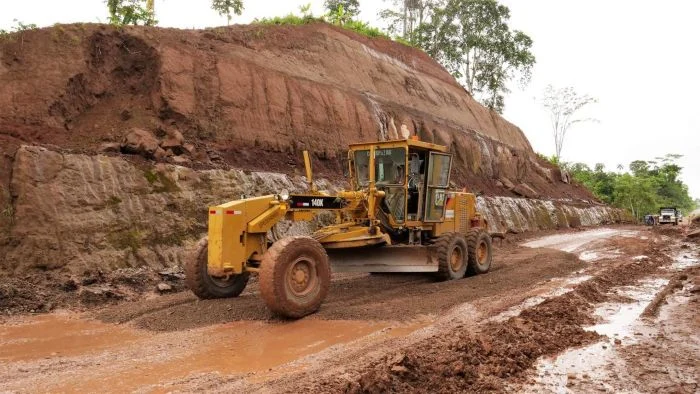
- Infrastructure Continuity: A significant portion of the budget is earmarked for the completion of ongoing projects managed by the national government, regional governments, and municipal entities. The goal is to prevent the paralysis of vital construction works.
- Regional Empowerment: Beyond the central credit, the law authorizes regional and local governments to incorporate S/ 5,436 million derived from canon, royalties, customs revenues, and other participations. These funds are designated for reconstruction, rehabilitation, and climate change mitigation.
- National Security: The credit includes specific allocations to bolster internal security and intensify the fight against organized crime.
- Democratic Processes: A dedicated budget of S/ 401 million has been assigned to cover the organizational costs of the 2026 Regional and Municipal Elections.
- Social Stability: S/ 840 million is directed toward sustaining essential public services, with a primary focus on the health and education sectors.
Chronology: The Path to Approval
The approval of this credit did not happen in a vacuum; it is the culmination of months of fiscal planning and inter-ministerial coordination.
- Preliminary Phase (Early 2026): The Ministry of Economy and Finance (MEF) conducted an exhaustive audit of public investment projects to identify those that were at risk of stalling due to budget shortfalls.
- Legislative Drafting: The MEF, under the leadership of Minister Acuña Namihas, drafted the proposal with a rigorous focus on the Marco Macroeconómico Multianual (Multiannual Macroeconomic Framework).
- Fiscal Review: Throughout the second quarter of 2026, the proposal underwent intense scrutiny to ensure that all funding sources—including credit operations and fiscal revenues—were clearly identified and compatible with existing fiscal rules.
- Promulgation (July 2026): With the publication in El Peruano, the law becomes legally binding, authorizing the immediate disbursement of funds to the respective governmental levels.
Supporting Data: Understanding the Fiscal Impact
The magnitude of this credit is underscored by the diversity of its funding sources. Unlike deficit-driven stimulus packages, the government has emphasized that this supplementary credit is financed through "identified sources."
Resource Allocation Breakdown
| Sector/Area | Allocation (Millions) |
|---|---|
| Total Supplementary Credit | S/ 9,565 |
| Regional/Local Canon & Royalties | S/ 5,436 |
| Elections 2026 | S/ 401 |
| Health and Education Services | S/ 840 |
| Infrastructure & Misc. Priorities | S/ 2,788 |
The reliance on canon and regional resources highlights a shift toward decentralizing financial power. By allowing regional governments to tap into their specific revenue streams (canon and royalties), the national government is effectively empowering local authorities to lead their own recovery efforts and infrastructure projects.
Official Responses and Strategic Vision
Minister Rodolfo Acuña Namihas has been the face of this initiative, maintaining that the government’s priority is "responsibility with social impact."
"With this supplementary credit, resources will reach the works and services that the population needs and expects," the Minister stated during the press announcement. "We are ensuring the continuity of investments in transport, water and sanitation, health, education, and agriculture. This is about contributing to regional development and improving the quality of life for every Peruvian."
Regarding the concerns of fiscal stability, the Minister was categorical: "We have prioritized the most urgent needs of the country with fiscal responsibility. These resources allow us to address critical demands without compromising the economic stability of Peru."
The CAS Labor Reform: A Step Toward Fairness
A notable component of the new law is the formalization of benefits for workers under the CAS (Contratación Administrativa de Servicios) regime. The law mandates that the Ministry of Economy and Finance implement a gradual benefit scheme, specifically regarding gratifications.
Currently, the MEF is drafting the necessary Supreme Decree to establish the criteria and conditions for these payments. This policy aims to ensure that all CAS employees receive their gratifications in an orderly, progressive manner that remains compatible with the nation’s fiscal sustainability. This is a significant milestone for labor rights in the public sector, acknowledging the crucial role played by contracted personnel in maintaining state operations.
Implications: The Road Ahead
The long-term implications of this S/ 9.5 billion credit are multifaceted.
1. Closing Infrastructure Gaps
By focusing on the "continuity of investments," the government is preventing the common "white elephant" syndrome—where projects remain unfinished for years, wasting billions in sunk costs. By providing the liquidity needed to finish current works, the state ensures that these investments finally generate a return for the public.
2. Fiscal Sustainability and Future Transitions
A core concern of the current administration is the transition to the next government. By adhering to the Multiannual Macroeconomic Framework and ensuring that all credit sources are clearly identified, the government claims it is leaving the next administration with enough "fiscal space" to govern effectively without the burden of an unmanaged debt crisis.
3. Economic Multiplier Effect
Infrastructure spending is historically one of the most effective ways to generate employment in the short term. By funneling money into regional construction and rehabilitation, the government is essentially stimulating local job markets, which is particularly vital for the recovery of secondary cities and rural areas outside of the capital, Lima.
4. Strengthening the Democratic Framework
The inclusion of funds for the 2026 elections ensures that the democratic process remains uninterrupted. In a climate of political volatility, the state’s ability to fund its own institutional requirements—such as transparent and efficient elections—serves as a pillar of stability.
Conclusion
The publication of the law authorizing this supplementary credit represents a balanced approach to the dual challenges of economic stagnation and social demand. By leveraging regional revenues (canon) and maintaining strict fiscal discipline, the Peruvian government is attempting to navigate a path that favors both immediate relief for the public and the long-term preservation of macroeconomic health.
As the government moves to implement the specific provisions—ranging from regional infrastructure to the benefit schemes for CAS workers—the effectiveness of this plan will be measured by its execution rate. If the funds are deployed with the speed and transparency promised by the Ministry of Economy and Finance, this credit could serve as a decisive catalyst for development, closing the gaps that have long hindered Peru’s regional growth and ensuring that the country remains on a steady, sustainable path toward prosperity.