Introduction: A Fragile Boundary
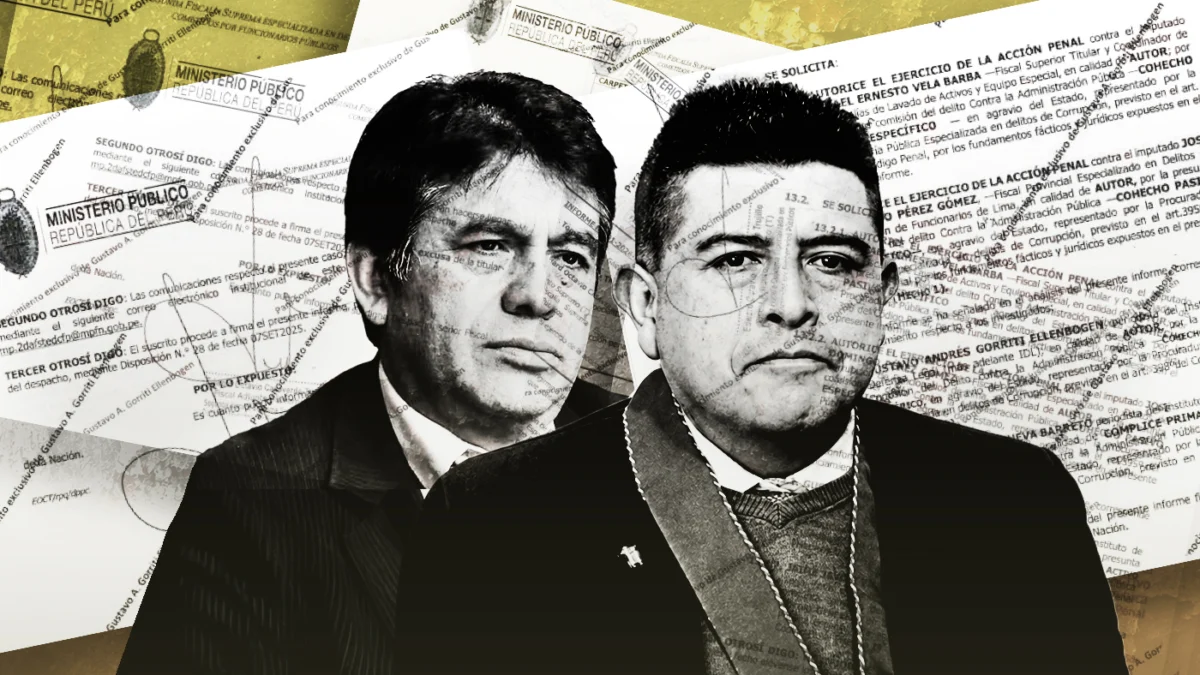
In a development that threatens the foundations of democratic discourse and the protection of investigative journalism in Peru, the state’s prosecutorial machinery has undergone a radical shift. The case against journalist Gustavo Gorriti and senior prosecutors Rafael Vela Barba and José Domingo Pérez Gómez serves as a chilling case study on how judicial processes can be weaponized to criminalize the press. At the heart of this controversy lies a transformation in the interpretation of evidence, shifting from a search for objective truth to the systematic validation of uncorroborated testimonies to target perceived political enemies.
Main Facts: The Reversal of a Legal Stance
On December 4, 2025, Supreme Prosecutor Edward Casaverde issued Disposition No. 30, a robust legal document that effectively closed the preliminary investigation into Gustavo Gorriti and the aforementioned prosecutors regarding alleged bribery. Casaverde’s initial reasoning was sound and rooted in established legal standards: the testimonies provided by Jaime Villanueva—the prosecution’s primary witness—were found to be fundamentally inconsistent. More importantly, there was a total absence of corroborating evidence to support Villanueva’s claims.
However, the legal landscape shifted dramatically following internal changes within the Public Ministry, specifically with the arrival of Tomás Gálvez at the helm of the Attorney General’s Office. On April 16, 2026, Supreme Adjunct Prosecutor Karla Zecenarro declared the original disposition null, citing a "lack of proper motivation." This decision effectively paved the way for a renewed campaign against the journalists and prosecutors, setting a dangerous precedent for how evidence is weighed in the Peruvian justice system.
Chronology of a Targeted Investigation
- December 4, 2025: Prosecutor Edward Casaverde issues Disposition No. 30, finding no evidence of criminal conduct after an exhaustive review of the facts.
- March 27, 2024 (Retrospective Context): Prosecutor Alcides Chinchay opens the initial investigation based on Villanueva’s claims that Gorriti influenced the Lava Jato special team’s operations.
- April 16, 2026: Karla Zecenarro annuls the dismissal, accusing Casaverde of failing to meet the "revelatory suspicion" standard.
- July 10, 2026: In a complete reversal of his previous findings, Prosecutor Casaverde issues Report No. 01-2026 to the Attorney General, claiming that "revelatory indices" now prove criminal acts, and requesting authorization to pursue penal action.
The Dictamen of Zecenarro: A Shift in Legal Standard
The ruling by Prosecutor Zecenarro represents a departure from traditional prosecutorial duty. By characterizing the contradictions in Jaime Villanueva’s testimony as mere "peripheral inaccuracies" or "narrative differences," Zecenarro effectively assumed the role of an advocate rather than an impartial arbiter of justice.
Zecenarro argued that the investigation should have been evaluated under the standard of "revelatory suspicion," a methodology that she claims would have allowed the prosecution to bypass the need for concrete, objective corroboration. Her logic—that a witness need not provide specific details but should be judged by the existence of a "functional dynamic"—is a direct assault on the principles of due process. By ridiculing the requirement for strict testimonial consistency, the prosecution has signaled an intent to prioritize political narrative over evidentiary reality.
Supporting Data: The Contradictions of Report 01-2026
The most striking element of this case is the metamorphosis of Prosecutor Edward Casaverde. Between his December 2025 decision and his July 2026 report, he fundamentally altered his assessment of the same evidence.
In the latter report, Casaverde elevates the claims of Jaime Villanueva to the status of "questionable evidence," while conveniently ignoring the testimony of every other witness involved. In 2025, he performed an integral assessment of all testimonies; in 2026, he looked solely at Villanueva’s words. This selective "cherry-picking" of facts is not merely a legal error; it is a calculated omission of exculpatory evidence.
Furthermore, the narrative regarding the alleged "favors" provided by Gorriti to the prosecutors has been sanitized to remove inconvenient figures. While the original investigation alleged that Gorriti had contacted then-Attorney General Zoraida Ávalos to influence the tenure of prosecutor Rafael Vela, this detail has vanished from the 2026 report. This omission is highly suggestive, given that Ávalos was Casaverde’s superior until mid-2026.
The Criminalization of Investigative Journalism
The core of the prosecution’s argument rests on the premise that the routine professional interactions between a journalist and their sources—specifically those within the justice system—constitute a "corrupting dynamic."
According to the new theory of the case, the investigative reports published by IDL-Reporteros are not acts of journalism, but rather evidence of a criminal pact. The prosecution suggests that Gorriti "designed" the investigation strategy for the "Cocteles" case, organized public support, and facilitated academic contracts for prosecutors. In exchange, he supposedly received confidential information.
By framing standard journalistic practices—such as requesting information, analyzing public records, and publishing investigative findings—as "criminal acts," the Public Ministry is effectively declaring war on the concept of a free press.
Official Responses and Theoretical Justifications
In Report 01-2026, the prosecution attempts to provide a constitutional veneer for its actions. It argues that the "secrecy of preliminary investigations" is a structural necessity that outweighs the rights to freedom of information and expression.
The report explicitly states that media coverage "lacks neutrality" and therefore falls outside the scope of protected speech. It posits that journalism must be "neutral" to be protected, a standard that is both logically impossible and fundamentally anti-democratic. By asserting that freedom of information is not absolute and can be restricted in favor of "due process" or "presumption of innocence," the prosecution is establishing a framework where the state can censor any reportage that reflects poorly on public officials or powerful institutions.
Implications for Democracy and the Rule of Law
The implications of this judicial trend are profound. If the Public Ministry succeeds in branding investigative journalism as a form of criminal conspiracy, the "chilling effect" on the Peruvian media landscape will be total.
- The End of Source Protection: If receiving information from a public official is categorized as bribery, no whistleblower or honest public servant will ever dare to speak to the press again.
- The Death of Accountability: Investigative journalism exists to hold power to account. By classifying the investigative process itself as "criminal," the state is effectively shielding itself from public scrutiny.
- Institutional Degradation: When prosecutors, under the influence of political directives, reverse their own well-reasoned decisions to satisfy the political agenda of the Attorney General’s office, the entire judicial system loses its credibility.
The case against Gustavo Gorriti and the Lava Jato prosecutors is not about the alleged commission of crimes. It is about the suppression of a critical voice that has consistently exposed the rot within the Peruvian state. As the legal battle continues, the international community and the citizenry must recognize this for what it is: a coordinated effort to dismantle the checks and balances of a democratic society by silencing those tasked with watching the watchmen.
Author’s Note: This analysis is based on the evolving legal reports within the Public Ministry of Peru. The transition from dismissal to indictment, based on the same pool of information, highlights a systemic crisis within the institution that warrants urgent oversight from human rights organizations and legal bodies worldwide.