In a landmark move to revolutionize public health services for the Peruvian national security sector, the Private Investment Promotion Agency (ProInversión) has officially launched an ambitious Public-Private Partnership (PPP) project. The initiative is set to overhaul the operation and maintenance protocols of the Luis N. Sáenz National Police Hospital, ensuring that the country’s premier healthcare facility for police officers and their families operates at world-class standards.
This strategic endeavor aims to bridge the gap between complex infrastructure management and medical excellence, targeting the sustainable improvement of services for over 700,000 beneficiaries, including active-duty personnel, retired officers, and their dependents.
The Core Mandate: Bridging Infrastructure and Efficiency
The Luis N. Sáenz National Police Hospital, a Category III-1 facility, stands as the cornerstone of the police health system in Peru. With a massive footprint of over 48,000 square meters, the facility is a hub of advanced medical technology, housing multiple operating theaters, sophisticated intensive care units, and specialized diagnostic equipment.
However, managing such a complex architectural and medical ecosystem requires specialized expertise. Through this PPP model, the government intends to outsource the "non-clinical" management—often referred to in the industry as the "Grey Coat" (infrastructure maintenance) and "Green Coat" (support services) operations—to private entities with proven track records.
Defining the Scope of the PPP
The project is not a privatization of medical care. The state remains the sole provider of clinical services, and patient access remains free for the police community. Instead, the private partner will be tasked with:

- Infrastructure Sustainability: Ensuring the structural integrity and long-term maintenance of the hospital’s six-level complex and its four subterranean levels.
- Medical Equipment Lifecycle Management: Providing continuous maintenance, calibration, and replacement of high-complexity medical technology.
- Support Services: Managing essential daily operations, including food service, rigorous biosecurity protocols, clinical waste management, laundry, and specialized cleaning.
Chronology of the Initiative
The road to this partnership has been a deliberate process of planning and benchmarking.
- Preliminary Assessment: Recognizing that the existing maintenance models were insufficient for the scale of the Luis N. Sáenz hospital, health and security authorities began evaluating the efficacy of private management models currently deployed in other high-profile Peruvian hospitals.
- Benchmarking Success: ProInversión looked to the success stories of the Alberto Barton Hospital, the Guillermo Kaelin de la Fuente Hospital, and the Instituto Nacional de Salud del Niño in San Borja. These institutions have successfully utilized PPP models to maintain high standards of patient comfort and operational reliability.
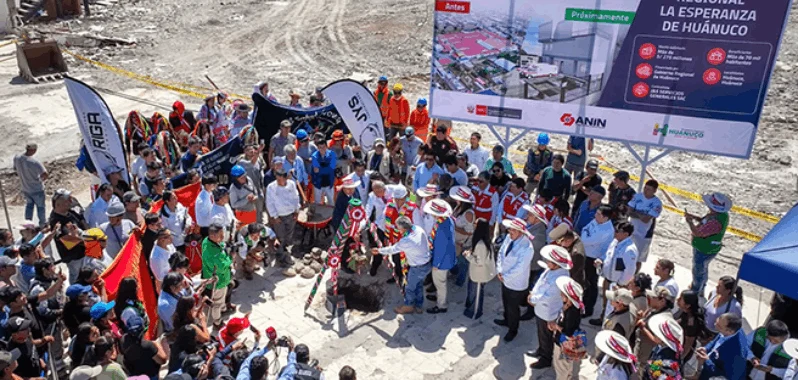
- Official Launch: In July 2026, the formal launch ceremony took place, attended by Minister of the Interior José Mercedes Zapata Morante, ProInversión Executive Director Luis Del Carpio Castro, and General PNP Jorge Villacorta Ruíz, marking the transition from conceptualization to the promotion stage.
- Current Phase: The project has now entered the promotion phase, where potential private sector partners are invited to analyze the technical and financial requirements of the contract.
Supporting Data and Facility Specifications
The scale of this project reflects the magnitude of the needs of the Peruvian police force. The Luis N. Sáenz Hospital is not merely a clinic; it is a critical piece of national infrastructure.
| Specification | Details |
|---|---|
| Category | III-1 (High Complexity) |
| Total Area | Over 48,000 square meters |
| Structure | 6 floors, 4 basements |
| Key Assets | Helipad, ICU, 5 Operating Rooms |
| Target Population | 700,000+ (Active, Retired, Families) |
The integration of these services into a single, cohesive management contract is expected to minimize downtime for critical medical equipment and ensure that the facility’s structural lifespan is maximized through preventative rather than reactive maintenance.
Official Perspectives: A Unified Vision
During the launch ceremony, key stakeholders emphasized that this move is about professionalizing the "behind-the-scenes" aspects of patient care to allow medical staff to focus exclusively on their mission: saving lives.
Luis Del Carpio Castro, Executive Director of ProInversión, highlighted the agency’s commitment:

"For ProInversión, it is an honor to work alongside the Peruvian National Police on a project that will ensure this hospital operates under the highest standards at all times. This model has already demonstrated clear, measurable results in other hospitals across the country. Today, we are putting that successful experience at the service of the police family."
Minister of the Interior, José Mercedes Zapata Morante, underscored that the project is a vital component of the government’s broader strategy to dignify the lives of those who protect the nation. By optimizing the hospital’s operational efficiency, the government ensures that police personnel receive the timely, high-quality care they deserve, reinforcing the morale of the entire institution.
Strategic Implications: Why This Matters
The shift toward a PPP model for the Luis N. Sáenz Hospital has profound implications for the Peruvian public health sector.
1. Shift in Risk Management
By shifting the burden of maintenance and non-clinical logistics to the private sector, the PNP medical corps can mitigate risks associated with equipment failure. In a hospital setting, the failure of a sterilization unit or an air conditioning system in a surgical suite can be catastrophic. The PPP contract will include strict Key Performance Indicators (KPIs) that penalize service interruptions, forcing the operator to maintain top-tier reliability.
2. Standardization of Care
The inclusion of "Green Coat" services—such as food and biosecurity—is critical. Patient outcomes are often tied to hospital-acquired infections and nutritional support. A private operator specialized in healthcare logistics can introduce industrialized, standardized processes that are often difficult for public institutions to manage due to procurement hurdles and administrative bottlenecks.

3. Sustainability and Fiscal Responsibility
PPP models are designed to be "asset-light" for the government regarding daily maintenance. While the state invests in the initial project, the long-term cost is stabilized through predictable, performance-based payments to the private partner. This prevents the "degradation cycle" where public buildings fall into disrepair due to lack of budget for maintenance, ultimately costing the taxpayer more in emergency repairs later on.
Looking Ahead: The Future of Police Healthcare
As the promotion phase progresses, the eyes of the construction and healthcare management industries are fixed on the tender process. The success of this project will likely serve as a blueprint for other state-run hospital systems in Peru.
The integration of private-sector efficiency into the public health sphere is a trend that is transforming Latin American healthcare. By leveraging the expertise of companies specialized in facility management, the Peruvian government is signaling that it is ready to move beyond traditional, often inefficient, management models.
For the 700,000 members of the police family, this means that their primary point of medical support will be better equipped, cleaner, and more reliable. It is an investment not only in bricks, mortar, and machinery but in the human capital of the nation’s security forces. As the project moves toward implementation, the collaborative effort between the Ministry of the Interior and ProInversión serves as a testament to the power of public-private synergy in creating a more resilient and responsive national health infrastructure.
The transformation of the Luis N. Sáenz Hospital is more than a modernization project—it is a commitment to ensuring that those who defend the peace of Peru are supported by a health system that is as robust, disciplined, and efficient as the police force itself.