Executive Summary
The regional government of Apurímac, Peru, has reached a pivotal stage in the construction of the Strategic Health Center of Santa María de Chicmo, located in the province of Andahuaylas. With a capital investment exceeding S/ 45 million (approximately $12 million USD), this infrastructure project represents a significant milestone in the regional administration’s commitment to decentralizing high-quality medical services. The project is designed to bridge the historical gap in healthcare access for rural and high-altitude populations, providing a modern facility equipped with the latest medical technology.
1. Main Facts: A Commitment to Public Health
The construction of the Santa María de Chicmo Health Center is not merely a civil engineering project; it is a vital social investment. The facility is being built to meet the escalating demands of a growing population that, until now, has faced significant hurdles in accessing specialized medical care.
- Project Name: Strategic Health Center of Santa María de Chicmo.
- Location: Andahuaylas Province, Apurímac Region, Peru.
- Budget: Over S/ 45 million.
- Goal: To provide fully equipped, modernized medical infrastructure to local residents and neighboring rural communities.
- Key Stakeholders: Regional Government of Apurímac (GORE Apurímac), local municipal authorities, and regional health directorates.
The facility is slated to be delivered as a "turnkey" project, meaning it will be fully operational and furnished upon completion, ensuring that the transition from construction to patient care is seamless. By incorporating modern design standards, the center will facilitate better patient flow, infection control, and administrative efficiency.
2. Chronology of the Project: From Planning to Execution
The path to this facility’s completion has been marked by persistent advocacy from local leaders and a concerted effort by the current regional administration to prioritize health infrastructure.

- Phase I: Needs Assessment and Planning (2022-2023): The project originated from the urgent need to address the chronic shortage of medical resources in the Andahuaylas region. Community leaders and health sector stakeholders identified the lack of adequate primary care facilities as a primary cause of high morbidity rates in the area.
- Phase II: Funding and Approval (Early 2024): With the regional government securing the necessary budget of S/ 45 million, the project moved from the conceptual stage to the tendering process. Financial feasibility was established based on regional development goals and national health standards.
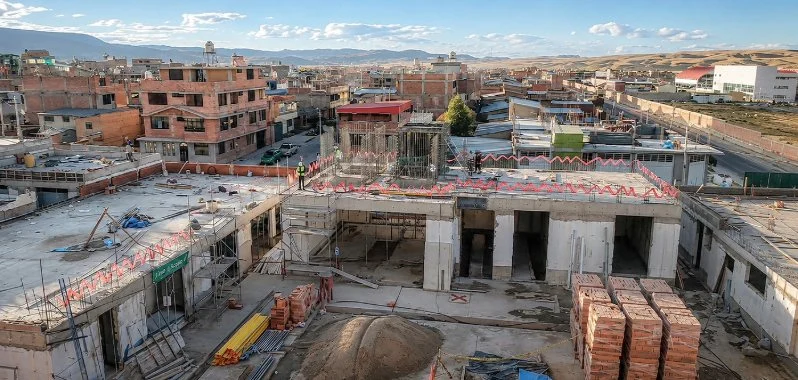
- Phase III: Groundbreaking and Initial Construction (Mid-2024): Physical work began with site preparation and structural foundations. The construction team faced unique logistical challenges inherent to the geography of the Andes, including material transport and altitude-specific construction requirements.
- Phase IV: Current Inspection and Finishing (2026): Recent site visits by Governor Percy Godoy Medina and his technical team have confirmed that the facility is entering its final stages. Inspections are currently focused on structural integrity, installation of electrical/sanitary systems, and ensuring compliance with the planned architectural layout.
3. Supporting Data: Closing the Healthcare Gap
The necessity of the Santa María de Chicmo Health Center is supported by alarming data regarding health infrastructure in the Apurímac region. Before this initiative, many residents had to travel several hours to reach the nearest hospital capable of handling complex emergency cases or routine specialized check-ups.
The Impact of Investment
The S/ 45 million allocation is categorized into three main investment areas:
- Civil Infrastructure (Approx. 65%): Construction of specialized wards, maternity centers, diagnostic labs, and outpatient clinics.
- Medical Equipment (Approx. 25%): Acquisition of advanced diagnostic imaging, emergency response tools, and laboratory hardware.
- Human Resources and Training (Approx. 10%): Preparation for the recruitment and specialized training of medical staff to operate the new equipment.
By centralizing these services, the government aims to reduce the "travel burden" on families. In rural communities, distance is the primary barrier to preventative care; this facility aims to make primary and secondary care accessible within the district boundaries.
4. Official Responses and Stakeholder Perspectives
During his recent inspection, Governor Percy Godoy Medina emphasized that the project is a testament to the regional government’s resolve to leave behind a legacy of "health and dignity."

"We are not just building walls," Governor Godoy stated. "We are constructing a system that protects the lives of our families in Santa María de Chicmo. The health of our citizens is the foundation upon which all other regional progress is built."
Local municipal authorities have also voiced their support, noting that the health center will act as an economic catalyst. Beyond the immediate health benefits, the facility will provide stable employment for local health professionals and administrative staff, injecting resources back into the local economy. The technical team from GORE Apurímac remains on-site, conducting rigorous quality control checks to ensure that the building meets the seismic safety standards required for the Andean region.
5. Implications: A New Era for Regional Healthcare
The completion of this center carries profound implications for the social and economic fabric of the Andahuaylas province.
Improving Health Indicators
With the inclusion of specialized areas, the center is expected to see a significant drop in maternal mortality and a rise in vaccination rates and chronic disease management. By providing a "Strategic" facility, the center acts as a hub for smaller, satellite medical posts in the surrounding mountains, creating a tiered network of care.

A Model for Future Projects
The success of the Santa María de Chicmo model is being watched closely by other regional governments in Peru. If the project finishes on time and within budget, it will serve as a blueprint for how to handle large-scale social infrastructure in mountainous, historically underserved areas. It highlights the importance of the "fully equipped" delivery method, which prevents the common pitfall of new hospitals standing empty for months or years due to a lack of specialized equipment.
Challenges Ahead
Despite the optimism, the project faces ongoing challenges. The regional government must now ensure that there is a sustainable supply chain for medical consumables, pharmaceuticals, and electricity. Furthermore, the retention of qualified medical personnel in rural areas remains a national challenge. The regional administration has hinted at incentive packages for medical professionals willing to serve in the newly modernized center, which could be a decisive factor in its long-term success.
Conclusion
The Strategic Health Center of Santa María de Chicmo stands as a beacon of progress for the Apurímac region. By integrating substantial financial investment with a focus on modern, accessible infrastructure, the regional government is taking a definitive step toward closing the healthcare gap. As the construction phase nears its conclusion, the focus will naturally shift to the operational launch, which promises to fundamentally alter the medical landscape for the thousands of families residing in this vital Andean district.
This project is a clear indication that, with political will and efficient project management, the challenges of geography and history can be overcome in favor of public well-being. The residents of Santa María de Chicmo are set to inherit not just a building, but a vital resource that will serve their community for generations to come.