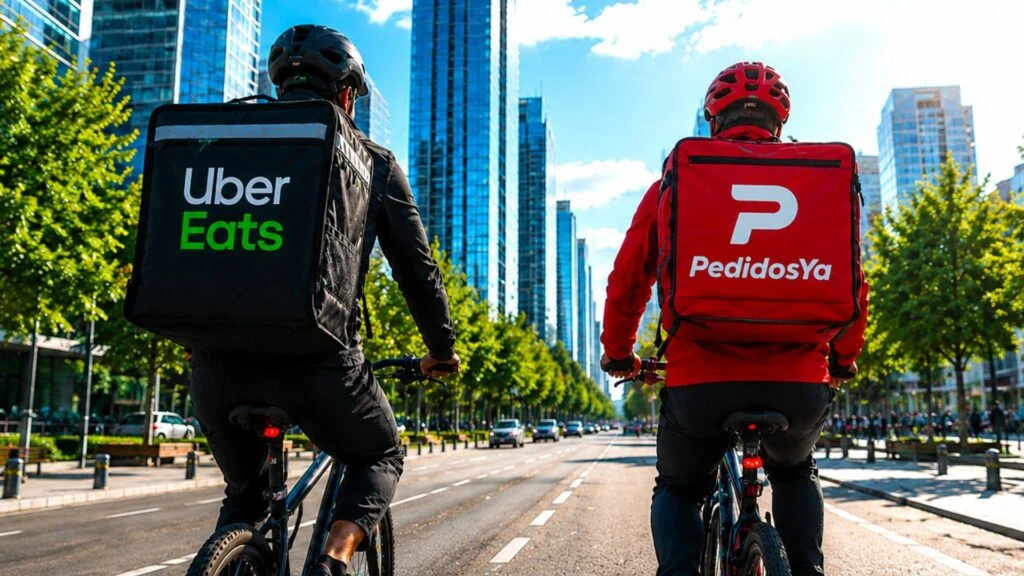
In a move that promises to redraw the global landscape of the "last-mile" delivery and mobility sectors, American technology giant Uber has launched a formal bid to acquire the German multinational Delivery Hero. This monumental transaction, which stands as one of the largest corporate acquisitions in the history of the tech industry, is poised to create a singular, dominant entity in the global on-demand services market.
With the unanimous backing of Delivery Hero’s board of directors, the deal represents a calculated expansion for Uber, aimed at consolidating its market share and creating a powerhouse capable of dominating 99 international markets. While the deal remains subject to rigorous regulatory scrutiny across various jurisdictions, the initial reception from major stakeholders suggests a strong momentum toward completion.
Main Facts of the Transaction
The financial architecture of the acquisition is as ambitious as its scale. Uber has submitted an offer of 41.5 euros per share for Delivery Hero, valuing the German firm at approximately US$14.8 billion. However, due to Uber’s pre-existing 25% stake in the company—complemented by additional financial instruments equivalent to another 12%—the net cash outlay for the American company is expected to hover around US$13.7 billion.
The acquisition is structured as a public takeover offer. For the deal to move forward, it requires an acceptance threshold of over 50% of Delivery Hero’s capital. To that end, Prosus, a major investor controlling nearly 17% of Delivery Hero, has already provided an irrevocable commitment to tender its shares, providing a significant tailwind for the acquisition’s success.
A Chronology of Strategic Alignment
The road to this historic merger was paved over several months of aggressive positioning. Uber’s strategy involved a dual approach: building a significant equity position while simultaneously negotiating with institutional partners to manage regulatory concerns regarding market overlap.
- Early 2024: Uber aggressively increases its stake in Delivery Hero, ultimately becoming its largest shareholder.
- Mid-2024: Private negotiations commence between the leadership teams of Uber and Delivery Hero, focusing on the potential for a full integration of assets.
- Strategic Carve-out: Recognizing that antitrust regulators in Europe and South America might block a total merger due to market dominance, Uber and Delivery Hero negotiate a parallel sale of operations in 14 countries to SSW Partners.
- Present Day: The official offer is made public, accompanied by the recommendation of Delivery Hero’s board and the commitment from key shareholders like Prosus.
Supporting Data and Market Impact
Should the deal receive the necessary regulatory "green light," the combined entity will be unparalleled in its scope. Combined, the two companies would have operated in 99 distinct markets, with projections indicating that the newly integrated firm would have managed gross bookings totaling US$236 billion throughout 2025.
This merger is not merely about scale; it is about efficiency. By integrating their logistics networks, technology stacks, and customer data, Uber and Delivery Hero aim to optimize delivery times, reduce operational overhead, and create a seamless interface for millions of users worldwide. The sheer volume of transactions managed by the combined entity would provide a massive competitive moat, making it increasingly difficult for smaller, regional delivery startups to compete on pricing or service range.
The SSW Partners Carve-out: Navigating Regulatory Hurdles
A critical component of this transaction is the agreement to divest Delivery Hero’s operations in 14 specific nations to the New York-based investment firm SSW Partners. Valued at approximately US$1.6 billion, this carve-out is a strategic maneuver designed to satisfy competition authorities.
The countries affected by this divestment include Austria, Chile, Cyprus, the Czech Republic, Ecuador, Greece, Moldavia, Norway, Poland, Portugal, Romania, Spain, Sweden, and Turkey. In these regions, the overlap between Uber Eats and Delivery Hero brands was deemed too significant, raising the risk of antitrust intervention. By transferring these assets to SSW Partners, which intends to seek further strategic partners for these operations, Uber ensures that the core of its global acquisition avoids being mired in multi-year competition investigations. This portion of the deal is expected to be finalized during the second half of 2027.
Implications for Latin America and the Future of PedidosYa
For users in Latin America, the implications of this merger are profound. PedidosYa, one of the most prominent delivery platforms in the region and a subsidiary of Delivery Hero, will be integrated into the Uber ecosystem. With a footprint that spans Argentina, Bolivia, Costa Rica, the Dominican Republic, El Salvador, Guatemala, Honduras, Nicaragua, Panama, Paraguay, Uruguay, and Peru, this move essentially places the vast majority of the region’s last-mile delivery infrastructure under the Uber umbrella.
The transition suggests a shift toward a more centralized technological experience. For the consumer, this could mean integrated subscription services (like Uber One), more efficient delivery times, and a wider variety of restaurant and retail partners. However, consumer advocacy groups are already signaling that the reduction in competition in the region warrants close monitoring to ensure that service fees and driver commissions remain fair.
Official Responses and Commitments
To soothe concerns regarding the loss of European corporate identity and job stability, Uber has made several binding commitments to the German authorities and the public.
The Berlin Commitment
Uber has pledged to maintain Delivery Hero’s corporate headquarters in Berlin. Furthermore, the German firm will continue to be managed independently by its current executive team under the supervision of its existing supervisory board. This "hands-off" approach is intended to preserve the unique company culture that allowed Delivery Hero to grow rapidly in the European market.
Economic Investment in Germany
In addition to the operational structure, Uber has committed to investing 2 billion euros into the German economy over the coming years. These funds are earmarked for:
- Workforce Development: Scaling up the existing employee base and improving training programs.
- Autonomous Technology: Investing in the deployment of autonomous delivery vehicles, a sector where Germany is becoming an increasingly important testing ground.
- Automotive Partnerships: Developing new collaborative projects with the German automotive industry to integrate fleet management technology.
Furthermore, to ensure a smooth transition and maintain market stability, Uber has agreed to a three-year moratorium on any drastic changes to profit-transfer agreements or corporate control structures that might negatively impact the local German ecosystem.
Future Outlook: A New Paradigm for Global Logistics
The acquisition of Delivery Hero is a definitive signal that the "consolidation phase" of the tech-delivery era has arrived. After years of rapid, venture-capital-fueled growth characterized by intense competition and low-margin expansion, the market is shifting toward profitability and efficiency.
By absorbing Delivery Hero, Uber is not just buying a rival; it is buying a sophisticated logistics network that spans continents. The integration will test Uber’s ability to manage diverse regulatory environments, from the strict labor laws of the European Union to the rapidly evolving digital economies of Latin America.
As the regulatory bodies in Washington, Brussels, and beyond begin their reviews, the tech sector will be watching closely. If successful, this deal will establish a new benchmark for global logistics platforms, demonstrating that the future of delivery lies not in the fragmentation of services, but in the total, synchronized integration of human mobility and the commerce of "last-mile" goods. The path ahead is complex, but the destination—a singular, globalized delivery giant—is now clearly in sight.