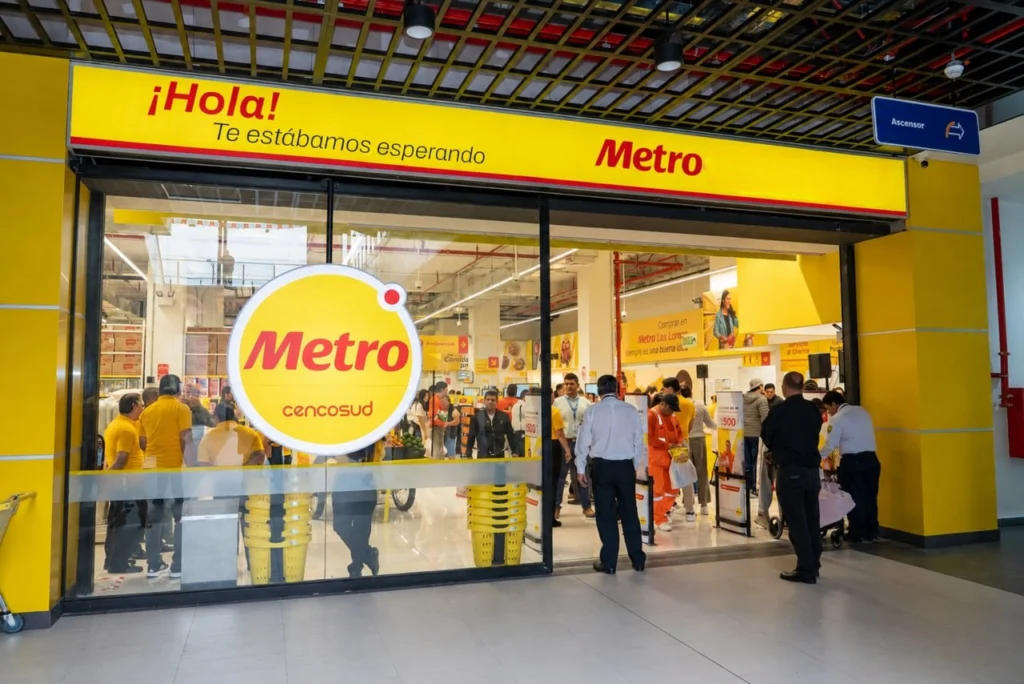
The first quarter of 2026 has served as a litmus test for the resilience of Chile’s retail giants. Amidst a complex macroeconomic backdrop characterized by stubborn unemployment, fluctuating inflationary pressures, and global geopolitical instability, the five pillars of the Chilean stock market (IPSA)—Falabella, Cencosud, Ripley, SMU, and Cencosud Shopping—have delivered a set of financial results that highlight a deepening chasm between operational efficiency and market volatility.
While the broader IPSA index reported a robust 8.35% year-on-year growth, netting US$3.882 billion in total profits, this headline figure obscures a fragmented reality. For the retail sector, the quarter was not a monolith of success or failure, but rather a study in contrasts: some firms successfully navigated the headwinds of reduced consumer purchasing power, while others struggled to maintain margins in an increasingly digitized and automated environment.
The Macroeconomic Backdrop: Winds of Change
The Chilean economy entered 2026 facing a formidable trifecta of challenges. An unemployment rate hovering at 8.9% has severely constrained household disposable income, directly impacting brick-and-mortar retail performance. Furthermore, while local inflation has shown signs of containment, the lingering effects of global supply chain disruptions and volatile oil prices have inflated logistics costs, pressuring the bottom lines of retailers that rely heavily on international imports.
Simultaneously, the industry is undergoing a "Great Digital Shift." Companies that invested heavily in omni-channel capabilities during the post-pandemic years are now reaping the rewards of efficiency, while those lagging in structural transformation are finding it increasingly difficult to compete on price and convenience.
Sector Performance: A Chronology of Q1 2026
Falabella: The Turnaround Success Story
Falabella emerged as the undisputed standout of the quarter. Reporting a net profit of US$253 million—a striking 22% increase compared to the same period in 2025—the company’s strategy of aggressive cost-cutting and portfolio optimization appears to be paying dividends.
- Financial Health: Consolidated revenues reached US$3.601 billion, up 7%, while EBITDA surged by 15% to US$584 million. Notably, the EBITDA margin expanded from 15.1% to 16.2%, signaling greater operational discipline.
- Deleveraging: Perhaps the most significant development was the reduction of the net debt-to-EBITDA ratio from 2.5x to 1.2x. This deleveraging effort earned the company a credit rating upgrade from BB+ to BBB- with a stable outlook, a rare feat in the current economic climate.
- Digital Dominance: Falabella’s online channel generated US$805 million in sales, a 21% jump, proving that its massive investment in digital platforms and logistics is effectively capturing market share.
Cencosud: Stability Masked by Currency Volatility
In contrast, Cencosud faced a more turbulent quarter. While the company maintained top-line stability with revenues of US$4.565 million (a marginal 0.23% increase), its bottom line suffered a 30% contraction in profits.
The primary culprit was the macroeconomic environment in Argentina, where currency devaluation severely impacted results. Furthermore, an 11.4% decline in adjusted EBITDA highlighted the pressure on margins across its department store and home improvement divisions. Despite these setbacks, the company’s digital transformation remains a bright spot, with sustained growth in online channels across Chile, Peru, and Colombia, suggesting that while the macro environment is difficult, the core business strategy remains intact.
Ripley: The Dichotomy of Banking and Retail
Ripley Corp. provided a classic example of a business bifurcated by its operational segments. With consolidated revenues rising by 2.3% to US$558 million, the company nonetheless suffered a 36.3% plunge in profits, the steepest decline among the major department stores.
- The Banking Buffer: The financial services arm proved to be a vital lifeline, with a 10.1% increase in revenue driven by credit expansion in Chile and Peru.
- The Retail Drag: The retail segment faced significant headwinds. A combination of weak consumer demand and a regulatory change regarding phone prefixes in Chile temporarily hampered collection efforts, leading to a rise in the non-performing loan ratio (mora > 90 days) from 3.5% to 3.9%.
SMU: Facing the Downturn
SMU, the supermarket operator, experienced the most significant decline of the quarter. While full data is still being integrated, early indicators suggest that the combination of high operational costs and a shift in consumer behavior toward discount-seeking has left the firm in a precarious position compared to its diversified peers.
The Mall Sector: An Oasis of Profitability
While department stores and general retailers grappled with the volatility of consumer demand, the shopping center sector—led by Cencosud Shopping, Parque Arauco, and Mallplaza—acted as the great exception to the market’s malaise.
All three entities reported double-digit profit growth. The "mall model" in Chile has shifted from mere retail space to "destination hubs," boasting high occupancy rates and consistent foot traffic. Cencosud Shopping led the charge with US$100.7 million in earnings. Investors have increasingly viewed these assets as defensive, providing a stable stream of rental income that is less sensitive to the immediate shocks affecting the retail inventory-heavy business model.
Implications: The Structural Shift in Employment and Tech
The data from Q1 2026 suggests that the Chilean retail sector is in the midst of a permanent, structural reconfiguration. The most jarring statistic to emerge from the quarter is the elimination of 6,155 jobs across the sector. This is not merely a reaction to a bad quarter; it is the physical manifestation of accelerated automation and a pivot toward leaner operational models.
Efficiency as the New Mandate
Companies that are failing to automate their logistics and inventory management are seeing their margins eroded by inflation and labor costs. The "retail survivor" of 2026 is one that treats labor as a premium input, shifting headcount from administrative and transactional roles toward specialized customer experience and high-tech management positions.
The Outlook for the Remainder of 2026
As the year progresses, analysts are tempering their expectations. The primary risks remain:
- Inflationary Pressure: While it may temporarily inflate nominal sales, it will continue to erode the real purchasing power of the Chilean consumer.
- Geopolitical Costs: Higher oil prices are effectively a "tax" on retail, increasing the cost of goods sold (COGS) through higher logistics and freight expenses.
- Credit Risk: With unemployment stagnant, the financial services arms of retailers—like those of Ripley and Falabella—will likely face increased provisioning requirements in the coming quarters.
Official Perspective and Market Sentiment
Market analysts, as reported by Supermercado al Día, have characterized the quarter as "a period of intense calibration." The consensus is that the market is currently rewarding companies that prioritize balance sheet health over aggressive expansion.
The successful deleveraging of Falabella has set a new benchmark for the sector, pressuring competitors to follow suit. Meanwhile, the strength of the mall operators suggests that real estate remains a critical hedge against the volatility of consumer goods.
As the retail giants look toward the second half of 2026, the focus will undoubtedly remain on "operational excellence." The era of growth at any cost has ended; in its place, a new era of digital-first, lean-operations, and disciplined financial management has taken root. For the Chilean consumer, this means a more efficient, albeit perhaps more automated, shopping experience, while for investors, it means a more discerning approach to which retail stocks can truly weather the storm of the current economic cycle.
The industry’s path forward is clear: integrate the digital, optimize the physical, and protect the margin—or risk being left behind in a market that no longer tolerates inefficiency.