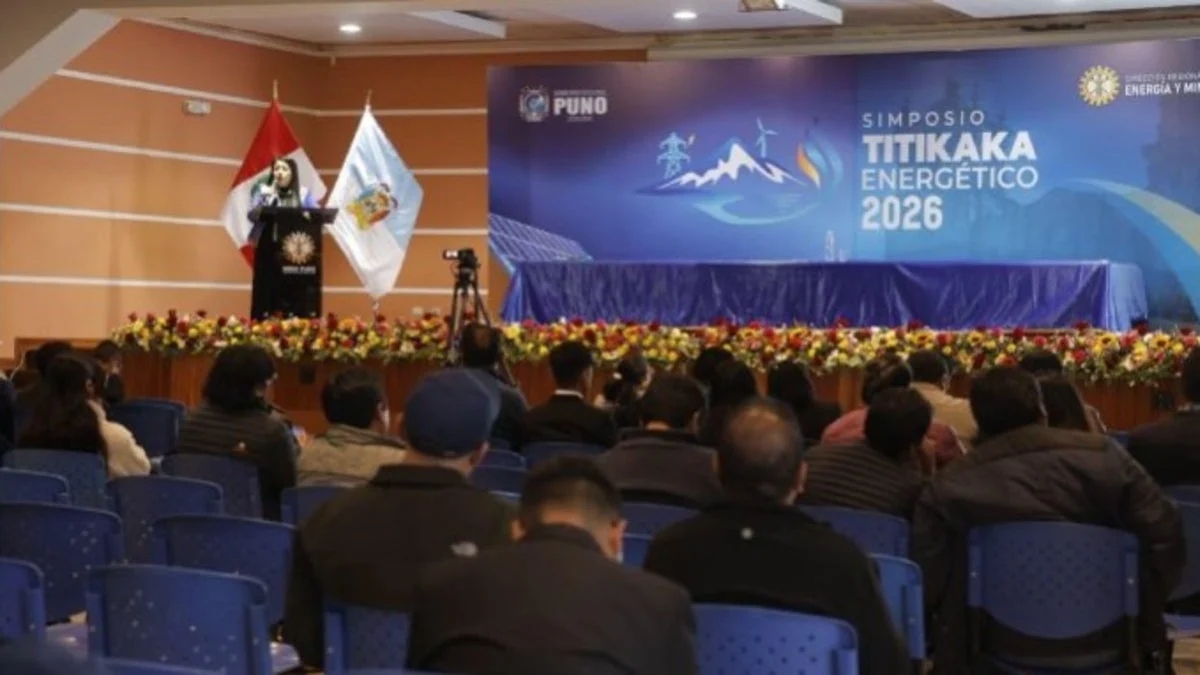
In a decisive move to reshape the national energy landscape, the Private Investment Promotion Agency (ProInversión) has announced an ambitious roadmap to inject $2.9 billion into Peru’s natural gas sector between 2026 and 2027. The strategy, unveiled during the "Titikaka Energético 2026" symposium in Puno, seeks to bridge the energy divide by extending affordable, clean, and reliable natural gas to 11 regions, fundamentally altering the socioeconomic prospects of hundreds of thousands of Peruvian families.
By leveraging a sophisticated blend of Public-Private Partnerships (APPs) and the strategic use of addenda to existing concessions, the government aims to fast-track infrastructure development that has historically lagged in the southern and central highlands.
The Strategic Vision: A New Energy Paradigm
The core objective of ProInversión’s initiative is to transition from fragmented energy distribution to a robust, integrated national network. The $2.9 billion investment is not merely a capital infusion; it is a structural overhaul designed to enhance national energy security, reduce reliance on more expensive and polluting fuels, and catalyze industrial growth in regions previously sidelined by the lack of gas infrastructure.
According to agency representatives, the use of APPs will allow the state to bypass traditional budgetary constraints by incentivizing private capital to take the lead in construction and operational maintenance. Simultaneously, the signing of addenda to existing concessions serves as a tactical tool to expedite projects that are already in the pipeline, effectively "unlocking" potential that would otherwise remain dormant for years.
Chronology of the Roadmap: Milestones for 2026–2027
The implementation schedule is aggressive, reflecting a sense of urgency within the Ministry of Energy and Mines (MINEM) and ProInversión. The timeline is structured around several critical milestones:
- 2025 (Foundation Phase): ProInversión formalized a Collaboration and Assignment Agreement with the MINEM. This pivotal act designated ProInversión as the primary "Formulating Unit" and the technical arm responsible for drafting the necessary studies, technical reports, and bidding documents for major infrastructure projects, including the long-awaited processing plant in La Convención (Cusco) and redundant transport pipelines.
- Q2 2026 (The Adenda Cálidda Milestone): This marks the activation of a $643 million investment aimed at gas distribution across the regions of Apurímac, Ayacucho, Cusco, Huancavelica, Junín, Puno, and Ucayali. The scale of this project is significant, requiring the construction of 2,510 kilometers of distribution networks, two "city gate" facilities, and nine satellite regasification plants.
- 2027 (Southern Expansion): The government anticipates the adjudication of the Masificación del Uso de Gas Natural (Natural Gas Massification) project for Arequipa, Moquegua, and Tacna. With an estimated investment of $266 million, this phase will focus on the end-to-end supply chain, from the transport of Liquefied Natural Gas (LNG) to the final mile of household and commercial connections.
Supporting Data: Infrastructure and Reach
The technical ambition behind these projects is underscored by the scale of the physical infrastructure planned. The commitment to build over 2,500 kilometers of distribution pipelines in the central and southern regions represents one of the largest public-private utility expansions in recent Peruvian history.
Breakdown of Projected Impact
- Direct Beneficiaries: The Adenda Cálidda project alone is projected to provide gas connections to approximately 150,914 households.
- Technological Integration: The deployment of satellite regasification plants serves as a bridge for regions where pipeline connectivity is geographically challenging. By using LNG, the government can deliver energy to isolated urban centers, effectively bypassing the limitations of terrain that have historically hindered the development of the "Southern Gas Pipeline" concept.
- Systemic Security: The project portfolio includes the development of liquid storage, redundant pipelines, and small-scale liquefaction plants in Cusco. This ensures that in the event of a supply disruption in one segment, the national grid maintains a buffer, protecting the energy supply for both industrial and domestic users.
Official Stance and Regional Integration
During the "Titikaka Energético 2026" event, Puno was highlighted as a focal point for this new energy era. Once viewed as an energy-starved region, Puno is now being positioned as a potential "gas hub" for the south. The government’s narrative emphasizes that this is not a top-down mandate, but a collaborative effort that respects local communities and prioritizes environmental sustainability.
"The integration of Puno into the national gas grid is a matter of social justice," noted a representative from ProInversión. "By utilizing modern technology and transparent private sector participation, we are ensuring that the resource extracted from our own soil translates into a lower cost of living for our citizens."
The collaboration between ProInversión and the MINEM represents a shift toward a more proactive, centralized oversight of energy projects. By taking control of the technical evaluation phase, ProInversión aims to minimize the administrative friction that has previously led to project delays and cost overruns.
Implications for the Peruvian Economy
The macroeconomic implications of this $2.9 billion investment are far-reaching.
1. Reducing the Energy Cost Burden
For households, natural gas represents a significantly cheaper alternative to Liquefied Petroleum Gas (LPG) canisters, which are subject to high price volatility in global markets. By stabilizing household energy costs, the government expects a direct increase in the disposable income of lower-middle-class families in the beneficiary regions.
2. Strengthening Industrial Competitiveness
The availability of reliable, lower-cost natural gas is a primary requirement for the industrialization of the southern regions. Industries such as mining, textiles, and manufacturing, which currently rely on more expensive fuels, will see a dramatic reduction in operational costs. This, in turn, is expected to attract further foreign direct investment (FDI) to these regions, creating a virtuous cycle of economic growth.
3. The Shift in Petroperú’s Role
It is impossible to ignore the current climate surrounding Peru’s state-owned oil company, Petroperú. As ProInversión takes a more central role in energy infrastructure, the relationship between these entities has become increasingly scrutinized. Recent developments, such as ProInversión assuming control of crude oil purchasing as part of broader restructuring efforts, suggest that the state is moving toward a model where infrastructure projects are isolated from the operational and financial challenges currently facing Petroperú.
4. Environmental Considerations
The transition to natural gas is a cornerstone of Peru’s commitment to a cleaner energy matrix. While not a renewable source, natural gas produces significantly lower carbon emissions and particulate matter compared to the coal or heavy fuel oils currently powering many industrial processes in the regions. This project aligns with national goals to reduce the environmental footprint of the country’s energy consumption.
Challenges Ahead: Navigating the Path to 2027
Despite the optimism surrounding these announcements, the road ahead is not without obstacles. Historically, infrastructure projects in Peru have faced significant hurdles, including:
- Social Permissibility: Major energy projects require the support and trust of local communities. The government must ensure that the consultation process is inclusive and that the economic benefits are clearly visible to the local population.
- Political Stability: As the 2026-2027 period coincides with significant political transitions, maintaining the continuity of these policies will be essential. The reliance on APPs requires a stable legal and regulatory environment to maintain private sector confidence.
- Execution Capacity: Transitioning from the study phase to construction requires a high level of coordination between local, regional, and national authorities. ProInversión’s role as the OPIP (Organismo de Promoción de la Inversión Privada) will be tested as it coordinates these complex projects across multiple, geographically diverse regions.
Conclusion
The $2.9 billion investment program represents a bold attempt by the Peruvian state to modernize its energy infrastructure. By shifting the focus toward a more integrated, private-sector-driven distribution model, the government is betting that it can overcome the systemic inefficiencies that have limited gas access for decades.
If successfully implemented, this initiative will not only improve the quality of life for 150,000-plus families but will also create a more resilient, cost-effective, and competitive energy landscape for Peru. The milestones set for 2026 and 2027 will be the true test of this strategy, serving as a litmus test for the country’s ability to execute large-scale, transformative infrastructure projects in an increasingly complex economic environment. As the nation watches, the focus remains on whether these plans will translate into actual pipelines, or remain another chapter of unrealized energy potential.