By Infrastructure Correspondent
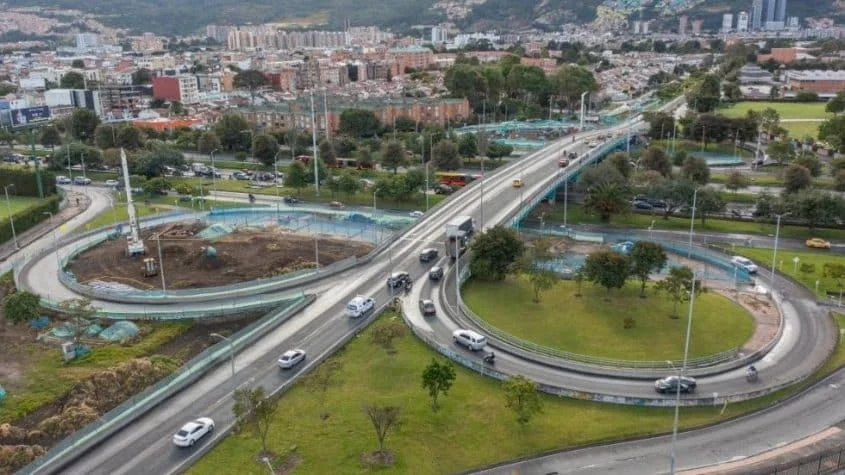
The skyline of northern Bogotá is undergoing a significant transformation as the construction of the Avenida Sirena bridge—a critical piece of infrastructure located at Calle 153—nears its final phase. After years of delays, administrative hurdles, and logistical challenges, the project has officially surpassed the 90% completion mark. This milestone signals a turning point for one of the city’s most congested corridors, offering a glimmer of hope to the thousands of commuters who navigate the bottlenecked transit zones of the capital daily.
According to current projections from the District, the bridge and its associated vehicle connectors are slated for partial opening in July 2026. While the primary structural work is nearing its zenith, the project remains a hive of activity as crews race to finalize the surrounding public spaces and secondary infrastructure, with a total project delivery expected by October 2026.
Main Facts: The Scope of the Avenida Sirena Project
The Avenida Sirena bridge is not merely a concrete structure; it is a vital artery designed to recalibrate the traffic flow of Bogotá’s northern sector. The project focuses on creating efficient linkages between the city’s eastern corridors and the heavily traveled Autopista Norte (North Highway) in the southbound direction.
As of late May 2026, the construction site serves as a testament to intensive engineering efforts. Recent weeks have seen the project reach critical technical benchmarks, including rigorous static load testing. Engineers deployed four heavy-duty dump trucks, each weighing over 30 tons, to test the structural integrity and load-bearing capacity of the bridge. This phase was essential to ensure the safety of future commuters and to satisfy the stringent building codes required for major urban overpasses.

Currently, a workforce of over 190 laborers is operating in shifts to complete the final stages of the project. Their tasks are multifaceted: they are simultaneously finalizing the asphalt paving, installing essential dry networks (telecommunications and power cabling), and completing the landscaping and pedestrian areas that will sit beneath and around the structure.
Chronology of the Project: From Stagnation to Acceleration
The history of the Avenida Sirena bridge is a classic case study in the complexities of large-scale urban infrastructure management in Latin America.
The Original Timeline
When the project was first conceived and tendered, the municipal authorities set an ambitious completion date of May 2023. At the time, the bridge was touted as the definitive solution to the gridlock at Calle 153. However, the initial phase of the project was marred by procurement delays, land acquisition issues, and technical disputes that effectively stalled progress for months.
The "11 Percent" Reality
The narrative of the project shifted dramatically when the current city administration took office. Upon inheriting the contract, officials were met with a sobering reality: despite years having passed since the groundbreaking, the project had only achieved an 11% completion rate. This revelation triggered a comprehensive audit of the project’s management and financial structure.
The Turnaround
Recognizing the economic and social cost of the delay, Mayor Carlos Fernando Galán took a proactive stance, designating the completion of the Avenida Sirena bridge as a top-tier priority for the city’s public works agenda. The administration re-negotiated terms with contractors, streamlined the approval processes for material procurement, and implemented a more aggressive construction schedule. The leap from 11% to 90% in the relatively short period since the current administration took the helm highlights a focused effort to rectify past lapses and restore public confidence in the city’s ability to execute major infrastructure projects.

Supporting Data: Engineering Precision and Logistics
The complexity of building in a dense urban environment like Bogotá cannot be overstated. To reach the current 90% milestone, the project has required meticulous coordination.
- Load Testing: The use of 120+ tons of cumulative vehicle weight during testing was a prerequisite for final certification.
- Workforce: A dedicated team of 190 personnel, ranging from civil engineers and structural steel workers to heavy machinery operators and traffic management experts, has been on-site daily.
- Infrastructure Components: Beyond the main span, the project involves the integration of drainage systems, modern LED street lighting, and the conversion of surrounding zones into accessible, secure pedestrian walkways.
- Connectivity: The primary goal is the creation of "connectors" that allow vehicles coming from the east to merge seamlessly into the southbound Autopista Norte, effectively bypassing the chaotic intersections that currently force vehicles into extended idling times.
Official Responses: Accountability and Future Outlook
Mayor Carlos Fernando Galán has remained vocal about the importance of finishing the project, framing it as part of a larger, systemic effort to "unblock" Bogotá. In recent statements, the Mayor emphasized that the administration’s focus was not on pointing fingers at previous management, but on providing tangible results for citizens.
"Our goal is to give the people of Bogotá the infrastructure they were promised," the Mayor noted during a site inspection last month. "The work on the Avenida Sirena bridge demonstrates that when you prioritize planning and provide the necessary resources, even the most delayed projects can be brought back to life."
District officials have stressed that the July 2026 opening of the bridge is not the end of the project, but rather a functional milestone. By keeping the construction of public spaces, such as parks and pedestrian plazas under the bridge, separate from the vehicular opening, the city aims to give drivers immediate relief while contractors finalize the aesthetic and social components of the project by October.
Implications: A New Era for Northern Bogotá
The impact of the Avenida Sirena bridge extends far beyond simple traffic statistics. The implications are deep and multifaceted:

1. Mobility and Economic Efficiency
By reducing travel times for commuters, the bridge will indirectly boost the productivity of the city. Thousands of man-hours currently lost to traffic congestion on the northern corridor will be reclaimed, allowing for a more fluid movement of goods and services.
2. Safety and Urban Security
One of the core promises of the project is the enhancement of road safety. The design incorporates modern signaling, proper lane demarcations, and better illumination, which significantly lowers the risk of traffic accidents. Furthermore, the revitalization of the space beneath the bridge—which is often a neglected area in such projects—aims to improve urban security through better lighting and pedestrian-friendly design, transforming a potential "dead zone" into a functional urban space.
3. Quality of Life
For the residents of the nearby neighborhoods, the bridge represents the end of a long period of construction-related noise, dust, and visual pollution. The commitment to finish the public space components by October 2026 suggests that the city is thinking about the long-term livability of the area, ensuring that the bridge is not just an eyesore, but a well-integrated piece of the urban fabric.
4. Setting a Precedent
The successful rescue of this project sends a strong signal to the construction industry and the public alike. It proves that municipal administrations can overcome the "sunk cost fallacy" and effectively complete stalled works if they are willing to reorganize priorities and enforce strict project management standards.
As July 2026 approaches, the eyes of the city are fixed on the Calle 153 corridor. The Avenida Sirena bridge is poised to stand as a symbol of progress—a tangible victory for a city that is constantly striving to bridge the gap between its infrastructure demands and the realities of modern urban growth. With the finish line now in sight, the focus shifts to the final, critical months of construction that will ensure this essential project is delivered with the quality and safety that the citizens of Bogotá deserve.