Executive Summary: A Breach of Public Trust
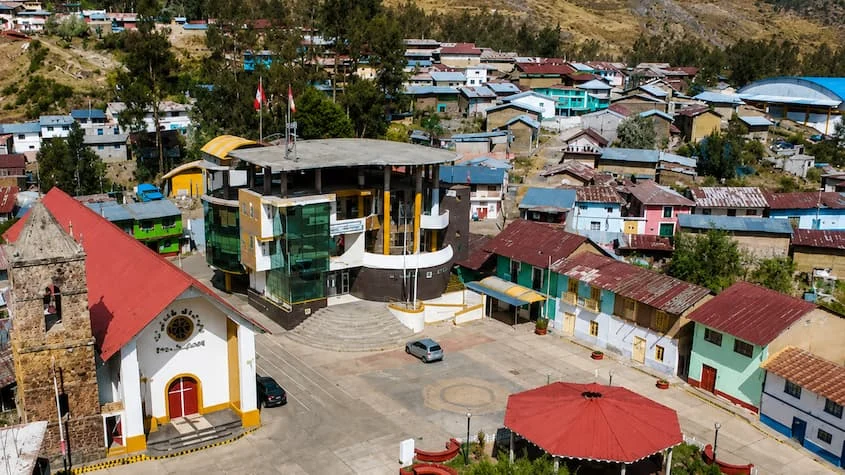
In a staggering display of administrative negligence and potential corruption, the Office of the Comptroller General of the Republic (Contraloría General de la República) has uncovered serious irregularities within a major road infrastructure project in the Ticlacayán district of Pasco. The project, titled "Improvement and Expansion of Urban Mobility Services in the Capital of the Ticlacayán District," was intended to modernize local transport routes and improve the quality of life for Andean residents.
Instead, the project—valued at over S/ 8.3 million—has become a textbook case of public procurement failure. According to the recently published Specific Control Report No. 010-2026-2-0449-SCE, the municipal selection committee allegedly bypassed transparent bidding protocols, rejecting lower-cost, qualified bidders in favor of a higher-priced consortium that failed to meet essential technical requirements. This decision has resulted in an estimated financial loss to the Peruvian state of more than S/ 820,000.
Chronology of the Procurement Failure
The timeline of this project, spanning from May to October 2024, reveals a pattern of questionable decision-making that suggests a deliberate effort to favor specific interests over public welfare.
- May 2024: The municipal administration initiates the bidding process for the urban mobility infrastructure project, setting an initial budget expectation of over S/ 8.3 million. The announcement attracts multiple bidders, several of whom possess the necessary certifications and competitive pricing.
- June–August 2024: The municipal selection committee begins the evaluation of proposals. During this phase, multiple qualified bidders submit offers significantly lower than the winning bid, proposing to execute the work for approximately S/ 7,509,594.
- September 2024: The committee issues a series of disqualifications, citing minor technical errors in the documentation of the lower-cost bidders. Evidence suggests these "errors" were easily rectifiable under current Peruvian procurement law, yet the committee opted for immediate disqualification.
- October 2024: The committee officially awards the "good pro" (contract) to a consortium with a significantly higher bid of S/ 8,330,000. The Contraloría begins its audit, noting that this specific consortium lacked the requisite experience defined in the project’s foundational bases.
Deep Dive: How the Procurement Was Manipulated
The Contraloría’s report is a scathing indictment of the local government’s selection process. The core of the issue lies in the interpretation of bidding rules. Under the Ley de Contrataciones del Estado (State Procurement Law), public entities are mandated to prioritize the most advantageous offer for the state, both in terms of quality and cost.

The Disqualification Fallacy
The committee argued that the lower-cost bidders failed to meet certain technical requirements. However, the audit found that these requirements were largely clerical in nature—"subsanable" (correctable) errors that should have allowed the bidders to remain in the competition. By refusing to allow these corrections, the committee effectively cleared the field, leaving only their preferred, more expensive candidate.
The Qualification Paradox
Even more alarming is the status of the winning consortium. According to the audit, this group did not possess the technical expertise or the track record required by the official bidding terms. This creates a dual failure: the municipality paid a premium price for the project (a markup of over S/ 820,000) while simultaneously compromising the quality of the work by hiring a firm that may lack the professional competency to execute it successfully.
Supporting Data and Financial Impact
The financial implications for the Ticlacayán district are severe. In a region where public funds are critically needed for development, the loss of nearly a million soles represents a significant drain on local resources.
| Item | Value (S/) |
|---|---|
| Initial Project Estimate | S/ 8,330,000 |
| Competitive Market Bids (Average) | S/ 7,509,594 |
| Direct Financial Loss/Overcharge | S/ 820,405 |
This loss is not merely an abstract number; it represents the potential loss of other critical public works—such as school repairs, healthcare facilities, or rural electrification—that could have been funded by the saved S/ 820,405.

Legal and Administrative Implications
The Contraloría has moved swiftly to address these findings, identifying clear evidence of criminal and administrative liability.
Accountability for Public Officials
The report identifies three former public servants within the Ticlacayán municipal government who were responsible for the oversight and selection process. These individuals now face:
- Administrative Sanctions: Internal investigations are being initiated to determine the extent of their professional misconduct, which could result in permanent disqualification from public service.
- Criminal Prosecution: The case has been formally referred to the Procuraduría Pública Especializada en Delitos de Corrupción (Public Prosecutor’s Office Specialized in Corruption Crimes). This office is now tasked with building a criminal case against the former officials, potentially leading to charges of collusion, abuse of authority, and embezzlement.
Broader Context: Infrastructure Challenges in Peru
This case in Ticlacayán is unfortunately part of a broader, systemic issue within Peruvian municipal government. As the country seeks to bridge its infrastructure gap, the decentralization of public funds has frequently outpaced the development of robust oversight mechanisms at the local level.
The Contraloría General has been increasingly active in its "Control Específico" (Specific Control) initiatives, attempting to curb the tide of corruption that plagues regional infrastructure. However, the Ticlacayán incident highlights a recurring vulnerability: the influence of the selection committee. When the gatekeepers of a public contract are incentivized to favor private interests, the entire mechanism of competitive bidding collapses.

The Path Forward: Reform and Oversight
For the residents of Ticlacayán, the immediate future of the road project remains in limbo. The legal battle against the former officials and the potential invalidation of the contract will likely cause significant delays in the physical construction of the road.
However, experts in public procurement argue that these disruptions are necessary to restore integrity. To prevent future incidents of this nature, the following reforms are being discussed by policy analysts:
- Digitization of Bidding: Further implementation of AI-driven tools that automatically detect "subsanable" errors, removing human discretion from the initial stages of qualification.
- Stricter Oversight of Selection Committees: Implementing mandatory, randomized audit triggers for any contract where the winning bid is significantly higher than the average of other qualified proposals.
- Increased Transparency: Real-time public access to the technical evaluations of all bidders, allowing civil society organizations to act as a secondary layer of oversight.
Conclusion: A Warning to Local Administrations
The scandal in Ticlacayán serves as a stark warning to other municipalities across Peru. The era of unchecked, opaque procurement processes is facing increased scrutiny from the central government. With the involvement of the Procuraduría Especializada en Delitos de Corrupción, the officials involved will soon find that their actions have real-world consequences that extend well beyond the walls of their municipal offices.
As the legal proceedings unfold, the people of Pasco await justice. The ultimate goal is not only to recover the S/ 820,405 lost to this scheme but to ensure that the urban mobility projects they were promised are built by competent, honest contractors who prioritize the needs of the community over the enrichment of a few. The Ticlacayán case will undoubtedly become a pivotal reference point in the ongoing fight against municipal corruption in the Peruvian highlands.