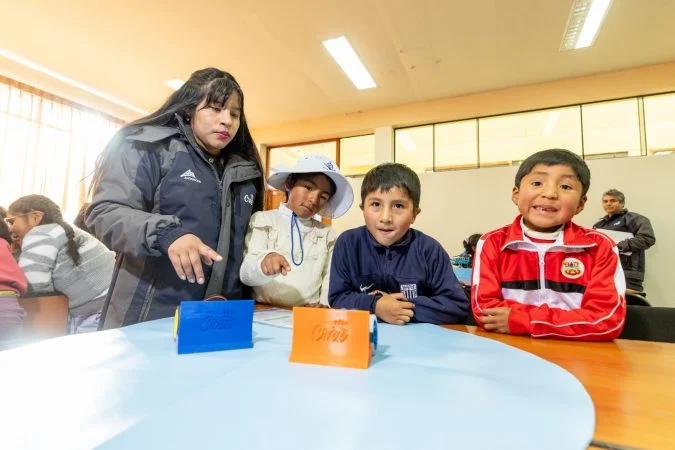
In the high-altitude province of Espinar, located in the Cusco region of Peru, a significant transformation is underway. Compañía Minera Antapaccay, one of the country’s leading copper producers, has moved beyond the traditional boundaries of corporate social responsibility. By establishing a robust, multi-tiered educational ecosystem, the company is actively reshaping the socioeconomic landscape of the region. During 2025 alone, this comprehensive strategy reached over 10,000 individuals—including students, professional educators, and local families—effectively bridging critical gaps in basic, technical, and higher education.
A Vision for Sustainable Growth: The Core Philosophy
The mining sector in Peru has long grappled with the challenge of creating long-term value for host communities. Antapaccay’s approach, however, treats education not as a peripheral philanthropic gesture but as a strategic pillar of sustainable development. By investing heavily in human capital, the company aims to ensure that the prosperity generated by the mining industry translates into lasting professional and personal opportunities for the people of Espinar.
"In Antapaccay, we are convinced that education is the foundation of sustainable development," stated Artemio Pérez, Senior Manager of Social Management at the company. "By fostering these initiatives, we are not just providing resources; we are strengthening the capabilities of the entire community to ensure they are prepared for the challenges of the future."
Chronology of Impact: A Decade of Commitment
The success of these programs is the result of years of consistent effort and strategic collaboration. The evolution of Antapaccay’s educational model can be categorized into several key phases:
Phase 1: Foundational Support (Early Implementation)
Initially, the focus was on stabilizing access to basic education. Through the Convenio Marco (Framework Agreement), the company financed the creation of the Central de Recursos Educativos de Espinar (CREE). This entity became the operational heart of the company’s educational outreach, acting as a bridge between the mining operation’s resources and the local school system.
Phase 2: Technical Diversification (2020–2025)
Recognizing that not all students follow a traditional university path, Antapaccay pivoted toward vocational training. The CETPRO ÑAUPAY became a critical hub, offering free specialized courses in fields relevant to the local economy, such as modern agriculture, culinary arts, and textile production. This period saw a shift from passive support to active skill-building, with a focus on entrepreneurship.
Phase 3: High-Tech Integration and Advanced Studies (2024–Present)
The most recent phase of the strategy emphasizes future-proofing the workforce. This includes the integration of Artificial Intelligence (AI) training for teachers and the establishment of high-level academic partnerships with institutions like the Universidad San Ignacio de Loyola (USIL), TECSUP, and SENATI.
Data-Driven Progress: Analyzing the Reach
The quantitative impact of Antapaccay’s initiatives is staggering. Data from the 2025 fiscal year underscores the breadth of this intervention:
- Basic Education: Through the CREE, 8,781 beneficiaries participated in a wide array of programs. These include Vacaciones Útiles (productive summer school), the Bus CREE (facilitating access to learning centers), and the Acompáñame program, which provides pedagogical support. These interventions have been credited by the Ministry of Education with contributing to consistent improvements in standardized learning outcomes across the province.
- Vocational Empowerment: Between 2020 and 2025, 738 students completed training at CETPRO ÑAUPAY. The economic ripple effect is significant: nearly 50% of these graduates have successfully launched their own small businesses, stimulating the local economy.
- Specialized Technical Training: In partnership with prestigious technical institutes like TECSUP and CETEMIN, 540 individuals received high-level training. Furthermore, 119 students specialized in plant operation and equipment maintenance, with a notable 38% employment rate achieved immediately following the completion of their programs.
- Higher Education and Faculty Development: Currently, 301 young people are pursuing university or advanced technical degrees under the company’s support umbrella. On the faculty side, 100 educators completed diplomas in educational management, while 126 teachers received specialized training in the application of Artificial Intelligence in the classroom.
The Role of Strategic Alliances
A defining feature of Antapaccay’s strategy is its refusal to act in isolation. By forging alliances with entities like USIL, SENATI, and the regional education authorities, the company leverages expert knowledge to ensure that the curriculum is relevant and modern.
The upcoming launch of 50 full-ride master’s degree scholarships in collaboration with USIL marks a new chapter in this initiative. By focusing on post-graduate development, the company is ensuring that the local leadership pool in Espinar is equipped with advanced management and administrative skills. This is vital for the long-term sustainability of local government and regional businesses.
Implications for the Mining Industry
Antapaccay’s model offers a blueprint for how mining operations can integrate into the social fabric of their host regions. The implications are profound:
1. Closing the Digital Divide
By incorporating AI training for teachers, Antapaccay is addressing the "digital literacy" gap that often plagues rural areas. This ensures that students in Espinar are not left behind as the global economy transitions toward digital-first industries.
2. Economic Diversification
By training people in sectors outside of mining—such as sustainable agriculture and textile production—the company is helping to diversify the provincial economy. This reduces dependence on the mining cycle and creates a more resilient local market.
3. Strengthening Social License
In the mining industry, a "social license to operate" is as important as any government permit. By demonstrating a tangible, measurable, and sincere commitment to the long-term development of the local youth, Antapaccay has cultivated a relationship of mutual respect and cooperation with the community.
Looking Ahead: A Sustainable Legacy
As the company looks toward the future, the goal remains the same: the empowerment of the individual. The shift from basic education to advanced degree programs and AI-driven pedagogy signals a commitment to quality over quantity.
The success of the 10,000+ individuals who have benefited from these programs is not just a statistic; it represents 10,000 potential change-makers. Each student who earns a degree, each teacher who masters a new technology, and each entrepreneur who opens a shop contributes to the social and economic fabric of Espinar.
In conclusion, the work done by Antapaccay in Espinar serves as a benchmark for modern corporate responsibility. It proves that when industry and education align, the result is a virtuous cycle of development that benefits not only the company and its employees but the entire region for generations to come. The "Antapaccay model" is, at its heart, an investment in the most valuable resource of all: human potential.