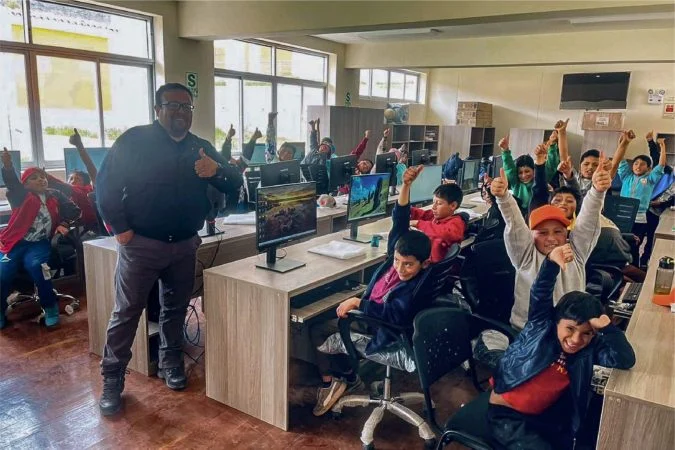
In a significant stride toward fostering regional development and closing the technological gap in rural areas, Southern Peru has launched an intensive Basic Office Automation (Ofimática) course at the "César Vallejo" Educational Institution (N.º 54320) in Tiaparo. This educational program, which falls under the broader scope of the Los Chancas Project, represents a collaborative effort between the private sector, academic institutions, and local communities to equip the next generation with essential digital literacy skills.
By integrating technical training into the daily lives of students in isolated regions, Southern Peru is not merely providing a short-term course; it is laying the groundwork for long-term socio-economic advancement.
Main Facts: A Commitment to Digital Inclusion
The initiative is designed to address the specific challenges faced by students in the Tiaparo region, where access to advanced computing resources and structured technical training has historically been limited. The core of the program is a 120-hour pedagogical course that covers fundamental software tools—including word processing, spreadsheet management, and presentation design—that are prerequisites for modern academic success and professional employability.
Key highlights of the program include:
- Target Audience: Students at the "César Vallejo" School in Tiaparo.
- Collaborative Framework: A tripartite alliance between Southern Peru, the local community of Tiaparo, and the National Service for Industrial Training (SENATI).
- Curriculum Scope: 120 intensive pedagogical hours dedicated to bridging the digital divide.
- Accessibility Measures: Implementation of a flexible schedule (Fridays and Saturdays) and a dedicated transportation service for students commuting from Huancaquita.
Chronology: The Road to Implementation
The implementation of the Basic Office Automation course did not occur in a vacuum; it is the culmination of long-term planning and relationship-building within the area of influence of the Los Chancas Project.
Phase 1: Needs Assessment (Pre-2026)
Before the launch, community leaders and representatives from Southern Peru conducted a series of dialogues with parents, educators, and local authorities. The consensus identified digital literacy as the primary bottleneck preventing students from pursuing higher education or technical careers outside their rural communities.
Phase 2: Strategic Partnership Formation
Recognizing the need for certified expertise, Southern Peru engaged SENATI, one of Peru’s most prestigious technical training institutions. This partnership ensured that the curriculum met national standards and that students would receive certification recognized by the industry.
Phase 3: Logistics and Mobilization
Recognizing that physical distance is often a barrier to education in rural Peru, the organizers developed a logistics plan to include students from neighboring Huancaquita. By guaranteeing transit to and from the school, Southern Peru eliminated the "distance tax" that often forces students to drop out of extracurricular training.
Phase 4: Program Launch (Mid-2026)
The program officially commenced, integrating into the school’s calendar while maintaining a flexible, weekend-based schedule to ensure minimal disruption to the students’ mandatory academic commitments.
Supporting Data: Why Digital Literacy Matters
The relevance of this initiative is underscored by global and national data concerning digital inequality. According to the International Telecommunication Union (ITU), the "digital divide" is not merely about internet connectivity, but about the ability to utilize digital tools to improve one’s quality of life.
In the context of the Peruvian mining sector and its social influence, data indicates:
- Employment Trends: Over 85% of entry-level positions in modern administrative and technical roles require intermediate-to-advanced knowledge of the Microsoft Office suite.
- Educational Outcomes: Students with early exposure to digital tools show a 30% higher success rate in university-level remedial courses.
- Regional Growth: Empowering local youth with technical skills reduces the "brain drain" phenomenon, as these students are more likely to find meaningful employment within their own regions, supported by the development of the mining industry and its value chain.
Official Responses and Stakeholder Perspectives
The program has garnered positive feedback from various stakeholders, reflecting the success of the participatory approach.
The Role of SENATI
Representatives from SENATI have emphasized the importance of high-quality instruction. "Our goal is not just to teach students how to click buttons, but to foster logical thinking through technology," noted a lead instructor. "By bringing SENATI’s methodology to Tiaparo, we are ensuring these students compete on an equal footing with their urban counterparts."
Community and School Leadership
The administration of the "César Vallejo" school noted that the presence of the Los Chancas Project team has transformed the school from a traditional learning space into a hub for technological innovation. "For many of our students, this is the first time they have had dedicated access to a structured IT curriculum. The enthusiasm is palpable," said a spokesperson for the school.
Southern Peru’s Strategic Vision
For Southern Peru, this investment is part of a "Shared Value" strategy. A company spokesperson stated: "Our commitment extends beyond mineral extraction. It is about being a catalyst for sustainable development. When we invest in education, we are investing in the social capital of the communities that host our operations. The Los Chancas Project is a testament to the fact that industrial progress and social well-being must go hand-in-hand."
Implications: The Long-Term Impact
The implications of this initiative extend far beyond the 120 hours of instruction. By institutionalizing this training, Southern Peru is setting a new standard for corporate social responsibility (CSR) in rural Peru.
1. Enhancing Local Employability
As the Los Chancas Project advances, the demand for skilled labor will increase. By providing local students with office automation skills, the program creates a pipeline of local talent that can fill administrative, logistics, and management support roles within the mining industry and its ancillary businesses.
2. Breaking the Cycle of Poverty
Digital literacy acts as a social elevator. Access to information, the ability to draft professional documents, and the proficiency to manage data are fundamental tools for breaking generational cycles of poverty. Students who finish this course will be better equipped to navigate banking, government services, and online entrepreneurship.
3. Strengthening Community Relations
Sustainable mining operations depend heavily on the "Social License to Operate." Projects like the one in Tiaparo demonstrate that the company is a listening partner that responds to the actual needs of the community rather than imposing top-down solutions. This builds the trust necessary for long-term industrial stability.
4. A Model for Other Regions
The structure of this program—combining technical certification, logistical support, and community collaboration—serves as a replicable model. Other mining operations and large-scale industrial projects in the Andes could adopt this blueprint to maximize the social impact of their educational contributions.
Conclusion: A Vision for the Future
The initiative at the "César Vallejo" Educational Institution is a beacon of progress in the effort to modernize rural education. By bridging the digital divide through the combined efforts of Southern Peru, SENATI, and the community of Tiaparo, the program ensures that the youth of today are not left behind in the digital age.
As the students progress through their 120 hours of training, they are doing more than just learning to use a computer; they are acquiring the agency to define their own futures. This initiative stands as a clear example of how private sector investment can be effectively harnessed to foster human capital, proving that when the right tools are provided, the potential for local development is limitless.
As the Los Chancas Project continues to evolve, the focus on education remains a cornerstone of its philosophy. This initiative will likely be remembered as a pivotal moment for the students of Tiaparo, marking the transition from traditional academic learning to a future empowered by the endless possibilities of the digital world.