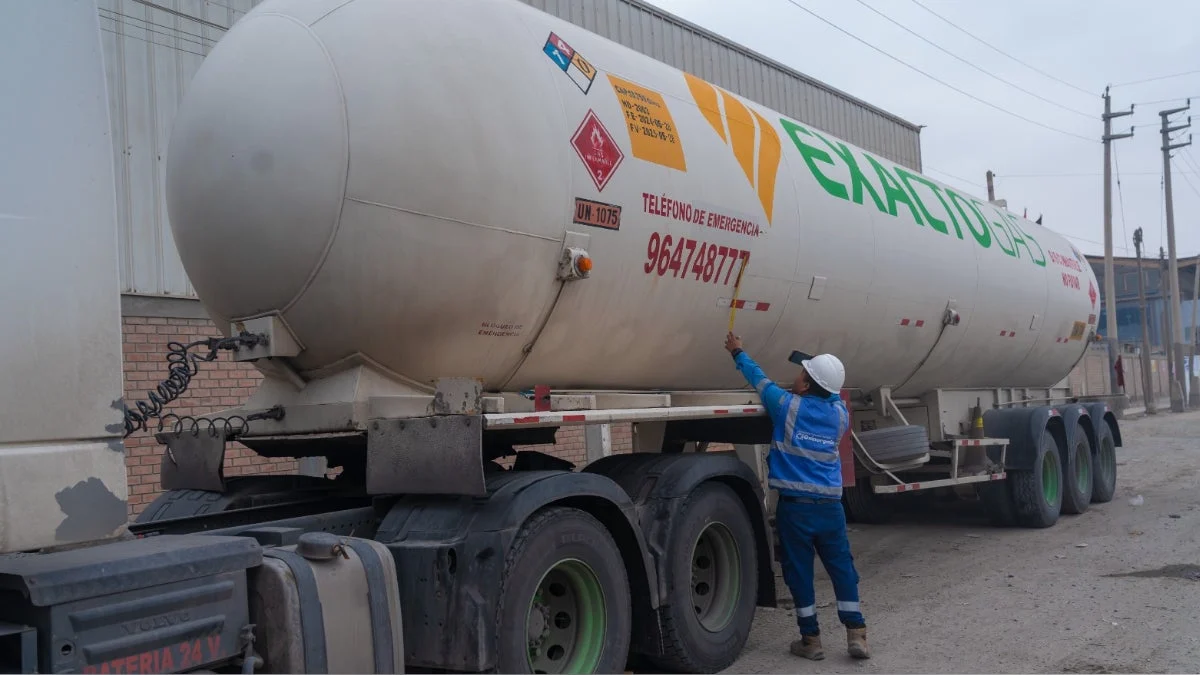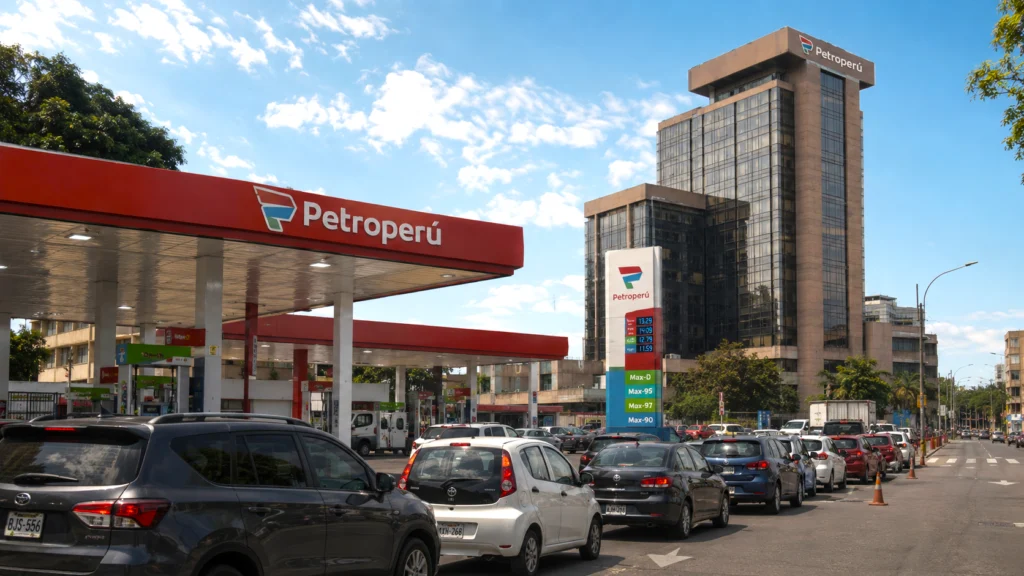
In a decisive move to stave off a potential national energy crisis, the Peruvian government has issued Emergency Decree 003-2026, establishing a robust financial backing scheme for the state-owned oil company, Petroperú. The decree authorizes the Ministry of Energy and Mines to provide financial guarantees of up to US$2 billion, a strategic intervention designed to ensure the operational continuity of the company and prevent fuel shortages across the country.
This measure, formalized in the official gazette El Peruano, arrives at a critical juncture for the energy sector. Petroperú has been grappling with persistent liquidity challenges, exacerbated by the volatility of international oil prices and complex internal structural constraints. By securing this financial framework, the government aims to stabilize the supply chain of hydrocarbons, which serves as the backbone for Peru’s transportation, industrial, and agricultural sectors.
The Scope of the Financial Intervention
The core of the emergency measure is the provision of a multi-layered financial guarantee. The US$2 billion package is strictly earmarked for essential operations. According to the decree, the funds must be utilized exclusively for:
- Capital Working Requirements: Ensuring the company has the liquidity to maintain day-to-day operations.
- Fuel Stock Replenishment: Restoring inventories to prevent domestic scarcity.
- Procurement of Inputs: Financing the acquisition of raw materials and chemical inputs necessary for refining processes.
- Operational Services: Covering the costs of logistics, distribution, and the maintenance of essential infrastructure.
To bridge the gap while the primary mechanism is established, the government has also authorized the Ministry of Energy and Mines to assume short-term contingent commitments of up to US$500 million. This "bridge financing" is intended to maintain the operational pulse of the company, ensuring that the distribution of diesel, gasoline, and other derivatives remains uninterrupted.
Institutional Innovation: The Special Purpose Vehicle (VPE)
One of the most significant components of Decree 003-2026 is the authorization for Petroperú to establish a Special Purpose Vehicle (VPE). This structure, which functions similarly to a financial trust, is designed to separate the new financing from the company’s legacy debt.
The VPE will serve as an independent unit tasked with managing funds, channeling capital from national and international financial institutions, and overseeing the allocation of resources. To ensure transparency and adherence to international financial standards, the process will be led and supervised by the Private Investment Promotion Agency (Proinversión). By involving a third-party agency, the government aims to inject technical rigor and professional management into the use of these resources, moving away from past administrative practices that have drawn criticism.
The decree grants the company the authority to temporarily waive certain internal statutory provisions that might impede the execution of this new scheme. This flexibility is intended to accelerate the implementation, allowing the company to bypass bureaucratic hurdles during this period of urgency. The measure remains in effect until December 31, 2026.
Chronology of a Chronic Crisis
The current intervention is the latest chapter in a long-standing financial struggle for Petroperú. The company’s financial health has been in a state of flux for several years, largely driven by the heavy debt burden associated with the modernization of the Talara Refinery.
- 2022–2023: Petroperú faced multiple liquidity crises as the cost of the refinery project ballooned and international credit ratings were downgraded. The government intervened multiple times with capital injections and guarantees.
- Early 2025: Market volatility in the Middle East and global supply chain disruptions placed renewed pressure on the company’s cash flow, forcing a re-evaluation of its financial stability.
- May 2026: The enactment of Decree 003-2026 marks the administration’s most comprehensive effort to restructure the company’s financial support mechanism, shifting from direct subsidies to a more complex, trust-based guarantee system.
Economic Implications: A Double-Edged Sword
The government’s decision has sparked a vigorous debate among economists and market analysts regarding the long-term sustainability of state-led interventions.
The Perspective of Operational Necessity
Carlos Gallardo, general manager of the Peruvian Institute of Economics (IPE), has offered a measured endorsement of the new framework. He suggests that this mechanism is an improvement over previous approaches. "It is a better scenario than what we had before," Gallardo noted, pointing to the existence of a defined ceiling for the guarantees and the explicit, restricted destination of the funds. By formalizing the support, the government provides the market with a clearer roadmap of the company’s financial requirements.
The Risk of Sovereign Exposure
Conversely, the move has raised significant red flags among fiscal experts. Former Minister of Economy David Tuesta expressed deep concern regarding the impact on Peru’s credit profile. Tuesta argues that while the use of a Special Purpose Vehicle (VPE) attempts to "encapsulate" the debt, it does little to hide the underlying reality from credit rating agencies.
"Even if the scheme uses trusts and special vehicles to separate the operation, the market and rating agencies will likely read this as an increase in the country’s contingent sovereign liabilities," Tuesta warned. The primary risk is that if the VPE fails to generate sufficient returns or if Petroperú continues to face operational deficits, the state will be legally and morally obligated to cover the losses, effectively converting these "contingent" debts into direct public debt.
Strategic Importance and Energy Security
At the heart of the government’s justification for the decree is the concept of "energy security." In a country where the geography is rugged and the economy is highly dependent on logistics and transport, the threat of fuel shortages is not merely a financial problem—it is a social one.
The Ministry of Energy and Mines has emphasized that the stability of Petroperú is synonymous with the stability of the national economy. A disruption in the fuel supply would trigger inflationary pressures on basic food baskets, increase transportation costs, and potentially stall regional commerce. Consequently, the government views the US$2 billion guarantee as an "insurance premium" paid to protect the country against the volatility of the global hydrocarbon market.
The Road Ahead: Transparency and Reform
As the implementation phase begins, the success of the decree will be measured by two factors: the operational efficiency of the newly created VPE and the ability of Petroperú to achieve a turnaround in its financial performance.
Critics argue that financial support alone is insufficient if the company does not undergo deep structural reforms. There is growing public demand for greater transparency in how the funds are managed and for the implementation of strict governance protocols within the state-owned entity.
The role of Proinversión will be critical in this regard. As the overseer, the agency must ensure that the funds are used not just to survive, but to optimize the company’s supply chains and increase the profitability of its refining and distribution operations.
Conclusion
The enactment of Decree 003-2026 is a pragmatic, albeit risky, move by the Peruvian government to protect the nation’s energy future. While it provides the immediate liquidity needed to keep the wheels of the country turning, it also places a significant burden on the national balance sheet. As the government, Petroperú, and financial regulators navigate the next 18 months, the challenge will be to balance the immediate need for stability with the long-term necessity of ensuring that Petroperú becomes a self-sustaining entity that no longer requires state intervention to function.
For now, the energy sector has been granted a reprieve. However, the eyes of the international financial community remain fixed on Lima, waiting to see whether this "special vehicle" will successfully drive the company toward recovery or if it will simply delay an inevitable fiscal reckoning.