By Editorial Staff, Peru Construye
In a symbolic act that marks a turning point for public infrastructure in Peru, President Keiko Fujimori presided over the groundbreaking ceremony for the new facilities of the I.E. No. 1211 José María Arguedas Altamirano in the district of Santa Anita. This event, held on October 27, serves as the pilot project for an ambitious national agenda aimed at revitalizing the country’s educational landscape after years of administrative paralysis and underinvestment.
The construction of this facility is not merely an isolated project; it represents the first tangible step toward a government-mandated commitment to build 2,000 new schools and renovate an additional 3,000 across the nation throughout the current administration’s term.
The Weight of Fourteen Years: A Chronology of Neglect
To understand the magnitude of this project, one must examine the history of the I.E. No. 1211 José María Arguedas Altamirano. For 14 long years, the school community has existed in a state of suspended animation. The original structure, deemed unfit for purpose, left students and staff without a permanent home.
A Decade and a Half of Displacement
- The Initial Halt: Fourteen years ago, plans for the original school were stalled due to a combination of bureaucratic hurdles, budgetary mismanagement, and a lack of political continuity that has plagued public works projects in Peru for decades.
- The "Park" Classroom Era: Since the abandonment of the project, the student body has been forced to conduct classes in ten makeshift modules installed in a public park directly across from the original school site. This temporary solution became an unfortunate long-term reality, exposing children to the elements and lacking the basic amenities required for modern pedagogical practices.
- The Breaking Point: Throughout the years, local parents, teachers, and community leaders staged multiple protests, demanding that the government address the infrastructure gap. The site became a symbol of systemic inefficiency, frequently cited by local officials as a prime example of the "lost years" in public education.
- The Turnaround: Following a series of audits and new budgetary allocations by the current administration, the project was finally unblocked. The groundbreaking ceremony signifies the end of this period of displacement, with the President making a formal commitment to return in 330 days to preside over the official inauguration of the completed facility.
Architectural Modernization: Building for the Future
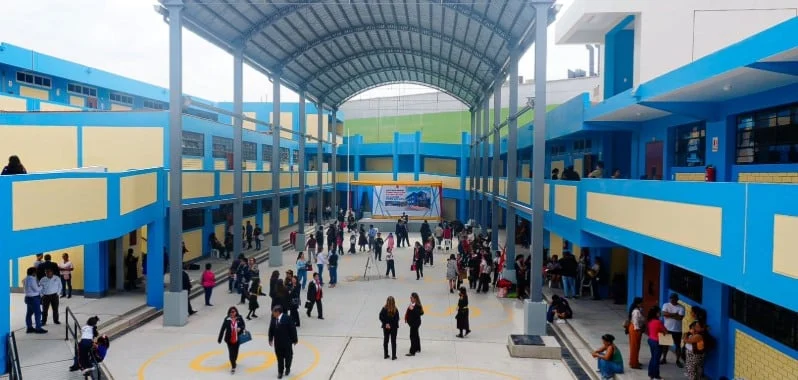
The new José María Arguedas Altamirano school is designed to move beyond the traditional concept of a classroom. The facility has been engineered to meet the demands of the 21st-century curriculum, focusing on technology, vocational training, and holistic student development.

Facility Specifications
The school’s master plan includes a comprehensive suite of learning and recreational spaces:
- Educational Spaces: 14 high-capacity, earthquake-resistant classrooms.
- Vocational Training: A dedicated "Formación para el Trabajo" (Vocational Training) workshop, designed to equip students with technical skills for the modern workforce.
- STEM and Innovation: A state-of-the-art laboratory and an innovation center dedicated to digital and pedagogical development.
- Creative and Social Hubs: A library for research and independent study, as well as an dedicated art workshop to foster student creativity.
- Administrative and Recreational: A large multipurpose area, a professional-grade sports court, a "Patio de Honor" (Main Courtyard) for formal school assemblies, and fully equipped administrative offices.
This infrastructure is intended to serve as a model for the upcoming 2,000 schools planned by the government, setting a new standard for how public education spaces should be designed to encourage engagement and academic excellence.
Supporting Data: The Economic and Fiscal Strategy
The construction of the Santa Anita school is part of a broader, high-stakes macroeconomic strategy. Recognizing that infrastructure is a primary driver of GDP growth and social mobility, the government has launched a significant counter-cyclical economic plan.
The S/ 18 Billion Commitment
The administration has announced a massive injection of S/ 18,000 million (approximately $4.7 billion USD) into the national economy. This "counter-cyclical" package is specifically designed to prevent economic slowdowns by front-loading public investment.
- Allocation to Education: Of this total, S/ 6,000 million has been ring-fenced for the school infrastructure program alone for the upcoming fiscal year.
- Economic Multiplier Effect: Economists suggest that every sol invested in infrastructure—particularly in education—creates a multiplier effect by generating construction jobs in the short term and improving human capital in the long term.
- Efficiency Mandate: The Ministry of Education and the Ministry of Economy and Finance have established a joint task force to ensure that these funds are not held up in the "red tape" that caused the 14-year delay in Santa Anita. This includes new oversight mechanisms to prevent project abandonment.
Official Responses and Strategic Pillars
During the ceremony, President Fujimori underscored that the infrastructure is only one of four pillars intended to overhaul the Peruvian educational system. The government views physical buildings as the "vessel," while pedagogical policy acts as the "content."

The Four Strategic Pillars
- Infrastructure Rehabilitation: The immediate goal of building or renovating 5,000 schools to eliminate the "infrastructure gap."
- Digital Connectivity: The government is rolling out an aggressive satellite connectivity program to ensure that even the most remote schools in the Andes and the Amazon have high-speed internet access.
- Discipline and Order: A new national policy on school discipline has been announced to address rising concerns about student behavior and safety within school grounds.
- Professional Development: The implementation of the "Escuela para Directores" (School for Principals). This initiative aims to professionalize school management, treating school principals as academic CEOs responsible for both the performance of their staff and the management of their school’s resources.
"Our commitment is not just to provide walls and roofs," the President stated during her address. "We are providing a foundation for the next generation of Peruvians to compete globally. We are moving from a model of neglect to a model of proactive management."
Implications: A New Era for Public Education?
The move toward an aggressive infrastructure plan carries significant social and political implications for Peru.
Social Impact
For the families of Santa Anita, the impact is immediate. The removal of the "makeshift" classrooms in the local park restores the public space to the neighborhood and provides students with a dignified environment. This is expected to improve student attendance and morale, which historically drop in the absence of stable school facilities.
Political Accountability
By setting a "330-day deadline," the President has raised the stakes for her own administration. In the past, political promises regarding infrastructure were often met with skepticism due to long-term delays. By linking the success of this school to the broader 5,000-school program, the government is essentially tying its approval rating to its ability to deliver on construction timelines.
The Path Forward
The challenge remains the execution of this program across diverse geographical regions. While the Santa Anita project is an urban site, the government will face significantly higher logistical challenges when expanding the initiative to rural areas. The success of the "S/ 18 billion" investment will depend heavily on the efficiency of local municipal governments and the ability of the national government to maintain oversight.

As the heavy machinery begins its work on the site of the former I.E. No. 1211, the residents of Santa Anita look forward to a future where their children will no longer have to learn under tents in a park. For the rest of the nation, the site has become the laboratory for a government effort that hopes to prove that, with the right level of investment and political will, even the most stagnant projects can be brought to life.
The next 11 months will be critical. If the administration can deliver on the José María Arguedas Altamirano project within the promised timeframe, it will provide the political momentum needed to accelerate the massive national infrastructure agenda scheduled for the coming years.