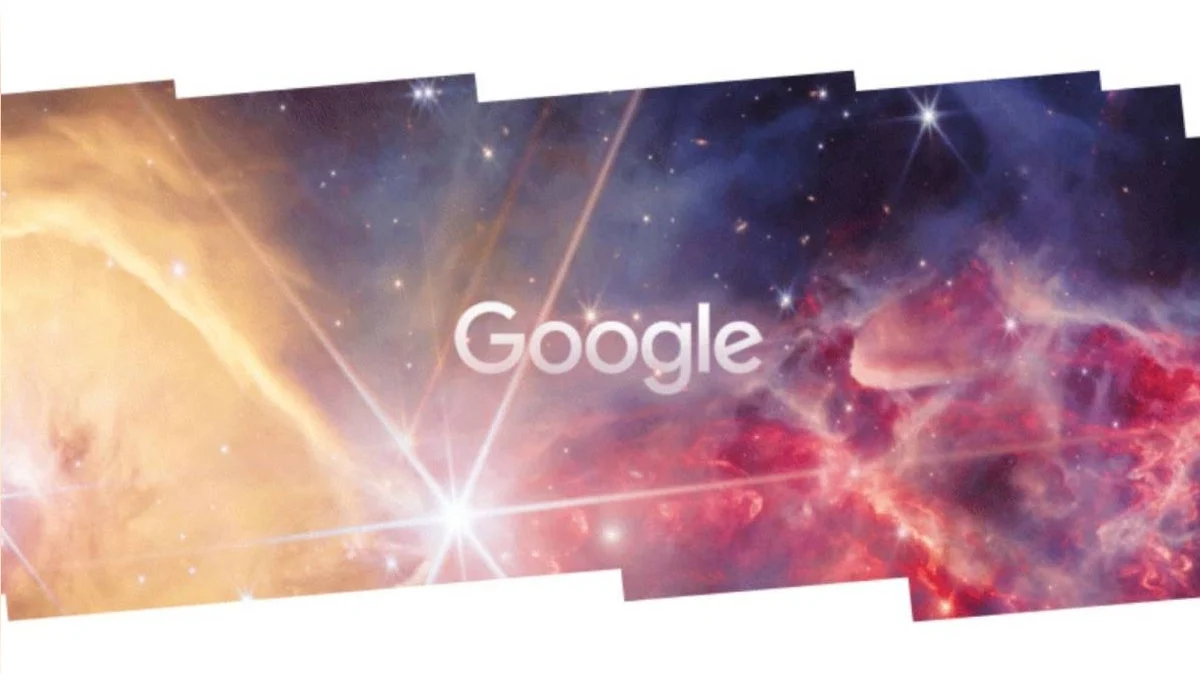
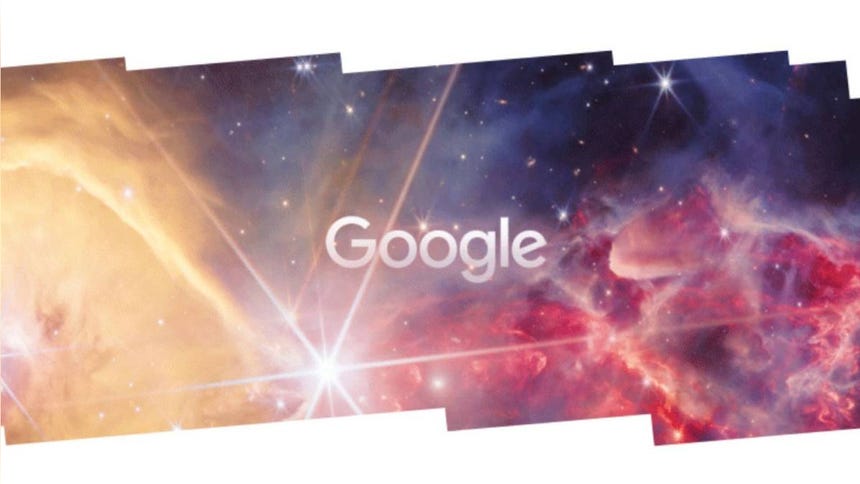
This Tuesday, October 6, the digital gateway to the world, Google, unveiled a specialized "doodle" to mark the ongoing World Space Week 2026. Transforming its iconic logo into a window to the cosmos, the technology giant is drawing global attention to the critical role of scientific outreach, international cooperation, and the rapid evolution of humanity’s reach into the final frontier.
The doodle features a breathtaking, high-definition visualization of the "Rosebud" nebula, captured by the James Webb Space Telescope (JWST). This choice of imagery is not merely aesthetic; it represents the pinnacle of current human engineering—a tool capable of peering through cosmic dust to observe the birth of stars and the early history of our universe.
The Significance of World Space Week
World Space Week is not a casual observation; it is the largest space event on Earth. Since its establishment by the United Nations General Assembly in December 1999, the week has served as a global platform to inspire the next generation of scientists, engineers, and dreamers.
The celebration is anchored between two historically significant dates:
- October 4, 1957: The launch of Sputnik 1, the first artificial Earth satellite, which inaugurated the Space Age.
- October 10, 1967: The signing of the Treaty on Principles Governing the Activities of States in the Exploration and Use of Outer Space, including the Moon and Other Celestial Bodies (often referred to as the "Outer Space Treaty").
By bridging these two dates, the event serves to remind the global community that space exploration is a delicate balance between technological ambition and legal, ethical responsibility.
The "Rocket Revolution": A New Era of Accessibility
The theme for the 2026 edition, "Rocket Revolution," encapsulates the tectonic shift currently occurring in the aerospace industry. For decades, space exploration was the exclusive domain of superpowers and government agencies. Today, the landscape is defined by the rapid commercialization of low-Earth orbit (LEO), the rise of reusable launch vehicles, and a burgeoning private sector.
The "Rocket Revolution" refers to the increased frequency of launches, the drastic reduction in the cost-per-kilogram of payload delivery, and the miniaturization of satellites. These advancements have democratized access to space, allowing smaller nations, universities, and private enterprises to conduct research that was previously unimaginable.
Chronology of Human Expansion into Space
To understand the gravity of the current moment, one must look at the milestones that brought us to this "Rocket Revolution."
- 1957 (The Spark): The Soviet Union’s Sputnik 1 orbits the Earth, sending shockwaves through the global scientific community and initiating the Space Race.
- 1961 (The First Human): Yuri Gagarin becomes the first human to journey into outer space, proving that life could survive the transition beyond the atmosphere.
- 1969 (The Moon Landing): Apollo 11 lands on the lunar surface, marking a pinnacle of 20th-century engineering and global television viewership.
- 1998 (The ISS Era): Construction begins on the International Space Station, a testament to the fact that even in times of geopolitical tension, space can be a theater for international cooperation.
- 2021–Present (The Webb Era): The launch and operational success of the James Webb Space Telescope opens a new window into the deep history of the universe, providing the high-resolution imagery celebrated by Google’s latest doodle.
- 2026 (The Commercial Shift): The current era, characterized by rapid-turnaround, reusable rockets and the transition toward permanent lunar presence and the first steps toward Mars.
Supporting Data: Why Space Matters
The economic and scientific implications of space exploration are profound. According to recent industry reports, the global space economy is projected to reach over $1 trillion by 2040. However, the benefits are not purely financial.
- Climate Monitoring: Satellites provide 90% of the data used for climate modeling, enabling us to track deforestation, sea-level rise, and atmospheric carbon concentrations with pinpoint accuracy.
- Global Connectivity: The proliferation of mega-constellations provides high-speed internet to the most remote regions of the planet, bridging the digital divide that has historically hindered education and economic development.
- Technological Spinoffs: From memory foam and water filtration systems to advanced medical imaging and solar panels, the technologies developed for the harsh environment of space consistently find utility in daily terrestrial life.
Official Responses and Global Initiatives
International bodies have utilized this week to emphasize the "Sustainable Space" agenda. The United Nations Office for Outer Space Affairs (UNOOSA) has called for heightened cooperation to address the growing issue of space debris. As the "Rocket Revolution" increases the number of objects in orbit, the need for international "traffic management" in space has never been more urgent.

"We are at a tipping point," stated a spokesperson for the international space coalition. "The ability to launch is no longer the hurdle; the hurdle is managing our footprint. We must ensure that the orbital environment remains accessible for generations to come."
Across the globe, thousands of events are taking place throughout this week. From university-led hackathons to public telescope viewings and government-sponsored forums on space law, the week aims to demystify the complexities of orbital mechanics and astrophysics for the general public.
Implications for the Future
The decision by Google to dedicate its doodle to the "Rosebud" nebula is symbolic of the shift in focus from the "conquest" of space to the "understanding" of space. As we stand in 2026, the focus is shifting from simple exploration to deep-space science and the potential for a multi-planetary future.
The Human Element
Beyond the rockets and the satellites, the core of the 2026 World Space Week is the human element. The democratization of space means that the next great discovery may not come from a massive government laboratory, but from a student-built CubeSat or a private research mission. The "Rocket Revolution" is, at its heart, a revolution of human potential.
The Philosophical Shift
As we gaze at the imagery provided by the James Webb Space Telescope, we are reminded of our own fragility. The Rosebud nebula, a star-forming region, serves as a mirror for our own origins. We are, quite literally, made of the same materials as the stars. By celebrating this week, we are not just celebrating engineering feats; we are celebrating the fundamental human urge to explore the unknown.

Conclusion: Looking Upward
As the week progresses, the international community is invited to engage with the science, the history, and the future of our cosmic neighborhood. Whether through attending a local astronomy workshop or simply spending a moment to look at the stars, the goal of World Space Week is to ensure that the wonders of the universe are not reserved for the few, but understood and cherished by the many.
Google’s tribute serves as a digital reminder that while our feet may be firmly planted on Earth, our vision is increasingly directed toward the stars. The "Rocket Revolution" is only beginning, and as we look toward the remainder of the decade, the potential for discovery remains as vast and mysterious as the cosmos itself.
For more information on local events related to World Space Week 2026, participants are encouraged to check their national space agency websites or the official World Space Week Association portal.