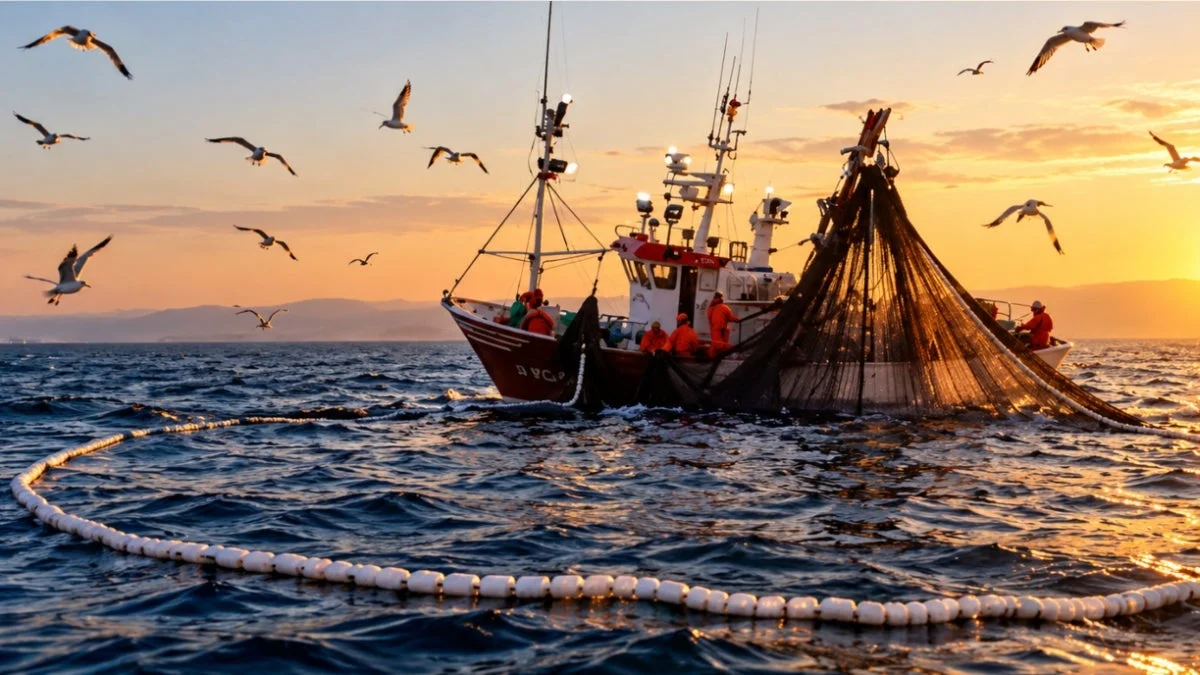
The Peruvian fishing sector, a cornerstone of the national economy and a vital player in the global supply chain of fishmeal and fish oil, is facing a moment of profound uncertainty. Following a rigorous scientific assessment, the Ministry of Production (Produce) has officially announced the cancellation of the second anchovy fishing season in the north-central region of the Peruvian coast. This decision, while aimed at ecological preservation, has triggered a wave of concern among industry leaders who warn of a potential year-long paralysis that could have cascading effects on employment, tax revenue, and the operational stability of the entire maritime supply chain.
The Scientific Basis: A Fragile Ecosystem
The decision to halt operations was not taken lightly; it is the direct result of findings presented by the Instituto del Mar del Perú (Imarpe), the nation’s foremost authority on marine research. According to data collected up to October 7, 2026, the acoustic biomass of the anchovy—the small, silver fish that fuels Peru’s industrial engine—has plummeted to approximately 5.12 million tons.
This figure is not merely a statistical dip; it represents a 28% decrease compared to the summer of 2026 and sits 23% below the historical average recorded during winter and spring cycles spanning from 1996 to 2025. The data suggests that the population is currently unable to withstand the pressure of industrial-scale extraction.
The Problem of Juveniles
A critical component of Imarpe’s diagnostic report is the demographic composition of the current stock. The survey revealed an alarming presence of juvenile specimens, which account for 79% of the population in terms of numbers and 65% by total weight.
In a sustainable fishery, the goal is to allow the species to reach reproductive maturity before extraction. By harvesting a population dominated by juveniles, the industry would risk a long-term collapse of the biomass. Furthermore, the anchovy’s reproductive activity has been observed to be significantly lower than historical patterns, despite isolated pockets of spawning occurring between the ports of Chimbote and Pisco.
Anomalous Oceanographic Conditions
Nature itself has conspired against a traditional fishing season. Imarpe identified persistent, anomalous warm oceanographic conditions—linked to the current El Niño phenomenon—that have forced the anchovy to shift its typical distribution. The fish have moved closer to the coast, migrated further south, and retreated to greater depths, making them harder to access and complicating the logistics of standard fishing operations.
Chronology of the Crisis: From Assessment to Suspension
The progression toward this decision followed a structured scientific and political timeline:
- Early 2026: Initial reports indicate the start of warm-water anomalies, signaling potential disruption to the marine ecosystem.
- Mid-2026: Monitoring efforts by Imarpe intensify as the biomass shows signs of thinning and poor recruitment of younger cohorts.
- October 7, 2026: The final cutoff date for the comprehensive acoustic survey that would determine the viability of the second fishing season.
- Mid-October 2026: Produce receives the final report from Imarpe confirming the critical state of the biomass and the prevalence of juvenile specimens.
- Late October 2026: The Ministry of Production officially announces the cancellation of the second season in the north-central zone, citing the "precautionary principle" to ensure the survival of the species.
Official Responses and Strategic Rationale
Jesús Barrientos, the Vice Minister of Fisheries and Aquaculture, defended the government’s stance as a necessary sacrifice for the future of the industry. "We must protect the anchovy to preserve the fishing possibilities of the coming years," Barrientos stated. He emphasized that the Ministry’s role is to act as the steward of a public resource, balancing short-term economic desires with the long-term biological viability of the sea.
Produce has committed to maintaining a state of "continuous surveillance." This includes monitoring not just the anchovy, but also alternative species like samasa, which has shown higher tolerance to warmer waters. However, the Ministry remains firm that any future authorization for commercial extraction will be strictly contingent upon evidence-based scientific validation.
The SNP’s Warning: A Call for "Extraordinary Measures"
The Sociedad Nacional de Pesquería (SNP), which represents the industrial fishing sector, has responded with a mixture of professional compliance and urgent advocacy. While acknowledging that the industry respects scientific findings, the SNP leadership has sounded an alarm regarding the socioeconomic fallout of an extended suspension.
The Threat of Year-Long Paralysis
The SNP estimates that the sector could face a total standstill lasting more than a year, potentially extending until the 2027 season. For a country that relies on fishing as a top-tier export, this is a significant blow. The economic impact is not confined to the vessels themselves; it extends to the massive workforce involved in processing, canning, logistics, and maritime transport.
"We are facing extraordinary circumstances, and therefore, we require extraordinary measures," stated a representative of the SNP. The guild has put forward a series of proposals for the executive branch:
- Employment Protection: Policies designed to subsidize or protect the thousands of workers whose livelihoods depend on the fishing calendar.
- Healthcare Continuity: Ensuring that crew members and their families do not lose their medical coverage during the period of inactivity.
- Fiscal Liquidity: Implementing tax relief measures to help companies maintain the necessary liquidity to stay afloat until the next productive cycle.
- Financial Support for Small-Scale Owners: Specifically requesting credit facilities for shipowners under Law N° 26920, who are often more vulnerable to cash-flow interruptions than larger corporations.
Implications for the Global and Local Economy
The anchovy is the lifeblood of the global fishmeal and fish oil industry. Peru is the world’s leading producer, and its absence from the market sends ripples across global commodity prices.
Market Volatility
When Peruvian supply is curtailed, the global price for fishmeal—a critical component in the aquaculture industry (especially for salmon and shrimp farming)—inevitably rises. This creates a secondary economic crisis for international buyers who must find alternative, often more expensive, protein sources for their feed.
Domestic Supply Chain
Domestically, the impact is localized but severe. Coastal communities in regions like Ancash and Ica, which are heavily dependent on the processing plants (harinera facilities), face a period of austerity. The secondary industries, including equipment maintenance, net repair, and maritime logistics, are also bracing for a dry spell.
Future Outlook: Managing the "New Normal"
As Peru looks toward 2027, the challenge lies in how the state manages the interaction between climate change and resource management. The current El Niño is a stark reminder that the climate is no longer a static background factor but an active participant in economic planning.
The SNP remains hopeful that by working with the government on the proposed measures, the industry can survive this "biological winter." However, the consensus among experts is that the maritime sector must evolve. This involves potentially investing in more resilient technologies, diversifying the species targeted for extraction, and creating a more robust "rainy day" fund for the sector to weather the cycles of nature.
Ultimately, the suspension of the 2026 fishing season is a testament to the fact that, in the face of nature’s unpredictable power, sustainability is the only path forward. Whether the government and the private sector can collaborate effectively to mitigate the human cost of this decision remains the defining question for the months ahead. The Peruvian sea is currently resting, and for the sake of the industry’s future, the human activity around it must now learn to do the same.