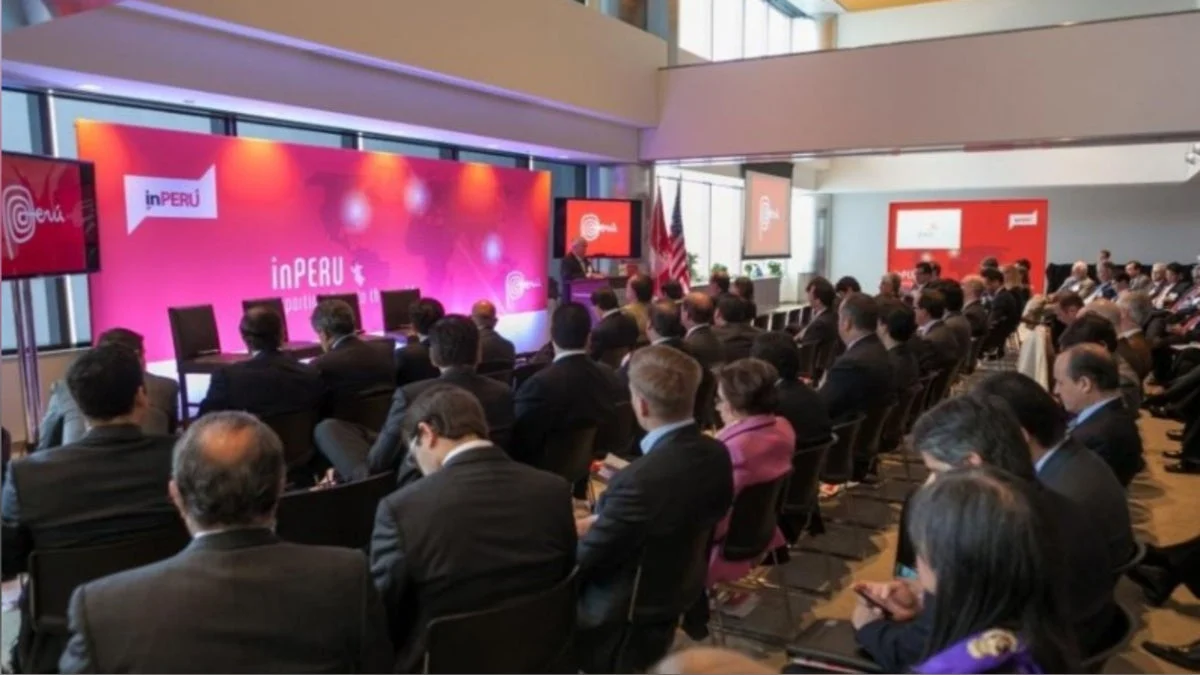
In a decisive move to solidify its position as a premier destination for global capital, a high-level delegation of Peruvian public and private sector leaders has arrived in New York City. The mission, representing the XIX edition of the inPERU Roadshow, serves as a critical bridge between the Andean nation’s strategic development goals and the institutional investors who command the global financial landscape.
As Peru seeks to capitalize on its macroeconomic stability and abundant natural resources, this two-day summit—scheduled for the 26th and 27th—is not merely a diplomatic visit, but a targeted effort to revitalize interest in key sectors, including mining, infrastructure, energy, and agribusiness.
The Vanguard of Peruvian Policy: Key Figures in Attendance
The Peruvian delegation is comprised of over 80 influential stakeholders, led by two of the country’s most respected economic figures: the Minister of Economy and Finance, Elmer Cuba, and the President of the Central Reserve Bank of Peru (BCRP), Julio Velarde. Their presence acts as a powerful signal of institutional continuity and commitment to fiscal discipline.
Joining them are Mercedes Aráoz, President of inPERU, and Juan Carlos Mandujano, Executive Director, both of whom have been instrumental in curating a schedule that prioritizes direct access to the world’s most influential financial houses. By aligning the legislative and executive authorities with the expertise of the private sector, the mission aims to provide a unified, coherent narrative regarding the country’s trajectory.
Chronology of the Strategic Engagement
The roadmap for the New York mission is intensive, designed to maximize exposure to decision-makers within the “Wall Street” ecosystem.
- Pre-Conference Reception (Sunday): The delegation began their engagements with a formal reception hosted by Carlos Pareja, Peru’s Permanent Representative to the United Nations. This event served as the essential “soft opening,” allowing for high-level networking between Peruvian delegates and international diplomats and financiers.
- Day One (The Macroeconomic Narrative): The core schedule kicks off with high-level dialogues. Minister Elmer Cuba is slated to deliver a comprehensive briefing on the Peruvian macroeconomic and fiscal outlook. Simultaneously, Julio Velarde will take center stage to navigate the complexities of global interest rates, inflation management, and the central bank’s forward-looking monetary policy.
- Day Two (Targeted Sectoral Meetings): The focus shifts to specific investment opportunities. ProInversión, the agency responsible for promoting private investment in Peru, will unveil a detailed portfolio of upcoming projects. These sessions are designed to facilitate direct inquiries from institutional investors interested in the technicalities of project finance, concessions, and regulatory frameworks.
Institutional Collaboration: The Power of Global Partnerships
The inPERU Roadshow is not operating in a vacuum. It has secured the participation of the financial world’s heavyweights, including dedicated sessions and roundtables organized by J.P. Morgan, Goldman Sachs, Bank of America, and BTG Pactual.
Furthermore, the delegation will engage with the Council of the Americas, an organization with deep ties to the hemisphere’s political and economic leadership, and the international law firm DLA Piper. These partnerships are strategic; they provide the legitimacy and the legal vetting necessary to reassure international investors of the security and viability of their potential capital deployments.
The Pillars of the Peruvian Pitch: Mining, Energy, and Infrastructure
The narrative presented by the delegation centers on three core pillars:
- Mining and Hydrocarbons: As a global leader in copper production, Peru remains a vital link in the global energy transition supply chain. The Roadshow will emphasize the government’s commitment to facilitating sustainable extraction and addressing the regulatory bottlenecks that have historically hindered large-scale investment.
- Infrastructure and Connectivity: With a growing need for modern logistics networks, ports, and regional connectivity, the government is looking to private-public partnerships (PPPs) to fund the next generation of Peruvian infrastructure. ProInversión’s presentation will detail how these projects are being structured to mitigate risk and ensure long-term profitability.
- Agro-industry: Peru has successfully transformed its coastal regions into global agricultural hubs. The mission will highlight the potential for further scaling through advanced irrigation technologies and improved supply chain logistics, positioning Peru as a reliable supplier for global food security.
Official Responses and Perspectives
The leadership behind this mission is acutely aware of both the potential and the challenges facing the nation.
Mercedes Aráoz, reflecting on the country’s status, noted that Peru possesses undeniable economic strengths and strategic opportunities that warrant renewed international focus. However, she was candid about the requirements for sustained growth: "While we have the potential, we must be clear that attracting capital requires a steadfast commitment to clear rules, legal security, and the restoration of absolute confidence in our institutional frameworks."
Juan Carlos Mandujano underscored the logistical importance of the Roadshow. "Our goal is to shorten the distance between the potential in Peru and those who hold the keys to global investment. We are here to listen, to address concerns, and to demonstrate that Peru remains a market that rewards strategic, long-term thinking."
Implications for the Peruvian Economy
The implications of this nineteenth edition of the Roadshow are significant for the country’s immediate economic future. Following a period of global uncertainty and regional volatility, Peru is attempting to re-establish itself as a “safe harbor” for investment in Latin America.
The Role of Fiscal Stability
By featuring Minister Cuba and President Velarde, the delegation is effectively presenting the “gold standard” of Peruvian economic management. Their ability to articulate a clear vision for the fiscal budget and inflation control is vital for regaining the favor of bondholders and equity investors who have been cautious due to recent political noise.
Strengthening Market Access
A primary objective of the meetings with major investment banks is to discuss the conditions of access to international capital markets. For Peru, maintaining favorable credit ratings and ensuring liquidity for its sovereign debt is paramount. The roadshow provides a platform to reassure these institutions that, despite political nuances, the fundamental economic architecture of the country remains robust and resilient.
A Legacy of Global Engagement
Since its inception in 2012, inPERU has been the principal vehicle for the country’s financial diplomacy. With successful past editions across North America, Europe, the Middle East, and Asia, the association has evolved from a simple promotional entity into a sophisticated diplomatic channel.
The XIX Roadshow represents a maturation of this strategy. Rather than merely “selling” the country, the delegation is engaging in a sophisticated dialogue with the global financial elite. They are addressing the reality of the post-pandemic investment climate, where capital is increasingly selective and risk-averse.
Conclusion: The Path Ahead
As the inPERU delegation concludes its mission in New York, the long-term success of these meetings will be measured not just in immediate investment commitments, but in the sustained improvement of market sentiment toward Peru. By leveraging the credibility of figures like Julio Velarde and providing a transparent view of the project pipeline via ProInversión, the delegation is betting that the narrative of stability and opportunity will prevail over short-term volatility.
For the international investment community, the message from New York is clear: Peru is open for business, its economic fundamentals are being vigilantly protected, and the doors are wide open for those willing to engage with one of the most promising emerging markets in the Americas. The work done in these boardrooms over the next few days will likely reverberate in the Peruvian economy for years to come, serving as a catalyst for the infrastructure and industrial growth the nation so urgently seeks.