Introduction: A Structural Breach in Parliamentary Procedure
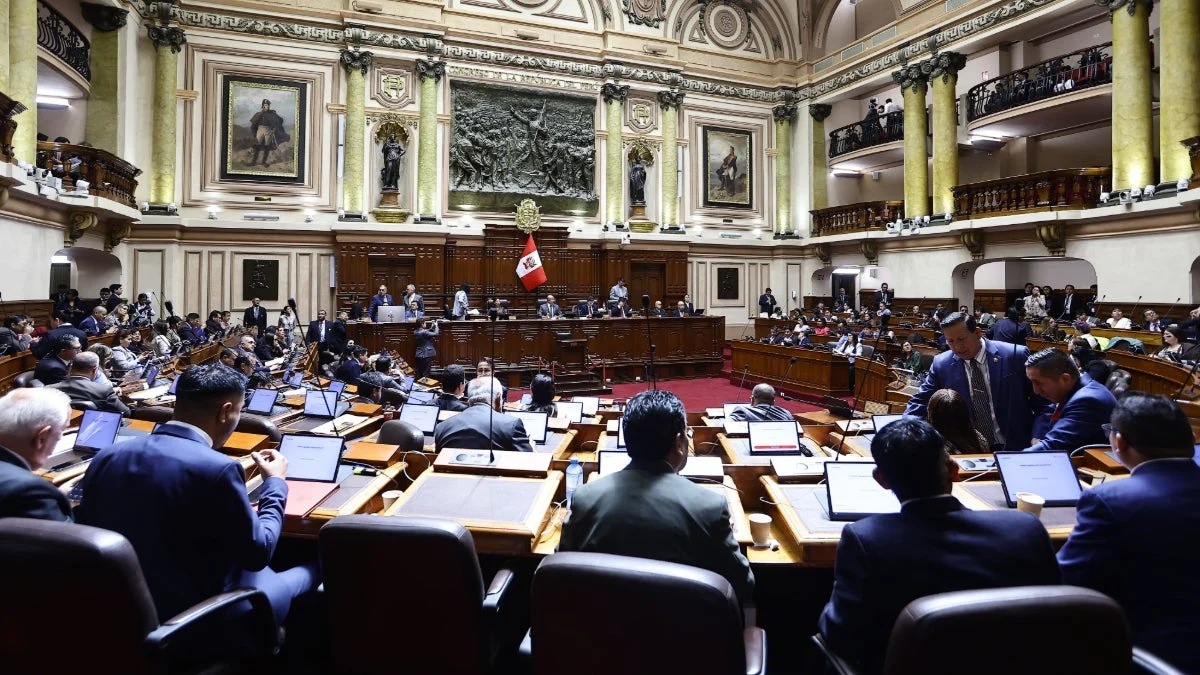
The integrity of the legislative process in Peru’s recently restored bicameral Congress has been thrust into the spotlight following a significant procedural error in the drafting of a law delegating legislative powers to the Executive branch. The controversy, which involves both constitutional concerns and a shifting landscape of political allegiances, has drawn sharp criticism from legal scholars and political analysts alike. At the heart of the debate is the "autograph" (the final text of a law) of the delegation of powers, which critics argue undermines the fundamental role of the Chamber of Deputies and exposes a deepening fracture in the legislative hierarchy.
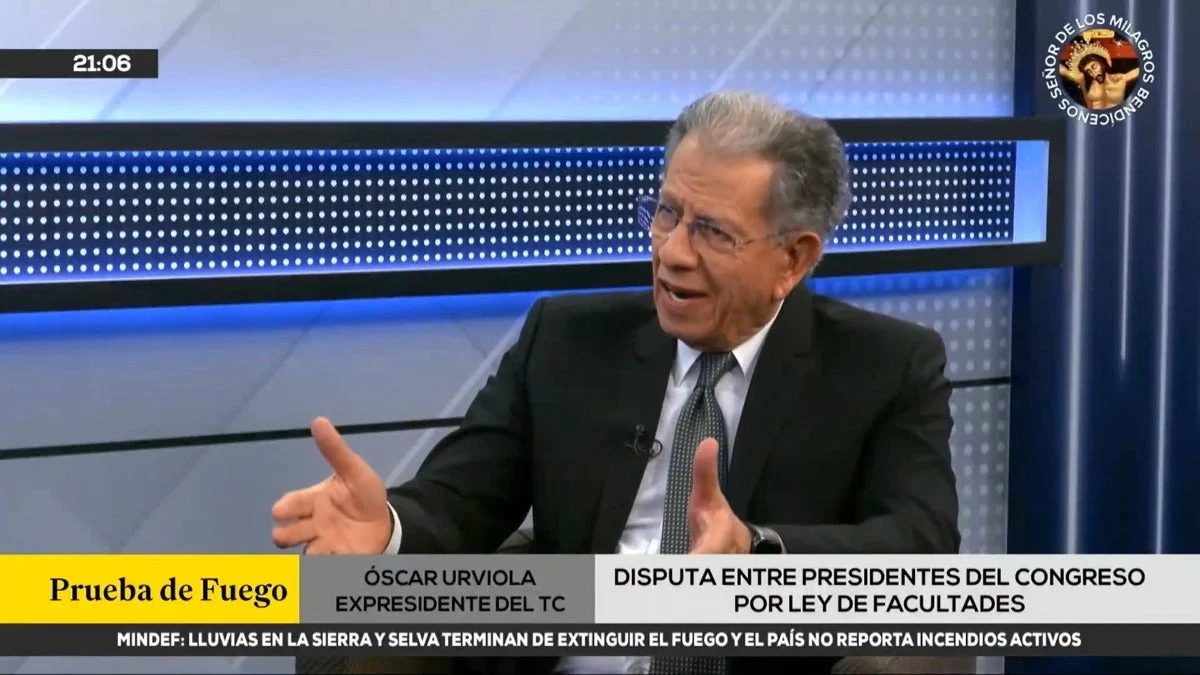
Oscar Urviola, former president of the Constitutional Tribunal (TC), has led the legal charge, arguing that the formal misidentification of the law as an act of the Senate—rather than the Congress of the Republic as a whole—is not a mere clerical error but a constitutional transgression. Concurrently, political analyst Juan de la Puente has identified this procedural dispute as a symptom of a broader phenomenon: the erosion of party discipline and the emergence of a new, fluid majority in the Senate that threatens the institutional balance of power.
Chronology of the Legislative Discrepancy
The sequence of events leading to the current constitutional impasse began with the passage of the delegation of powers bill, a critical piece of legislation that grants the Executive the authority to issue decrees without direct legislative oversight on specific economic and security matters.
- The Drafting Phase: During the final stages of the legislative process, the document presented as the "autograph" of the law was prepared, but failed to acknowledge the bicameral nature of the newly restored Congress.
- The Publication Error: The law was formally titled and presented as a "Law of the Senate." Furthermore, the signatures affixed to the document were exclusively those of the President and the First Vice President of the Senate.
- The Public Outcry: As the document entered the public record, legal experts noted that it omitted the signature and institutional authority of the Chamber of Deputies, effectively ignoring the constitutional requirement that both chambers participate in the formation of law.
- The "Fe de Erratas" Debate: When the issue was raised, officials suggested that a simple "fe de erratas" (correction of errors) would suffice. This was immediately rebuffed by constitutionalists like Urviola, who argued that an institutional identity error cannot be corrected with a minor administrative note.
Official Responses and Legal Interpretations
The Constitutional Critique: Oscar Urviola’s Position
Oscar Urviola’s critique is rooted in a strict interpretation of the Peruvian Constitution, specifically the articles governing the bicameral structure. Urviola asserts that the current legislative formulation is a direct violation of the constitutional mandate that the Congress of the Republic—comprising both the Chamber of Deputies and the Senate—is the sole repository of legislative power.
"What is unforgivable," Urviola stated during an interview on RPP’s Prueba de Fuego, "is that they have titled this a ‘Law of the Senate.’ This phrasing effectively ‘paints the Chamber of Deputies on the wall’—it renders them decorative and ignores their constitutional role in the legislative process."
Urviola emphasized that the application of Article 105 of the Constitution must be read in strict conjunction with Articles 90 and 102. By failing to integrate the two chambers, the current autographed law lacks the necessary constitutional legitimacy. When asked about the potential for a legal challenge, Urviola suggested that while an action for unconstitutionality is likely, the timeline for such a process is problematic. Should the Constitutional Tribunal eventually rule the process flawed, the legal principle of non-retroactivity would likely mean that the legislative decrees issued by the Executive in the interim would remain valid, creating a "fait accompli" that undermines the very constitutional safeguards intended to check Executive power.
The Political Analysis: Juan de la Puente’s Perspective
Juan de la Puente, an expert in parliamentary dynamics, views the procedural error as a manifestation of a deeper, systemic shift within the legislative branch. De la Puente argues that the traditional party-line voting mechanisms have collapsed, replaced by a strategic, albeit fragile, alignment between the Executive and a new majority in the Senate.
"There is a new majority," De la Puente observed, "but it is built upon the dilution of the interests of non-officialist parties within the Chamber of Deputies."
According to De la Puente, the emergence of an "opposition-collaborationist" bloc has fundamentally altered the political equilibrium. This group consists of representatives who, while technically belonging to opposition parties, consistently vote in favor of Executive interests, effectively bypassing the collective will of their own parliamentary benches. This realignment, De la Puente warns, creates a dangerous environment where the Senate can override or ignore the Chamber of Deputies, reducing the latter to a rubber-stamp body and narrowing the space for meaningful institutional debate.
Supporting Data: The Erosion of Party Discipline
The shift identified by De la Puente is supported by recent voting records, which demonstrate a growing trend of "discrepant voting." In several key legislative sessions regarding the delegation of powers, members of the Ahora Nación, Buen Gobierno, and Obras bancadas have voted against their party leadership’s official position.
- Internal Fragmentation: In the Chamber of Deputies, the level of party cohesion has plummeted by approximately 35% compared to the previous legislative cycle.
- Senate Dominance: The ability of the Senate to amend or nullify lower-chamber decisions with a simple majority of 35 votes has created a bottleneck where the Senate effectively acts as the sole legislative authority on high-impact executive policies.
- Legislative "Drift": The data suggests that the "opposition-collaborationist" faction now holds the balance of power in the Senate, allowing the Executive to secure legislative authority with a curated group of allies that transcend party labels.
Implications for the Future of the Republic
The implications of this controversy extend far beyond the drafting of a single law. The situation has created a tripartite crisis involving constitutional legitimacy, the integrity of the bicameral system, and the future of party-based democracy in Peru.
1. The Institutional Fragility of the Bicameral System
The core value of bicameralism is the "check and balance" provided by having two separate bodies review legislation. If the Senate acts in isolation—or if the Chamber of Deputies is treated as a secondary, non-essential body—the entire purpose of the restoration of the Senate is nullified. The precedent being set by this "autograph" error could lead to a permanent imbalance where the Senate is viewed as the only body that matters to the Executive.
2. The Rise of "Opposition-Collaborationism"
If the trend identified by De la Puente continues, the traditional political party structure in Peru may face an existential crisis. If legislators can consistently vote against their party platforms without consequence—and if this behavior is incentivized by the Executive through the "collaborationist" model—the electorate’s ability to hold parties accountable for their legislative performance will be severely compromised.
3. Judicial Uncertainty
As Urviola noted, the lack of retroactive effect in constitutional rulings creates a "legal trap." If the government proceeds with the implementation of decrees under a law that is later declared unconstitutional, the country could face a period of legal instability where the validity of hundreds of executive actions is called into question. This uncertainty could deter foreign investment and lead to public confusion regarding the legality of new tax, security, and administrative regulations.
Conclusion: A Call for Institutional Rectification
The current situation is not merely a matter of semantics or a minor bureaucratic slip-up. It is a critical juncture for the Peruvian Congress. The insistence of legal scholars that the legislative process must be rectified, combined with the warnings from political analysts about the erosion of the legislative balance, paints a picture of a system under stress.
To restore public trust and uphold the constitutional order, the legislative leadership must take immediate steps to address the procedural errors in the autographed law. This involves not only issuing formal corrections but, more importantly, reaffirming the equal status of the Chamber of Deputies in the legislative process. Failure to do so risks embedding a culture of executive dominance and legislative fragmentation that could define the remainder of the current parliamentary term. The path forward requires a return to the constitutional principles that underpin the Republic: respect for the separation of powers and an unwavering commitment to the integrity of the law.