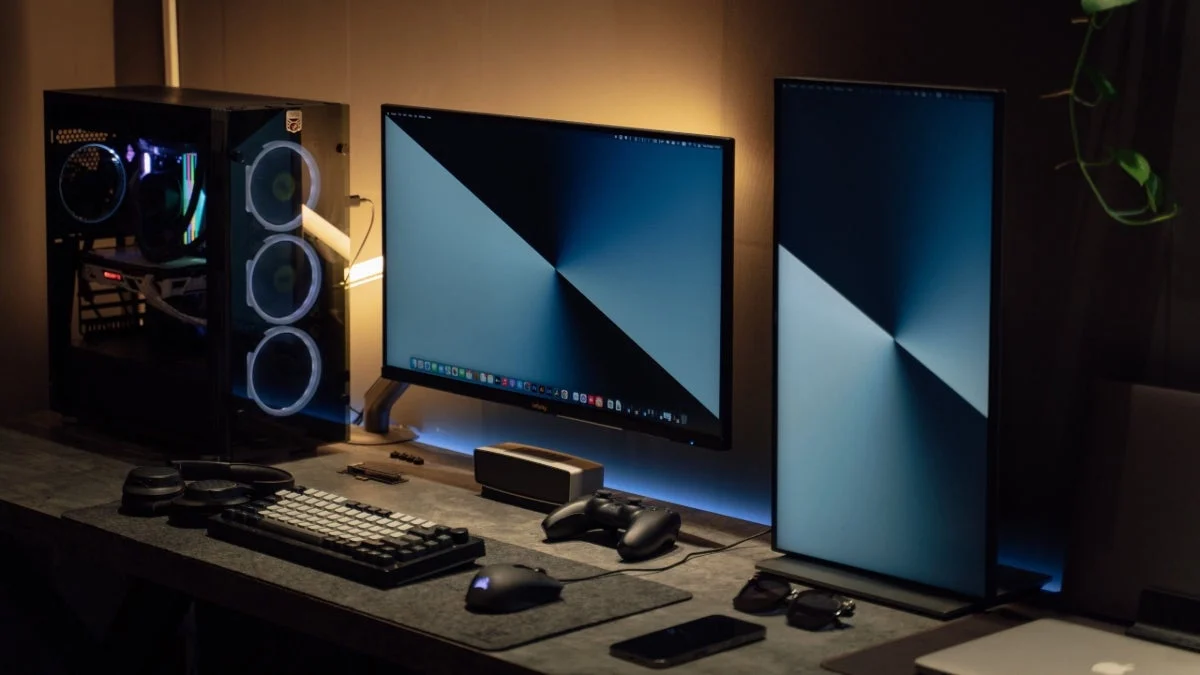
The landscape of artificial intelligence is undergoing a tectonic shift. For the past several years, the "AI revolution" has been synonymous with the cloud—massive data centers, constant internet connectivity, and the inherent privacy risks associated with sending sensitive corporate data to third-party servers. Today, that paradigm is being dismantled. Led by AMD and supported by an ecosystem of global hardware manufacturers, the industry is pivoting toward a future where advanced AI runs locally, offline, and entirely under the control of the user.
Main Facts: The End of Cloud Dependency
The core motivation behind this movement is threefold: data sovereignty, cost reduction, and operational latency. By shifting the processing burden from remote server farms to local hardware, companies can guarantee that proprietary information never leaves the office premises. Furthermore, this transition eliminates the recurring costs of expensive enterprise AI subscriptions and the performance bottlenecks inherent in internet-based connectivity.
AMD has spearheaded this transformation with two landmark announcements:
- AMD Helion: An industrial-scale supercomputer architecture specifically engineered for enterprise-grade data centers.
- AMD Ryzen AI Halo: A compact, high-performance desktop platform designed to provide individual engineers and researchers with the power to run massive AI models entirely offline.
These systems are not merely iterative upgrades; they represent a fundamental change in how AI is integrated into the professional workflow. By providing the raw compute power necessary to run models with up to 300 billion parameters directly from a desk, AMD is enabling a new generation of "Agentic AI."
Chronology of the Shift
- 2023–2024 (The Cloud Era): AI development was dominated by massive LLMs (Large Language Models) accessible only via APIs. Businesses struggled with data compliance and unpredictable cloud computing costs.
- Early 2025 (The Push for Local): Increased concern over intellectual property leakage and the "black box" nature of cloud-based AI led to the development of local, small-language models (SLMs).
- October 2026 (The AMD Announcement): AMD officially unveils the Helion architecture and the Ryzen AI Halo platform, signaling the maturation of high-performance local AI.
- November 2026 (The Rollout): The official deployment date for the first wave of Helion-equipped supercomputers, marking the beginning of the "on-premise AI" era.
The Rise of Agentic AI: Beyond the Chatbot
The primary catalyst for this shift is the emergence of "Agentic AI." While current generative AI tools are largely reactive—responding to prompts or generating text—agentic systems are autonomous. They possess the agency to analyze complex data sets, write and execute code, make executive decisions, and manage end-to-end workflows without human intervention.
For these agents to be truly effective in a corporate environment, they cannot rely on the latency of the internet. They require a local, high-speed architecture. The AMD Helion system solves this by allowing for the synchronization of thousands of processing cores in a single server cabinet, providing the deterministic performance required for mission-critical tasks.
Supporting Data and Technical Infrastructure
The transition to local AI is not a solo effort by AMD; it is a collaborative industry-wide push. Giants including Cisco, Dell Technologies, HP, Lenovo, and Wiwynn have committed to supporting this new paradigm. These partners are re-engineering their server and workstation infrastructures to accommodate the extreme heat and power requirements of these new AI-centric chips.
The Ryzen AI Halo Ecosystem
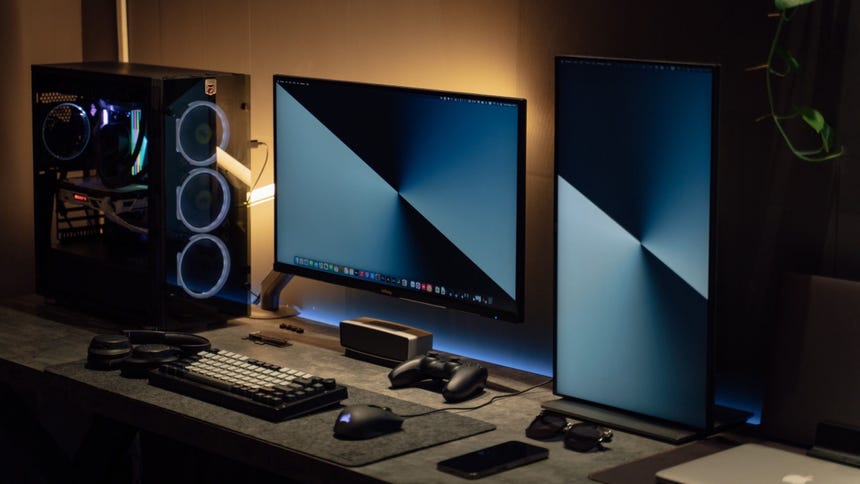
For the individual professional, the Ryzen AI Halo platform is a game-changer. It is effectively a "personal AI laboratory."
- Scale: Capable of handling models up to 300 billion parameters.
- Efficiency: Designed for continuous, high-load operation in office environments.
- Compatibility: The new Ryzen AI Max 400 series serves as the "brain" for a new wave of laptops and desktops, including the HP ZBook Ultra G3A, and specialized units from manufacturers like Framework and GMKtec.
The industry’s move to liquid cooling, integrated directly into these new workstations, highlights the intensity of the compute power being localized. We are effectively placing the power of 2024-era data centers directly onto the professional’s desk.
Official Responses and Industry Perspectives
Industry analysts and company spokespeople agree that this shift is inevitable. An AMD spokesperson noted during the announcement, "The future of AI is not just about intelligence; it is about autonomy. To achieve true autonomy, the AI must be as close to the data as possible. By moving the model to the device, we remove the friction of the cloud and provide the privacy that the modern enterprise demands."
Competitors such as NVIDIA, Intel, and Apple have also intensified their efforts. The current market atmosphere is one of "fierce competition," with each firm scrambling to define the standard for local AI processing. The common thread among all these companies is the recognition that AI can no longer be a service "rented" from the cloud; it must be a capability "owned" by the user.
Implications: A New Competitive Landscape
The move toward local AI has profound implications for every sector of the economy:

1. Data Privacy and Security
Perhaps the most significant impact is the death of the "data privacy trade-off." Companies will no longer have to choose between using advanced AI and protecting their trade secrets. By running models locally, sensitive data remains behind the corporate firewall, effectively insulating the firm from third-party data leaks.
2. The Economic Model of AI
We are seeing the transition from an OPEX-heavy model (monthly subscriptions and per-token fees) to a CAPEX-focused model (investing in high-performance hardware). While the upfront cost of a Ryzen AI Halo workstation or a Helion server cluster is higher than a cloud subscription, the long-term cost-per-inference is significantly lower, especially for heavy-duty AI users.
3. Democratization of R&D
By placing supercomputer-grade AI in the hands of independent researchers and smaller firms, the barriers to entry for AI innovation are being lowered. You no longer need the budget of a tech conglomerate to train or deploy a sophisticated, autonomous AI agent. This could lead to an explosion of niche, industry-specific AI tools that are more efficient and accurate than the general-purpose "mega-models" currently dominating the market.
4. The Future of Work
The rise of agentic, local AI suggests a fundamental change in the role of the knowledge worker. As AI agents become capable of handling complex workflows locally, the human employee will transition from a "creator" to an "orchestrator," managing fleets of local AI agents that perform the heavy lifting of data analysis, coding, and logistical management.
Conclusion: The Path Ahead
The industry’s decision to move AI away from the internet and into the office is not just a trend—it is a necessary evolution. As we approach November 2026, the arrival of these systems will mark the beginning of a new chapter in the digital age. By reclaiming the intelligence we have spent years outsourcing to the cloud, businesses and individual professionals are poised to enter a period of unprecedented productivity, privacy, and local autonomy.
The era of "Cloud-Only" AI is ending. The era of the "Personal Supercomputer" has arrived. Whether this will lead to a total decoupling from the cloud or a hybrid model remains to be seen, but one thing is certain: the power to create, decide, and innovate is coming home to the desktop.