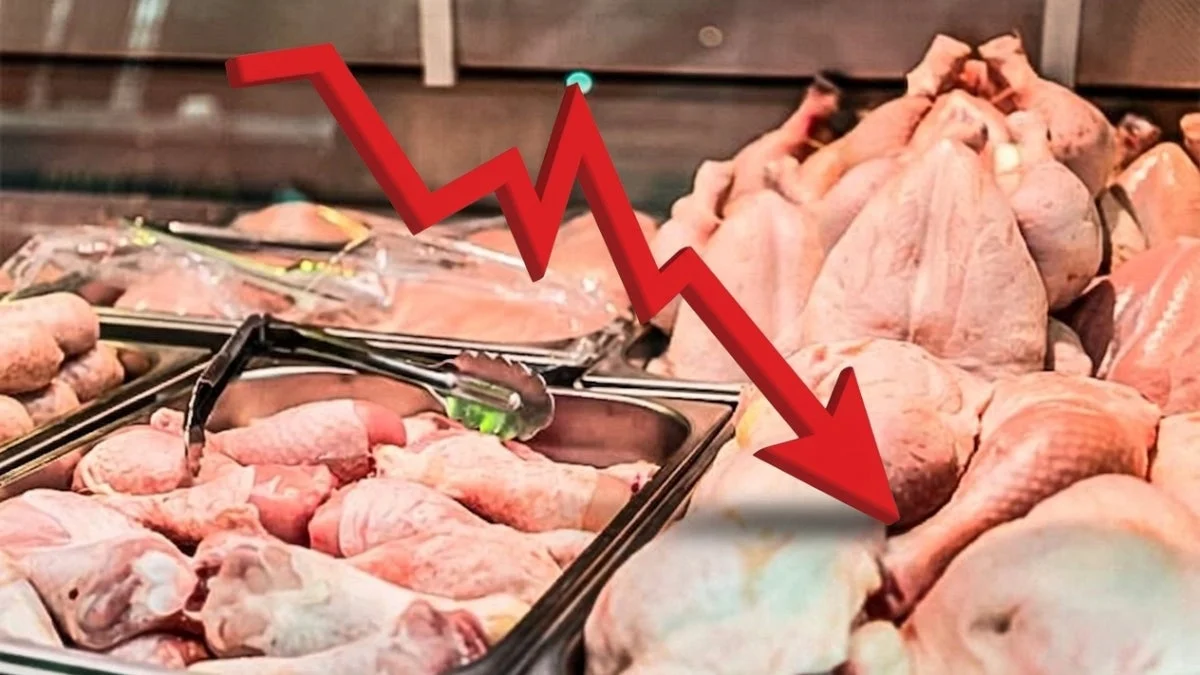
After months of navigating volatile price surges that strained household budgets across Lima, Peruvian consumers are finally experiencing a welcome reprieve. Data from the Ministry of Agrarian Development and Irrigation (Midagri) indicates that the average price of chicken—a staple of the Peruvian diet—has plummeted by 25% in capital markets over the past month. This cooling effect, mirrored by a notable drop in wholesale costs, provides a rare moment of economic stability for families grappling with inflation.
The State of the Market: A Month of Correction
As of August 24, the average price of a kilo of chicken in Lima’s retail markets stood at S/8.67. This figure represents the lowest price point observed so far in 2026, a stark contrast to the S/11.60 recorded just over a month ago on July 20. The reduction of nearly S/3 per kilo is not merely a minor fluctuation; it is a significant market correction following a period where prices flirted dangerously close to the S/12 mark throughout July.
When contextualized against the broader calendar year, the current downward trend is even more pronounced. In March 2026, chicken prices reached a painful peak of S/12.93 per kilo. Since that high, the market has seen a cumulative reduction of over S/4 per kilo, or approximately 33%. To find comparable price levels, one must look back to September 2025, suggesting that the industry is finally emerging from a prolonged period of inflationary pressure.
Wholesale vs. Retail: The Supply Chain Impact
The relief is even more visible in the wholesale distribution centers, which serve as the primary barometer for the health of the poultry supply chain. In these centers, the price per kilo dropped from S/7.20 on July 20 to S/4.10 on August 24. This represents a staggering 43.1% decline in just over 30 days.
This dramatic shift highlights the elasticity of the poultry sector. When wholesale costs drop so sharply, it creates the necessary margin for retailers to pass savings onto consumers, albeit with the usual lag time associated with inventory turnover. Midagri reports that the average bird weight in Lima’s markets is approximately 2.799 kilograms, meaning that a standard family purchase now costs roughly S/24.30—a significant decrease from the previous month’s expenditure.
Chronology of the 2026 Poultry Price Cycle
To understand why this shift is so significant, it is necessary to examine the trajectory of the market throughout the year:
- January – February 2026: Prices remained relatively stable, with chicken hovering in a moderate range and eggs priced at roughly S/5.91 per kilo.
- March 2026: The market hit a zenith. Supply chain bottlenecks and input cost increases pushed the price of chicken to S/12.93, forcing many families to rethink their grocery lists.
- April – June 2026: A period of persistent volatility, where intermittent supply issues kept prices high and unpredictable.
- July 2026: The market saw a resurgence of high prices, with chicken nearing the S/12 mark once again. Simultaneously, eggs peaked at S/7.97 per kilo on July 22, causing concern among consumer advocates.
- August 2026: The turning point. Favorable environmental conditions began to manifest in production volume, leading to the current steep decline that reached its most recent milestone on August 24.
The Science of Supply: Why Prices Are Falling
Industry analysts and sector experts have pointed to a single, primary driver for the current price drop: an surge in production volume. The increased availability of poultry in the daily market is a direct result of improved environmental conditions.
The Role of Climate Stability
The agricultural sector has long been at the mercy of the climate, particularly in the context of the El Niño phenomenon. Throughout much of the year, extreme temperature fluctuations—ranging from intense, unsustainable heat to uncharacteristic cold spells—wreaked havoc on poultry farm productivity. These fluctuations often lead to higher mortality rates among chicks and decreased growth rates for mature birds, effectively shrinking the supply.
However, recent weeks have seen more stable, favorable temperatures. This climatic "sweet spot" has allowed for optimized breeding conditions, leading to a higher yield per production cycle. When the supply of live birds increases at the farm gate, the downstream effect is a larger volume of product entering the wholesale centers and, eventually, the retail markets of Lima.
Official Responses and Industry Perspective
The Peruvian Poultry Association (APA) has sought to temper the excitement of the price drop with a long-term view of market dynamics. According to the APA, the poultry market is inherently cyclical. Prices are governed by a complex interplay of variables: the cost of feed (largely driven by global grain prices), labor costs, logistics, and climate.
Long-Term Price Stability
One of the most important takeaways from the APA’s recent statement is the context of the last decade. Despite the intense media focus on monthly spikes, the association emphasizes that the price of chicken, in real terms, has remained within a predictable band of S/7 to S/12 for the past ten years. This suggests that while consumers often feel the "sting" of temporary hikes, the market possesses a structural mechanism that prevents permanent, runaway inflation for this specific commodity.
The APA maintains that after any significant drop, the market will inevitably seek a new equilibrium, which may involve a modest recovery in prices once the current surplus of supply is absorbed.
The Egg Market: A Slower Descent
While the news regarding chicken is overwhelmingly positive, the story of the egg is more nuanced. Eggs remain a critical source of protein for low-income households, and their price trajectory has been more stubborn than that of poultry meat.
Following the July 22 peak of S/7.97 per kilo, the price of eggs has moderated to S/7.56 as of late August. While this represents a 5.1% decrease, it is a far cry from the steep drop seen in chicken. Furthermore, the current price is still 27.9% higher than it was at the start of the year (S/5.91).
The wholesale market for eggs mirrors this trend: a 6.4% reduction since late July, yet still 51% higher than the S/4.33 observed at the beginning of 2026. This data suggests that while the supply of eggs is recovering, the recovery is occurring at a slower, more deliberate pace, likely due to the longer production cycle required for laying hens compared to broilers.
Economic Implications for the Peruvian Household
The decline in food prices is more than just a statistical victory; it has tangible impacts on the Peruvian economy.
- Inflationary Relief: Food items, particularly chicken, carry significant weight in the Consumer Price Index (CPI). A sustained reduction in these prices helps dampen the headline inflation rate, providing the Central Bank with more room to maneuver in its monetary policy.
- Disposable Income: For the average family, a drop of S/3 per kilo in chicken prices acts as a de facto increase in disposable income. In a household that consumes several kilos of chicken per week, these savings add up to a significant amount that can be reallocated toward other essential goods or services.
- Food Security: Lower prices improve access to high-quality protein, which is essential for nutritional health, particularly in vulnerable demographics. The stabilization of these costs is a critical component of national food security.
Looking Ahead: What Should Consumers Expect?
As we move into the final quarter of 2026, the outlook remains cautiously optimistic. While the current abundance of supply is driving prices down, the agricultural sector remains vigilant regarding weather patterns. Any disruption—whether through new climate events or a sudden spike in the cost of imported soy and corn (key components of poultry feed)—could reverse the current trend.
For now, the Peruvian consumer can benefit from the current market conditions. The data provided by Midagri serves as a reminder of the power of supply-side corrections and the importance of climate stability in sustaining the food supply chain. As the nation watches the markets, the hope is that this "respite for the pocket" will persist, allowing households to regain the financial stability that has been so elusive for much of this year.