By Economic Analysis Desk
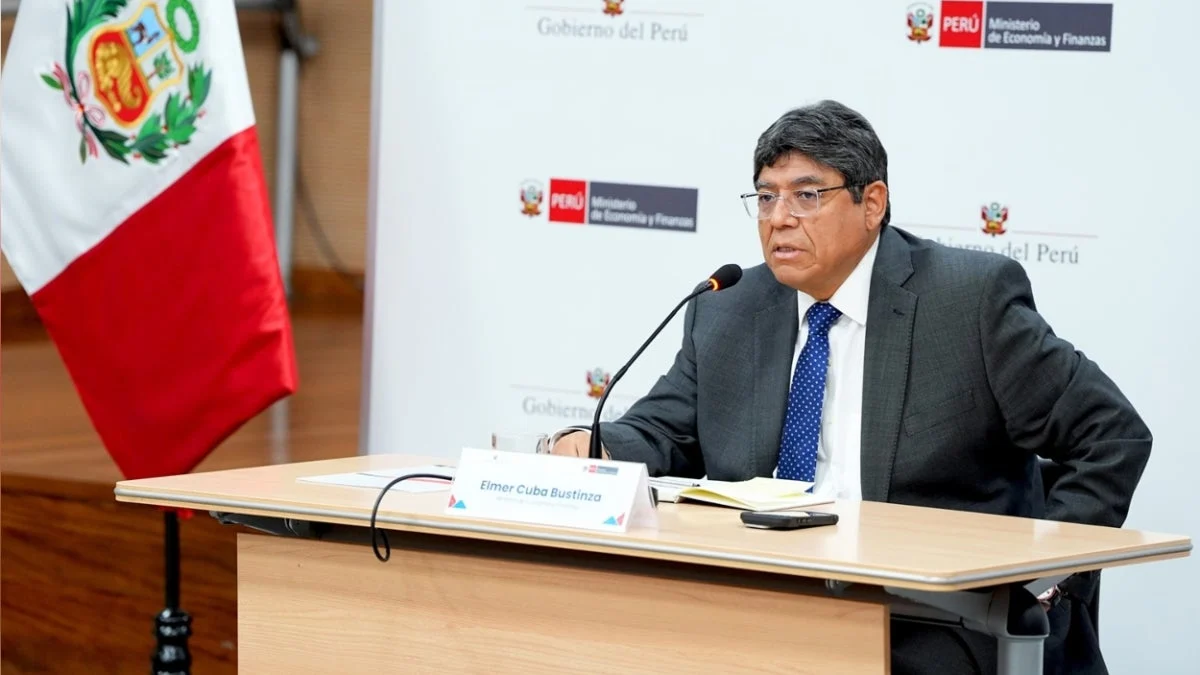
In a significant pivot toward fiscal modernization, the Peruvian government has announced a comprehensive strategy to overhaul the nation’s tax landscape. Minister of Economy and Finance, Elmer Cuba, revealed that the administration is preparing to dismantle and reconstruct legacy tax regimes for small businesses, citing an urgent need to close the gap between Peru’s actual tax collection and its potential. This move, supported by the recently published OECD Tax Policy Review: Peru 2026, marks the beginning of a concerted effort to broaden the tax base, curb evasion, and ensure the long-term solvency of the state.
The Core Challenge: A Persistent Revenue Gap
At the heart of the government’s initiative lies a sobering reality: Peru is underperforming in tax collection compared to its regional peers and countries with similar GDP per capita. Minister Cuba emphasized that the current system is characterized by structural inefficiencies that have persisted for over three decades.
"Countries similar to Peru, with comparable GDP per capita, collect more than we do," Minister Cuba stated during the presentation of the OECD report. "When we benchmark ourselves against Latin America and the Caribbean, we find ourselves trailing in terms of compliance. There is significant space to advance, but we must address the root causes of our low tax pressure."
For decades, the Peruvian tax system has been hampered by a reliance on complex, often fragmented, regimes that were originally intended to simplify taxation for small entrepreneurs but have, in many cases, become breeding grounds for informality and tax avoidance.
Chronology of Reform: A 30-Year Legacy Under Review
The current tax environment in Peru is defined by regimes that were established during a different economic era. The Régimen Único Simplificado (RUS) and the Régimen Especial de Renta (RER) were introduced over thirty years ago to incentivize formalization among micro and small enterprises. However, in the modern digital economy, these systems are increasingly viewed as outdated.
- The 1990s Context: The RUS and RER were created to lower the barrier to entry for small businesses in a largely manual, paper-based economy.
- The Digital Shift (2015-2024): The mandatory implementation of electronic invoicing across the Peruvian economy has fundamentally changed the information landscape. The Tax Authority (SUNAT) now has access to granular, real-time data that renders the simplified, "flat-rate" nature of older regimes obsolete.
- The 2026 Mandate: With the publication of the OECD Tax Policy Review: Peru 2026, the government has formalized its intent to align local policy with international best practices. Minister Cuba has declared that the "time has come" to phase out these legacy structures, signaling a shift toward a more transparent and equitable tax base.
Supporting Data: Why Reform is Non-Negotiable
The urgency of this reform is backed by hard data. According to the OECD study, the three pillars of Peru’s tax deficiency are low tax pressure, high informality, and chronic non-compliance regarding the General Sales Tax (IGV) and Income Tax.
The Informal Economy Trap
Informality in Peru remains one of the highest in the region, hovering significantly above the Latin American average. The government argues that current regimes often act as a "comfort zone" for small businesses, allowing them to remain small and informal to avoid the tax burden associated with larger-scale operations. By simplifying and digitizing these regimes, the Ministry of Economy and Finance (MEF) hopes to create a "ladder" that encourages firms to grow, formalize, and contribute their fair share to the national treasury.
The Role of Electronic Invoicing
Minister Cuba highlighted that the ubiquity of electronic invoicing serves as the primary catalyst for this reform. "Today, with electronic invoicing, there is more information available that actually benefits segments with less human capital, such as micro-enterprises," he noted. The government intends to leverage this data to automate compliance, reducing the administrative burden on taxpayers while simultaneously making it significantly harder to hide revenue.
Official Responses and the New Anti-Evasion Commission
In response to these findings, the government is moving beyond policy rhetoric. The Ministry of Economy and Finance has confirmed the creation of a specialized commission tasked with leading the fight against tax evasion. This commission will focus heavily on the IGV and Income Tax, the two primary revenue drivers that are most susceptible to non-compliance.
"The OECD study is a vital baseline for the commission we are establishing," Minister Cuba explained. "It provides the technical roadmap to reduce evasion, which will allow us to achieve greater fiscal solvency. This is not just about collecting more; it is about having the resources to invest in infrastructure and social inclusion, which are essential for a country like Peru."
The commission is expected to work in tandem with SUNAT to implement stricter auditing processes, informed by the data provided by the electronic invoicing system. The government’s objective is to reach a higher level of tax pressure within a shortened timeframe, providing the state with the fiscal muscle required to address the country’s infrastructure deficit and social development goals.
Implications: What This Means for Peru
The implications of this proposed reform are profound, affecting everything from the daily operations of micro-businesses to the nation’s sovereign credit profile.
For Small Businesses
The reform will likely mean a transition period where small businesses are migrated to new, more streamlined regimes that align with their actual economic activity rather than artificial, fixed-rate buckets. While this may cause short-term friction, the long-term goal is to integrate these businesses into the formal financial system, opening doors to credit, government contracts, and improved market access.
For the National Economy
Increasing tax pressure without stifling growth is a delicate balancing act. However, the government’s reliance on OECD expertise suggests that the strategy will focus on broadening the base rather than merely increasing rates. By capturing revenue from currently informal or non-compliant sectors, the government aims to create a more level playing field where legitimate businesses are not undercut by those operating outside the tax net.
For Social Policy
The link between tax revenue and social progress is central to Minister Cuba’s narrative. By curbing evasion, the government expects to secure a more sustainable revenue stream that is less dependent on volatile commodity prices. This fiscal stability is the prerequisite for long-term investments in education, health, and rural infrastructure, which have historically been underfunded due to the lack of domestic resource mobilization.
Conclusion: A Turning Point for Fiscal Governance
The announcement by the Ministry of Economy and Finance signals a departure from the "laissez-faire" tax policy of the past decades. By acknowledging the failures of the RUS and RER regimes and leaning into the transparency provided by digital tools, the government is attempting to modernize the state’s relationship with its taxpayers.
The success of these reforms will depend on the government’s ability to communicate the benefits of formalization while maintaining rigorous enforcement. As the anti-evasion commission begins its work, the eyes of both the international investment community and the Peruvian public will be on the execution of these policies. If successful, this reform could serve as a model for emerging economies looking to transform their fiscal structures to meet the demands of the 21st century.
Peru is at a crossroads: it must choose between the path of stagnant, fragmented taxation and a new, modernized framework that promises to unlock the country’s true economic potential. The message from the MEF is clear: the status quo is no longer an option.