Executive Summary
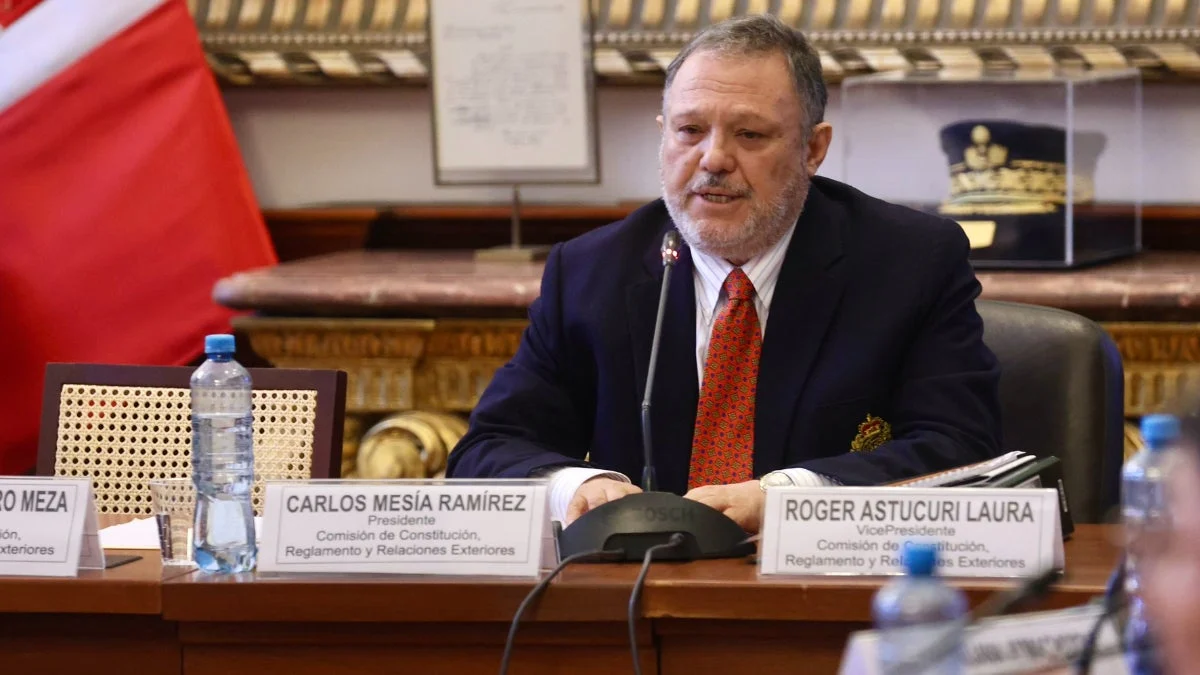
The legislative agenda of the executive branch faces a critical impasse within the Senate’s Constitution, Regulation, and Foreign Relations Committee. Carlos Mesía, the committee’s chair and a prominent member of the Fuerza Popular party, has officially declared that he will refuse to convene the group until a pre-existing consensus is reached among the various political benches. This move follows a dramatic walkout by opposition members earlier this week, leaving the future of the administration’s request for delegated legislative powers in a state of deep uncertainty.
The conflict centers on a fundamental disagreement regarding the scope of the legislative package. While the Chamber of Deputies previously greenlit 20 specific points focusing on citizen security and the mitigation of the El Niño climate phenomenon, a technical report from the Senate committee has expanded this mandate to 27 points, incorporating measures for administrative simplification and other ancillary issues. The opposition’s refusal to engage with this expanded agenda has led to a complete cessation of parliamentary proceedings.
Chronology of the Conflict: From Cooperation to Confrontation
The Initial Discrepancy
The tension escalated on Thursday during a scheduled session of the Constitutional Committee. Members of the opposition—comprising the Good Governance Party, the Civic Works Party, Juntos por el Perú, and Ahora Nación—expressed profound dissatisfaction with the procedural direction of the debate. They argued that the introduction of seven additional points by the committee’s technical table constituted an overreach of the mandate received from the Chamber of Deputies.
The Walkout
Asserting that the committee was failing to guarantee a "democratic and transparent debate," the opposition bloc staged a collective walkout. In a formal statement released shortly thereafter, these groups declared they were "waiting for a new summons" that would respect the scope of the initial proposal. They view the attempt to expand the legislative agenda as an effort to bypass the established institutional consensus.
The Standoff
Following the walkout, Carlos Mesía adopted a hardline stance. In an interview on Prueba de Fuego (RPP), he explicitly rejected the opposition’s demand for an immediate new session. "I am not going to call a committee meeting only to fall back into this chaos," Mesía stated. He framed the current situation as a failure of political will, insisting that he would only reconvene the committee once he has guarantees that a constructive, consensus-based debate—and subsequent vote—can take place.
Supporting Data and Technical Disagreements
The crux of the legislative deadlock lies in the disparity between the 20-point package approved by the Chamber of Deputies and the 27-point agenda proposed by the Senate’s technical team.
The Technical vs. Political divide
The executive branch’s request was originally framed as a time-sensitive necessity, particularly concerning public safety and climate emergency response. However, the Senate’s technical advisors argued that these priorities could not be effectively addressed without simultaneous reforms in administrative efficiency and regulatory simplification.
For the opposition, these seven additional items represent a "creeping expansion" of executive power, which they argue should be handled through standard legislative channels rather than through the expedited process of delegated powers. By refusing to debate the expanded list, the opposition is effectively forcing a return to the original 20-point scope.
Official Responses and Political Rhetoric
The View from the Chair
Carlos Mesía has been increasingly vocal in his criticism of the opposition’s behavior. He has specifically singled out the Juntos por el Perú bench, accusing them of orchestrating the obstructionist strategy. According to Mesía, other smaller opposition parties have "followed along by the nose," lacking the political autonomy or ideological identity to diverge from the path set by the left-wing faction.
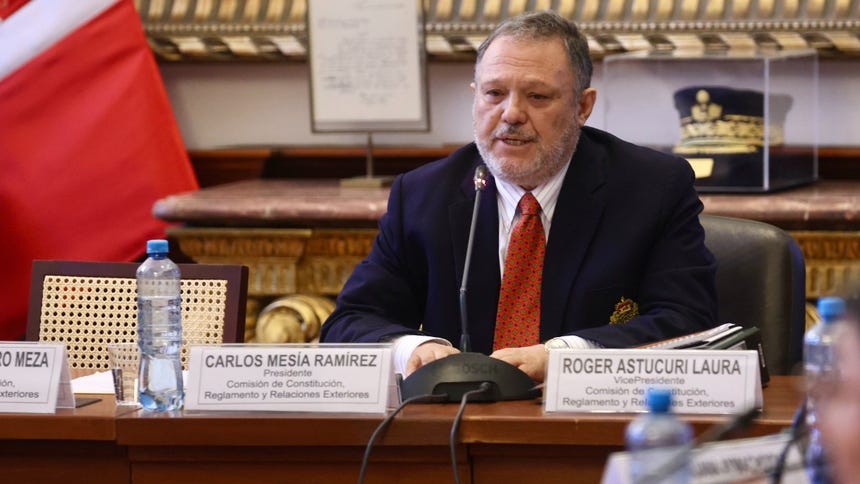
"The problem is that they do not have the votes," Mesía remarked. "What Juntos por el Perú is ultimately seeking—with others blindly following—is to allow the left to manipulate the direction of Congress from the Chamber of Deputies."
The Opposition’s Stance
The opposition maintains that their actions are a defensive measure to preserve the integrity of the legislative process. Their insistence on sticking to the 20 points is not merely a technicality, but a statement of principle regarding the limits of executive authority. They contend that any attempt to "pad" the request with extraneous administrative reforms violates the spirit of the original agreement between the executive and the legislature.
Implications for Governance and the Rule of Law
The Peril of Expiring Deadlines
The looming expiration of regulatory deadlines has added a sense of urgency to the crisis. As the constitutional time limits for the committee to issue a report approach, the risk of a total failure of the initiative increases. When questioned about these deadlines, Mesía adopted a pragmatic, if controversial, view.
He cited the precedent of the Chamber of Deputies, where deadlines were effectively bypassed in favor of "political realism." According to Mesía, when rigid adherence to the calendar conflicts with political necessity, the former is often sidelined to ensure that critical legislation—such as the fight against crime or climate change mitigation—is not permanently shelved.
Potential Paths to Resolution
Despite the current impasse, Mesía has outlined two potential pathways to break the deadlock:
- The Compromise Approach: Mesía has proposed a bifurcated voting process. Under this plan, the committee would debate and vote on the initial 20 points first, followed by a separate debate on the remaining seven items. This would allow for progress on the core emergency measures while keeping the contentious administrative reforms on the table for further negotiation.
- The Minority Dictamen: Should the opposition refuse the compromise, Mesía has challenged them to utilize the established legislative tools by presenting a "minority report" (dictamen en minoría). This would allow them to formally submit their version of the proposal—limited to the 20 points—for a floor vote, effectively testing whether they can command a majority to override the committee’s current trajectory.
The Cost of Inaction
The consequences of continued paralysis are severe. Should the committee fail to reach a consensus, the entire request for delegated powers could be archived, resulting in a significant political defeat for the Executive. In such a scenario, the administration would lose its ability to enact necessary reforms through decree, forcing them to navigate the standard, much slower legislative process—a scenario that could potentially leave the country vulnerable to the very threats the executive sought to address.
Conclusion: A Test of Democratic Maturity
The conflict within the Senate’s Constitution Committee is symptomatic of a broader struggle within the national legislature. It pits the executive’s desire for speed and efficiency against the opposition’s mandate for oversight and institutional constraint.
As the deadline for the committee’s decision approaches, the pressure on all parties to move beyond partisan brinkmanship is mounting. Whether through the bifurcated voting process proposed by Chairman Mesía or through the formal submission of minority reports, the path forward requires a level of political flexibility that has, thus far, been absent from these negotiations. The coming days will be decisive, as the legislature determines whether it can function as a productive body or if it will remain trapped by the ideological divisions that currently define its proceedings. For now, the "art of the possible"—as Mesía calls it—remains an elusive goal in the halls of the Senate.