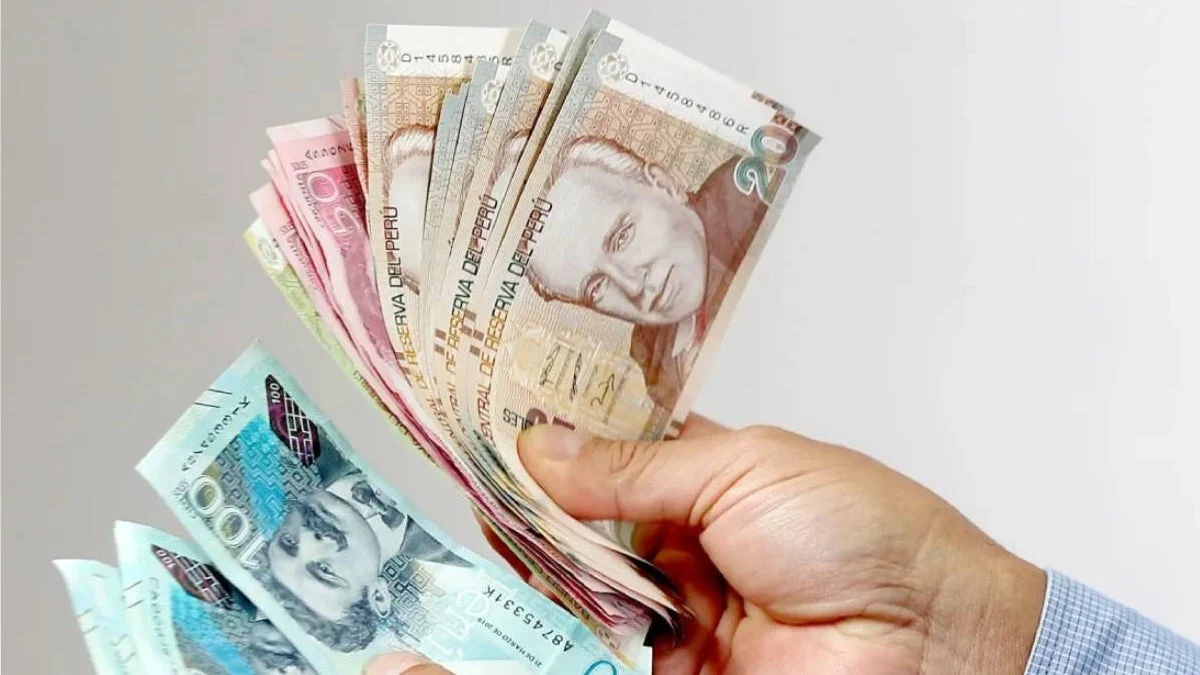
For over four million private-sector employees across Peru, the first half of July represents a significant milestone in the annual financial calendar. As the nation prepares for the Fiestas Patrias (Independence Day) celebrations, the disbursement of the "July Gratification"—a mandatory labor benefit—serves as a vital economic injection for households and a critical regulatory milestone for employers.
With an estimated S/ 10,000 million (approximately $2.6 billion USD) flowing into the pockets of the formal workforce, this year’s payment cycle has brought renewed attention to labor rights, the intricacies of wage calculations, and the enforcement mechanisms overseen by the National Superintendency of Labor Inspection (SUNAFIL).
Main Facts: Understanding the July Gratification
The gratificación is a statutory bonus mandated by Peruvian labor law for workers in the private sector. Unlike discretionary bonuses, this payment is a legal entitlement for those employed under the general labor regime.
Who is eligible?
Eligibility is strictly tied to an employee’s status on the company’s payroll (planilla). The benefit is granted to:
- General Regime Workers: Employees in the private sector who work for companies not classified as micro or small enterprises (mype).
- Public Sector (DL 728): Public employees who are explicitly hired under the private labor regime.
Notable Exclusions and Partial Benefits
Not every worker receives a full month’s salary as a bonus. The law creates distinct tiers based on company size:
- Small Enterprises (REMYPE registered): Workers are entitled to 50% of the standard gratification.
- Micro-enterprises: These employees are generally excluded from this specific benefit under current law.
- Independent Contractors: Since they are not on the payroll, they do not qualify for this benefit.
- Public Sector (Non-728): Those in different public regimes receive a fixed aguinaldo (stipend) of S/ 300, as set by the Ministry of Economy and Finance (MEF).
Chronology and Deadlines: The "July 15" Rule
The legal framework surrounding the July 2026 payment is rigid. Employers were required to deposit the funds into employees’ accounts no later than Wednesday, July 15, 2026.
- The Grace Period: There is no grace period for this payment. Any delay beyond July 15 constitutes a breach of labor obligations.
- Late Payments: If an employer fails to meet the deadline, they are not only required to pay the principal amount but also the corresponding legal interest accumulated from the deadline until the date of actual payment.
- The Process: Companies are responsible for calculating the specific amount based on the employee’s time served during the January–June 2026 semester.
Supporting Data: The Anatomy of the Calculation
Calculating the July gratification is a multi-step process that often confuses employees and HR departments alike. Experts, including Jorge Carrillo Acosta from the Universidad del Pacífico, emphasize that the final figure is rarely just the base salary.
The Formula
For a worker to receive a full "gratification" (one full monthly salary), they must have worked the entire six-month period (January 1 to June 30, 2026). If the employee started mid-semester, the benefit is calculated as one-sixth of the computable remuneration for every full month worked.
What is "Computable Remuneration"?
The calculation includes:
- Base Salary: The fixed monthly wage.
- Family Allowance: If applicable, this is included in the base.
- Variable Compensation: Bonuses, commissions, or overtime pay are included if they were received at least three times during the previous six months.
The "Extraordinary Bonus"
A critical, often overlooked component is the Ley 30334 bonus. Because the gratification itself is exempt from social security (EsSalud) and pension (AFP/ONP) contributions, the law mandates an additional payment to cover the social security costs:
- 9% of the gratification amount for employees affiliated with EsSalud.
- 6.75% for employees covered by a private health insurance provider (EPS).
Practical Examples (Estimates)
| Base Monthly Salary (Gross) | Total Benefit (Gratification + 9% Bonus) |
|---|---|
| S/ 2,000 | S/ 2,180 |
| S/ 3,000 | S/ 3,270 |
| S/ 5,000 | S/ 5,450 |
| S/ 10,000 | S/ 10,900 |
Note: These figures are approximations. Exact amounts vary based on specific deductions and health insurance status.
Official Responses and Enforcement
The regulatory body responsible for ensuring compliance, SUNAFIL, has been clear regarding its stance on non-payment. Labor attorney Juan Valera of Valcaya Legal warns that the consequences of ignoring this legal requirement are severe.
Penalties for Non-Compliance
The fines are tiered based on the size of the company and the number of employees affected:
- Small Enterprises: Fines range from 0.45 to 4.50 Tax Units (UIT), which equates to roughly S/ 2,475 to S/ 24,750.
- General Regime (Large/Medium Enterprises): Fines are significantly steeper, ranging from 1.57 to 26.12 UIT, or S/ 8,635 to S/ 143,660.
These fines are not just punitive; they are designed to make non-compliance financially unviable for businesses. SUNAFIL conducts both proactive and complaint-based inspections to ensure that the "Fiestas Patrias" liquidity reaches those to whom it belongs.
Implications: The CAS Worker Debate
One of the most contentious issues surrounding the 2026 payment cycle is the status of workers under the CAS (Contratación Administrativa de Servicios) regime.
In March 2026, Law 32563 was promulgated to integrate CAS workers into the benefits enjoyed by private-sector employees, including the gratification and the CTS (Compensación por Tiempo de Servicios). However, the implementation has hit a legislative wall.
The Executive vs. Legislative Standoff
- The MEF Position: The Ministry of Economy and Finance has proposed a gradual transition, arguing that the fiscal impact of an immediate full payment is unsustainable. Their plan suggested a 10% payment for 2026, scaling up to 100% by 2030.
- The Congressional Standoff: The Congress rejected the gradual approach, leaving the formula in a state of legal limbo. As of July 2026, many CAS workers remain in a "wait-and-see" position, with the Permanent Commission of Congress tasked with defining a definitive formula.
Broader Economic Impact
For the average Peruvian, the July gratification is more than a bonus; it is a vital tool for debt management and household planning. With the inflationary pressures of the first half of 2026, the S/ 10,000 million injection into the economy is expected to boost retail, tourism, and services during the Independence Day long weekend.
However, the disparity between those in the private formal sector and those in the informal or public-CAS regimes continues to highlight the "two-speed" nature of the Peruvian labor market. As the country moves past the July 15 deadline, the focus shifts from the distribution of funds to the potential legislative reforms needed to ensure that such benefits are more equitably distributed across all categories of public and private employment in the years to come.