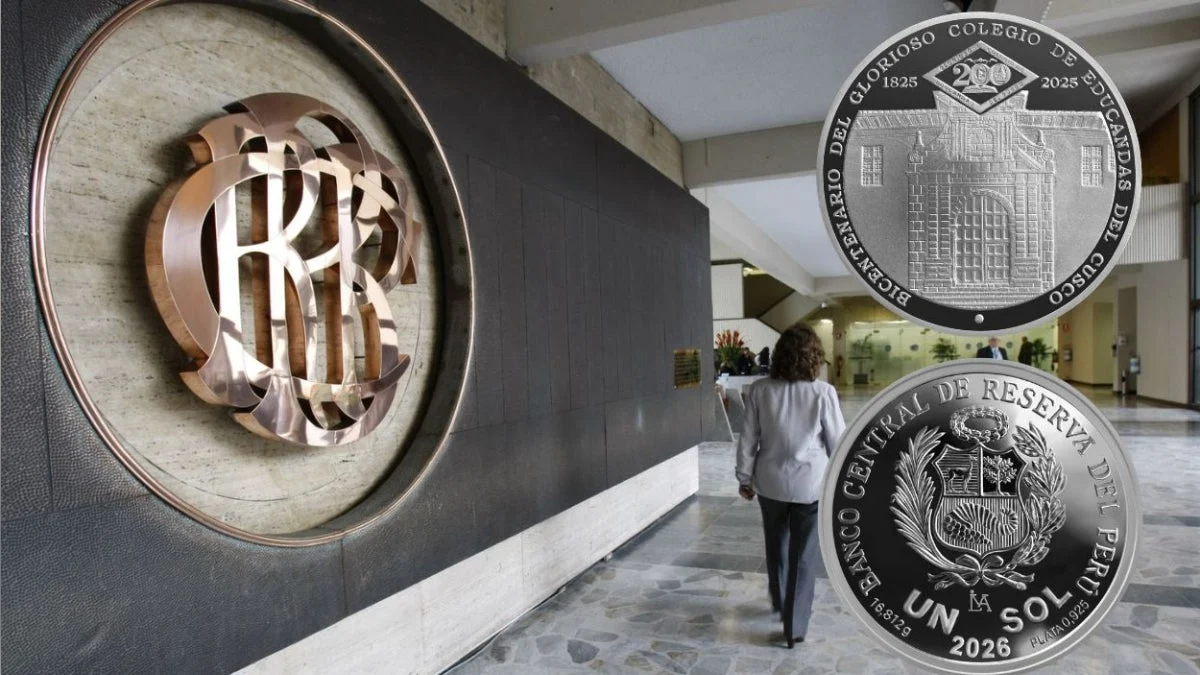
In a tribute to two centuries of educational excellence and the advancement of women’s rights in Peru, the Central Reserve Bank of Peru (BCRP) has officially unveiled a commemorative silver coin honoring the Bicentennial of the Glorioso Colegio de Educandas del Cusco. This institution, which holds the distinction of being the first public school for women in the country, has been a cornerstone of Peruvian intellectual life since the early years of the Republic.
The release of these 5,000 limited-edition coins serves not only as a collector’s item but as a profound historical marker, celebrating an institution that served as a crucible for some of the most influential female voices in Latin American history.
Main Facts: A Numismatic Tribute
Since September 17, the BCRP has made this commemorative piece available to the public. While the coin holds a nominal value of S/ 1, it is a high-quality numismatic asset crafted from 0.925 sterling silver.
Each coin contains half an ounce of fine silver, features a diameter of 33 millimeters, and is minted with a sophisticated "proof" finish—a specialized process that creates a mirror-like background and frosted relief, heightening the detail of the engraving. The edge is reeded, and the coin bears the year of mintage, 2026.
Given its limited production run of only 5,000 units, the BCRP has set the acquisition price at S/ 159. While the coin is technically legal tender, its primary purpose is commemorative, intended for numismatists, historians, and those wishing to own a piece of Peru’s educational heritage.
A Chronology of Empowerment: The History of Colegio de Educandas
To understand the significance of this coin, one must look back to the foundational moment of the school. On July 8, 1825, during his efforts to solidify the independence of the Andean nations, the Liberator Simón Bolívar decreed the establishment of the Colegio de Educandas del Cusco.
Bolívar envisioned an educational system that would include women in the intellectual development of the new republic, an radical idea for the early 19th century.
- 1825: Foundation of the institution by Simón Bolívar, marking the birth of the first public school for women in Peru.
- Mid-19th Century: The school establishes itself as a beacon of learning in the southern Andes, attracting students from prominent families and aspiring scholars alike.
- Late 19th Century: The institution gains national fame for producing students who would redefine the role of women in society.
- 2025: The Bicentennial year, prompting national celebrations and the issuance of the BCRP commemorative currency to immortalize the school’s 200-year contribution to Peruvian culture.
The school’s legacy is perhaps best defined by its distinguished alumni. Among them is Clorinda Matto de Turner, the legendary writer and a precursor of indigenist literature, whose work challenged the social hierarchies of the time. Equally significant is María Trinidad Enríquez, a pioneer who became the first female university student and the first female lawyer in the Americas. These women represent the "Educandas" spirit—a tradition of breaking barriers and demanding intellectual equality.
Technical Specifications and Design Aesthetics
The design of the coin is a marriage of historical symbolism and modern minting technology.
The Obverse: National Identity
The obverse of the coin features the Escudo de Armas del Perú (the Coat of Arms of Peru). Surrounding this national emblem is the formal inscription "BANCO CENTRAL DE RESERVA DEL PERÚ," the year of mintage, 2026, and the face value of "UN SOL."
The Reverse: Architectural Heritage
The reverse side is dedicated to the school itself. It features the prominent phrase "BICENTENARIO DEL GLORIOSO COLEGIO DE EDUCANDAS DEL CUSCO." Central to the design is an exquisite engraving of the entrance door to the Capilla de San Juan de Dios, which is physically attached to the school. The coin also includes the official Bicentennial logo and the commemorative dates "1825–2025," anchoring the institution’s long history in a permanent metal medium.
Official Responses and Accessibility
The BCRP has emphasized that the issuance of this coin is part of their broader mission to highlight key historical milestones that have shaped the Peruvian identity. By choosing to honor an educational institution, the Bank recognizes that the strength of a nation lies in its intellectual foundations.
How to Acquire the Coin
The BCRP has streamlined the purchasing process to ensure that collectors across the country have equitable access. The coins are available exclusively through the BCRP Virtual Portal. Because of the limited mintage of 5,000 units, demand is expected to be high, particularly among residents of Cusco who hold the institution in high local regard.
- Unit Price: S/ 159.00
- Availability: Limited to 5,000 units total.
- Platform: BCRP Virtual Sales Portal
Implications: Why This Matters Today
The commemoration of the Colegio de Educandas goes beyond mere nostalgia. In the modern era, the Bicentennial of this institution serves as a reminder of the slow but steady progress of gender equality in education.
The Role of Women in Nation-Building
The history of the Colegio de Educandas is, in many ways, the history of the struggle for female agency in Peru. When Bolívar founded the school, the concept of a woman with a formal education was met with skepticism by the conservative sectors of society. By honoring the school today, the State is validating the contributions of the thousands of women who passed through its doors and went on to become educators, doctors, lawyers, and writers.
Economic and Cultural Value
From a numismatic perspective, the coin represents a "low-mintage" collectible. Coins with mintage numbers as low as 5,000 often appreciate in value over time, not just because of the silver content, but due to the historical narrative they carry. For the BCRP, this is a way to promote the country’s cultural heritage while engaging with the international community of coin collectors.
A Catalyst for Further Education
The buzz surrounding the coin has prompted a renewed interest in the history of the Colegio de Educandas. Local historians and educators in Cusco have seized the moment to organize seminars and public exhibitions, ensuring that the younger generation understands that the school is not merely a building or a historical footnote, but an active participant in the ongoing story of Peru.
Conclusion
The Glorioso Colegio de Educandas del Cusco is more than a school; it is a monument to the resilience and intellect of Peruvian women. As the BCRP circulates these 5,000 silver coins, it does more than distribute currency—it distributes a memory. Each coin serves as a physical witness to the vision of Simón Bolívar and the intellectual achievements of luminaries like Clorinda Matto de Turner.
For those interested in securing this piece of history, the BCRP Virtual Portal is the gateway. As the country moves past its Bicentennial celebrations, these coins will remain as quiet, enduring testaments to the fact that for 200 years, the Colegio de Educandas has been, and continues to be, a source of light in the heart of Cusco.