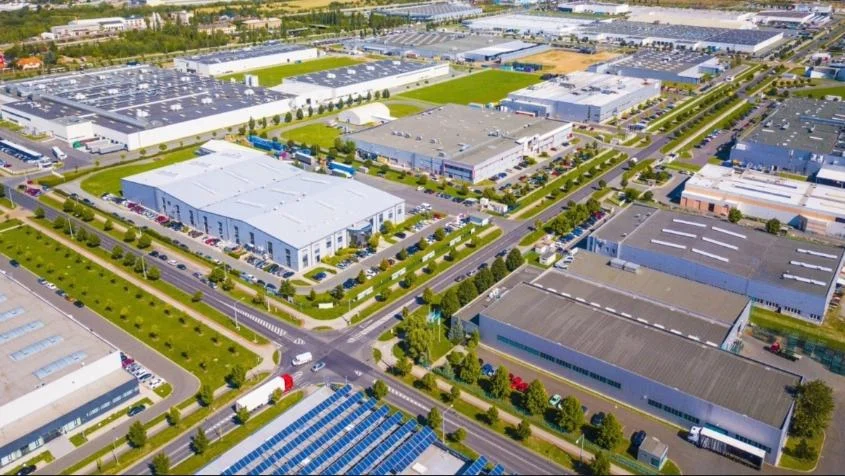
In a significant boost to Mexico’s industrial infrastructure, President Claudia Sheinbaum Pardo has announced the launch of 20 new industrial parks across eight states. This strategic initiative, backed by a $763 million investment from the Mexican Association of Private Industrial Parks (AMPIP), marks a pivotal step in the government’s ambitious "Plan México." The expansion is set to create over 32,000 direct jobs and solidify Mexico’s position as a premier global hub for manufacturing and supply chain logistics.
The Core Facts: A Strategic Industrial Expansion
The announcement, made during the presidential morning briefing, "Las mañaneras del pueblo," confirms that these 20 new developments will span 4.6 million square meters of industrial space. Once completed, these facilities are expected to house approximately 175 companies across various high-value sectors.
By integrating these new projects with existing operations, the administration has successfully reached a 40% milestone in its broader national goal of establishing 100 new industrial parks. This progress, achieved as the administration enters its third year, underscores a concerted effort to decentralize industrial activity and foster regional economic development.
A Chronology of the "Plan México"
The trajectory of Mexico’s industrial policy has been defined by a focus on "nearshoring" and the integration of North American supply chains.
- Early Implementation: The initial phase of the "Plan México" focused on identifying key geographic corridors where infrastructure and labor availability could support large-scale manufacturing.
- Initial Milestone: With the first 20 parks already in full operation, the government and the private sector began mapping out the subsequent wave of investment.
- The Current Announcement: As of late 2026, the commitment of $763 million by AMPIP members represents the largest single-tranche investment in the program’s recent history.
- Future Outlook: With 40% of the 100-park goal now realized or under development, the government aims to accelerate the remaining 60% of the project pipeline, ensuring that regional disparities in wealth distribution are addressed through sustained industrialization.
Regional Breakdown: Where the Growth is Happening
The government’s strategy is highly localized, focusing on four major corridors to leverage existing logistical advantages:

1. The AIFA Corridor (Central Mexico)
Surrounding the Felipe Ángeles International Airport (AIFA), this region is becoming a logistical powerhouse. Five new parks will be established across five strategic municipalities, comprising 166,000 square meters of industrial floor space. This hub is expected to attract 26 companies and generate 1,727 jobs, catering specifically to air cargo and rapid-distribution logistics.
2. The Northern Border (Coahuila and Nuevo León)
The most aggressive expansion is occurring along the U.S.-Mexico border. With 10 new parks, this region will account for the majority of the investment, covering 3.16 million square meters. This area is poised to host 75 companies and create a staggering 26,800 jobs, capitalizing on the proximity to the North American market and the ongoing migration of manufacturing from Asia to Mexico.
3. The Bajío Region (Aguascalientes, Guanajuato, and Querétaro)
Known for its automotive and high-tech clusters, the Bajío will receive three new industrial parks covering 915,000 square meters. These facilities will accommodate 54 companies and provide 1,500 new employment opportunities, further cementing the region’s reputation as a center for precision engineering and automotive assembly.
4. The Gulf of California (Baja California)
Two new parks in this region will occupy 309,000 square meters, hosting 20 companies and creating 2,100 jobs. This expansion is critical for maintaining the momentum of the regional tech and electronics manufacturing sectors.
Official Responses and Strategic Vision
President Sheinbaum emphasized that this success is a testament to the "triple helix" model of cooperation—a synergy between the government, private enterprise, and the local workforce. "We are moving forward with a clear vision," the President stated. "The fact that we are nearing the 40% mark of our goal proves that the private sector trusts in the stability and future of the Mexican economy."

Ximena Escobedo Juárez, Subsecretary of Industry and Commerce at the Secretariat of Economy, noted that the distribution of these parks across 17 municipalities is intentional. The goal is to ensure that economic growth is not concentrated solely in major metropolitan areas but is distributed throughout the states to provide equitable opportunities for the population.
David O’Donnell, President of the AMPIP Board, echoed this sentiment, highlighting the resilience of the Mexican industrial sector. "We believe in Mexico, we trust in Mexico, and we continue to invest in Mexico," O’Donnell declared. He emphasized that these parks are being built "in line with demand," signaling that the investments are driven by real-world market needs rather than speculative construction.
Broader Implications: A $4.6 Billion Catalyst
Beyond the $763 million allocated for the 20 new parks, the broader economic strategy for 2026 involves a massive $4.6 billion infusion across several critical industries. This capital is earmarked for:
- Autopartes (Auto Parts): Supporting the transition to electric vehicle manufacturing.
- Medical Devices: Expanding Mexico’s role in global healthcare manufacturing.
- Aerospace: Strengthening the supply chain for international aerospace firms.
- Machinery and Electronics: Enhancing the technical capacity of the Mexican manufacturing workforce.
These investments are designed to strengthen Mexico’s position within the North American bloc (USMCA). By increasing the local content of goods manufactured in Mexico, the country is mitigating the risks associated with global supply chain volatility and reducing lead times for North American partners.
AMPIP: Four Decades of Industrial Leadership
The announcement coincides with a milestone year for the AMPIP, which is celebrating its 40th anniversary in 2026. The organization remains the backbone of Mexico’s industrial sector, currently representing 143 associates across 28 states. With 493 parks already in their portfolio, housing 4,000 companies and supporting 3.8 million jobs, the AMPIP’s role in steering the national industrial policy is more critical than ever.

Conclusion: The Path Ahead
The commitment to 20 new industrial parks is more than just a real estate development project; it is a manifestation of Mexico’s long-term economic trajectory. As the country moves toward the final 60% of its goal, the focus will likely shift toward sustainable industrial practices, digital transformation, and the integration of renewable energy sources within these new hubs.
By fostering a collaborative environment, Mexico is not only meeting its immediate infrastructure needs but is also preparing for the next decade of global trade. The partnership between the state and the private sector ensures that the industrial parks of today will become the engines of economic prosperity for generations to come, firmly establishing Mexico as an indispensable partner in the global industrial landscape.