Executive Summary: A Balancing Act
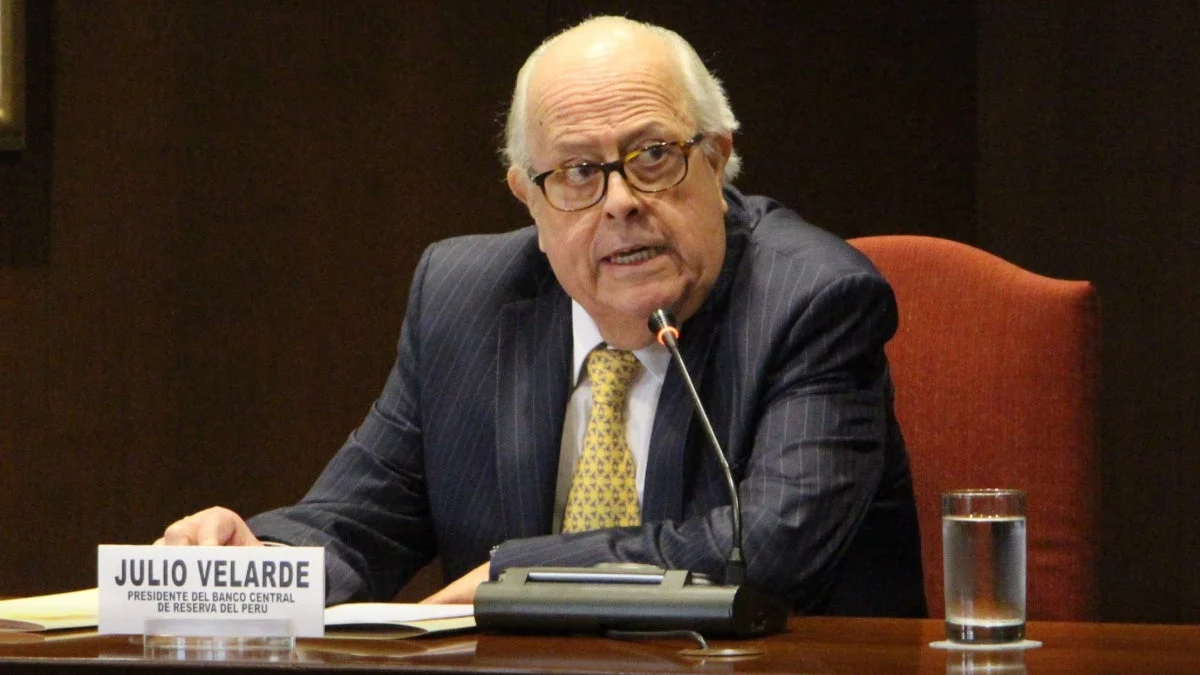
In an increasingly fractured global landscape, Peru finds itself at a critical economic juncture. During the VII Congress of Amazonian Entrepreneurs (CEA) held in Pucallpa, Ucayali, the President of the Central Reserve Bank of Peru (BCR), Julio Velarde, provided a comprehensive diagnostic of the nation’s financial health. While affirming that Peru maintains one of the most robust macroeconomic foundations in Latin America, Velarde underscored two primary "clouds" on the horizon: the geopolitical instability in the Middle East—which continues to exert upward pressure on global fuel prices—and the looming, tangible threat of the El Niño phenomenon on domestic food security and infrastructure.
The Chronology of Uncertainty: From Global Conflict to Local Weather
To understand the current economic sentiment in Peru, one must look at the convergence of international and domestic stressors that have unfolded over the past twelve months.
- Early 2023: Initial recovery efforts from post-pandemic inflation were hampered by rising logistical costs.
- Mid-2023: The emergence of climate forecasting models confirmed the high probability of a severe El Niño event, causing the BCR to revise its growth outlooks downward.
- Late 2023: The escalation of the conflict in the Middle East introduced a new, volatile variable: energy security. As oil prices fluctuated, the cost of transportation and distribution—critical in a country as geographically diverse as Peru—faced persistent upward pressure.
- Current Status: As of the latest CEA address, Velarde identifies these as the two "anchors" holding back a more robust recovery, despite the country’s strong fiscal and monetary fundamentals.
Supporting Data: Why Peru Remains a Regional Outlier
Despite the aforementioned risks, the BCR’s message to investors is one of measured confidence. Julio Velarde’s assertion that "Peru is in a very solid position compared to the rest of the region" is supported by several key economic indicators that differentiate the Andean nation from its neighbors.
1. Anchored Inflation Expectations
One of the primary mandates of the BCR is price stability. Despite the inflationary shocks caused by global supply chain disruptions and local climate events, the BCR has successfully kept inflation expectations within the target range over the medium term. By maintaining high credibility, the Bank has prevented the "de-anchoring" of expectations, a phenomenon that has plagued other economies in the region where inflation remains stubbornly high.
2. Fiscal and Monetary Discipline
Peru’s sovereign credit rating remains one of the highest in Latin America, bolstered by years of prudent fiscal management. The central bank’s significant international reserves act as a massive buffer against currency volatility, allowing the Sol to remain one of the most stable currencies in the emerging market space.
3. Investment Climate
The VII Congress of Amazonian Entrepreneurs serves as a microcosm for the country’s potential. Investors, particularly those looking at the Amazonian region—a critical hub for bio-economy, forestry, and sustainable energy—often cite the predictability of the BCR’s monetary policy as a decisive factor for long-term capital commitment.
The Dual Threat: Fuel and Climate
Velarde’s warning regarding the "high prices of fuels" is not merely a statement on energy; it is an acknowledgment of the structural vulnerability of the Peruvian economy.
The Middle East Conflict
The persistent conflict in the Middle East has created a "risk premium" on crude oil that shows no sign of abating. Because Peru is a net importer of refined fuels, the domestic market is highly sensitive to these global shocks. High energy costs act as a hidden tax on every Peruvian household, increasing the price of goods and services through the logistics chain.
The El Niño Phenomenon: A Macroeconomic Risk
Perhaps more pressing than the international energy crisis is the domestic climate emergency. Velarde explicitly identified El Niño as the "greatest risk" to the economy. The impacts are three-fold:
- Inflationary Impact: The destruction of crops, particularly in agricultural hubs like Piura, leads to immediate supply shortages, driving up food prices and disproportionately affecting the most vulnerable sectors of the population.
- Productivity Impact: The disruption of the labor force and agricultural yields directly impacts the GDP.
- Infrastructure Impact: As seen in recent torrential rains, the degradation of roads, bridges, and irrigation systems requires massive fiscal outlays for reconstruction, diverting funds that could have been used for development and poverty alleviation.
Official Responses and Strategic Directions
The BCR, under Velarde’s stewardship, continues to employ a data-driven approach to navigate these threats. The Bank’s strategy involves:
- Monetary Policy Flexibility: While the BCR has been cautious, it remains ready to adjust interest rates to support the economic recovery, provided that inflation remains under control.
- Public-Private Collaboration: Velarde’s presence at the CEA was designed to facilitate a dialogue with the private sector. The BCR is encouraging businesses to factor these macroeconomic variables into their investment strategies, urging caution regarding debt-heavy expansions while highlighting opportunities in resilient sectors.
- Infrastructure Resilience: The Bank is advocating for more efficient public spending directed toward climate-resilient infrastructure. The message is clear: short-term savings on construction quality will lead to long-term systemic losses during future climate events.
Implications: A Roadmap for the Future
The implications of Velarde’s diagnostic for the Peruvian economy are profound.
For the Private Sector
Investors are being told to prepare for a "new normal" where external shocks are frequent. The focus must shift toward efficiency, supply chain diversification, and risk management. The Amazonian region, in particular, offers untapped potential, but success there requires navigating the climate risks that Velarde highlighted.
For the Government
The fiscal space is limited. The government must prioritize investments that mitigate the impact of El Niño. This includes investing in better drainage systems, climate-resistant crop varieties, and robust early-warning systems. Failure to address these vulnerabilities will not only lead to higher inflation but could potentially erode the very "macroeconomic stability" that the BCR has worked so hard to preserve.
For the Citizen
The average Peruvian should expect a period of "cautious stability." While the country is not facing a collapse, the pressure on food and fuel prices is likely to persist until global geopolitical conditions stabilize and the effects of the current climate cycle subside.
Conclusion: The Resilience of the Peruvian Model
Julio Velarde’s assessment at the VII Congress of Amazonian Entrepreneurs serves as both a warning and a vote of confidence. By acknowledging the severity of the risks—the Middle Eastern conflict and the climate-driven inflationary pressures—he maintains the transparency that has made the BCR one of the most respected institutions in the country.
Peru remains a regional standout, not because it is immune to global turmoil, but because it possesses the institutional strength to withstand it. As the country moves forward, the synergy between fiscal prudence, monetary stability, and climate-conscious infrastructure development will determine whether Peru can transition from its current state of "solid resilience" to a period of renewed, sustainable growth. The road ahead is fraught with external variables, but the bedrock of the Peruvian economy remains, for now, firmly in place.