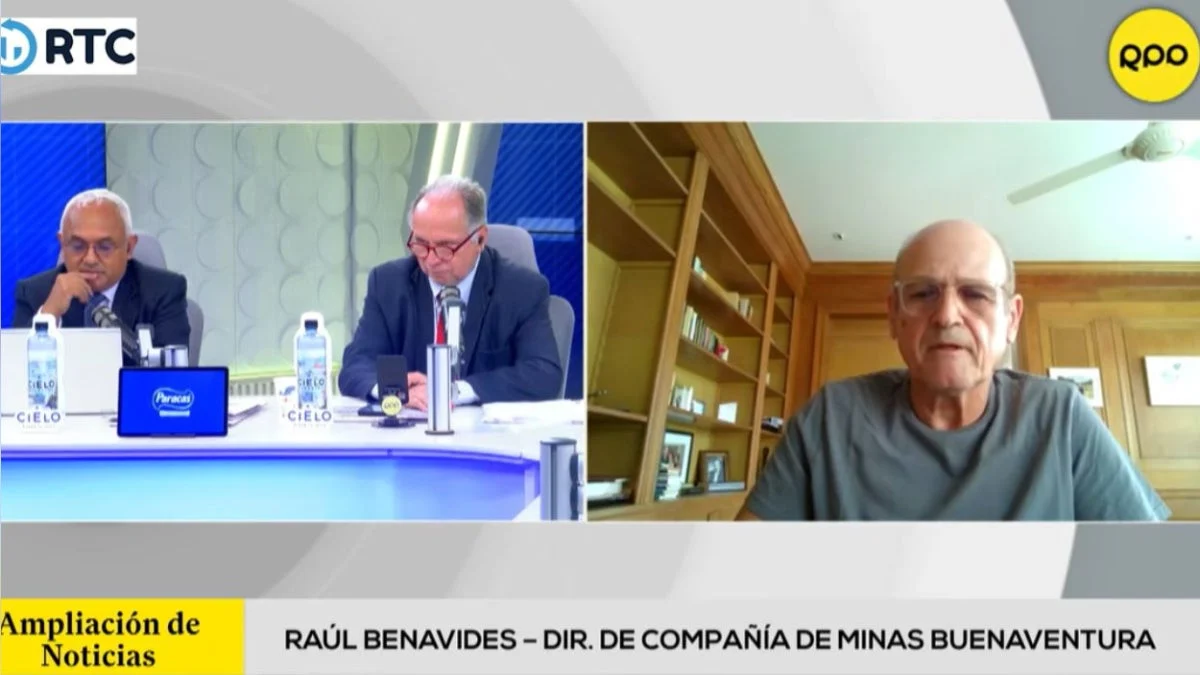
The Peruvian mining sector, a cornerstone of the nation’s economy, stands at a pivotal juncture. As the government advances its proposed Law for Artisanal and Small-Scale Mining (MAPE), key industry voices are calling for a fundamental shift in how the state manages the transition from informality to legality. Raúl Benavides, director of the mining giant Buenaventura, has emerged as a central figure in this debate, arguing that while the new legislative framework offers necessary tools for oversight, it must be bolstered by aggressive measures to curb illicit trade and protect the Amazon basin from irreversible ecological devastation.
Main Facts: The Debate over the MAPE Law
The proposed MAPE law is designed to overhaul the current regulatory landscape for small-scale miners, aiming to replace the widely criticized Registro Integral de Formalización Minera (Reinfo). For years, Reinfo has been accused of acting as a "legal umbrella" under which illegal mining activities have flourished, shielded from effective state intervention.
Benavides’ critique centers on a core paradox: the formalization process, intended to bring miners into the fold of legal compliance, has frequently served as a mechanism for impunity. The proposed legislation introduces several technical improvements, including the implementation of electronic filing systems to streamline communication between the state and small-scale miners. Furthermore, it mandates a multi-institutional approach to fiscalization, involving the Ministry of Energy and Mines (MINEM), the Environmental Assessment and Enforcement Agency (OEFA), the energy regulator Osinergmin, and the labor oversight body Sunafil.
However, the primary friction point remains the balance between promoting economic activity and enforcing environmental and labor standards. Benavides maintains that the state cannot, under any circumstances, allow formalization to grant immunity to those who engage in environmental degradation or operate under conditions that jeopardize human life.
Chronology of a Regulatory Failure
To understand the urgency of the current proposal, one must examine the evolution of mining policy in Peru over the last two decades:
- 2002–2010: The rise of small-scale mining begins to accelerate, driven by high global gold prices. State oversight remains largely reactive and decentralized.
- 2012: The government launches the formalization process under the Reinfo framework. Initially intended to be a temporary bridge for artisanal miners to adopt legal standards, it suffers from administrative bottlenecks and corruption.
- 2016–2019: Reports of widespread environmental destruction in the Madre de Dios region intensify. The term "Reinfo" becomes synonymous with the protection of illegal operations, with critics—including high-level judiciary figures—labeling it a "license to kill."
- 2020–2023: The pandemic exacerbates labor abuses in the mining sector. Security risks related to the illicit trade of explosives skyrocket, leading to the current legislative push for the MAPE law.
- 2024: The government introduces the new MAPE law, aiming to impose stricter controls on mineral processing plants and explosive usage, prompting the current public debate on its efficacy.
Supporting Data: The Shadow Economy of Minerals
The economic and human toll of the current informal mining model is staggering. According to industrial data and environmental audits, a significant portion of the gold exported from Peru lacks a clear, transparent chain of custody. This "shadow gold" is often laundered through small-scale processing plants that claim to be part of the formalization process.
Benavides highlights that the lack of oversight at the point of sale is the "Achilles’ heel" of the current system. By allowing cash transactions for mineral purchases, the industry effectively enables money laundering and the financing of criminal organizations.
Key figures supporting the need for reform include:
- Explosives Proliferation: Current projections suggest that thousands of tons of commercial explosives are diverted to illegal mining sites annually, contributing to regional violence and unsafe working conditions.
- Environmental Degradation: The deforestation rates in the Amazon linked to mercury-intensive gold mining have reached historic highs, with thousands of hectares of protected rainforest lost annually.
- Labor Precarity: Thousands of miners operate without basic safety equipment, insurance, or legal contracts, representing a significant human rights challenge that the formalization process has yet to solve.
The Call for Radical Transparency: Prohibiting Cash Transactions
One of the most consequential proposals voiced by Benavides is the absolute prohibition of cash payments in the commercialization of minerals. The logic is simple but transformative: by forcing all transactions into the formal banking system, the state can effectively track the "DNA" of the gold from the extraction site to the final buyer.
"The problem is at the point of the first sale," Benavides argues. If the state forces buyers—both domestic and international—to verify the legal origin of the minerals, the incentive structure for illegal mining collapses. Currently, buyers often turn a blind eye to the origins of the mineral, provided the price is competitive. The new law, according to the director, must shift the burden of proof onto the purchaser. If a buyer cannot demonstrate that the gold was sourced from a legal, registered, and environmentally compliant operation, the transaction should be treated as a criminal act.
Official Responses and Stakeholder Perspectives
The government’s response to these proposals has been cautious. While MINEM officials have welcomed the suggestions regarding electronic filing and multi-agency cooperation, they remain concerned about the administrative capacity of the state to enforce such stringent controls in remote areas of the Amazon.
Industry associations representing artisanal miners, conversely, have expressed concerns that excessive bureaucracy could drive even more miners into the shadows. They argue that formalization must be a "pathway," not a "barrier." However, legal experts and environmental advocates have largely sided with Benavides, asserting that the "social license to operate" is contingent upon strict adherence to environmental laws, and that any "flexibility" in the law is simply an invitation to further abuse.
Implications for the Future of Peru’s Mining Industry
The implementation of the MAPE law, if amended to include the recommendations provided by industry leaders like Benavides, could set a global precedent for how developing nations manage artisanal and small-scale mining.
1. Environmental Restoration
By focusing on the Amazon, the law could provide the necessary enforcement mechanism to halt the mercury contamination of river basins. If processing plants are strictly audited, the illicit flow of gold will be throttled, reducing the profitability of illegal operations that currently rely on environmental destruction.
2. Economic Formalization
Transitioning thousands of workers from "shadow" employment to the formal sector will improve tax collection and, more importantly, ensure that these workers are protected by national labor laws. This represents a significant shift from the current "abusive" model to a sustainable economic practice.
3. Security and Stability
Controlling the supply chain of explosives will directly impact the security situation in mining regions. By eliminating the anonymity of the explosive trade, the state can dismantle the logistics chains that support criminal gangs, thereby restoring order to areas currently gripped by violence.
4. A Model for Global Compliance
As international markets—particularly in Europe and North America—begin to demand "clean" gold, Peru stands to gain a competitive advantage by cleaning up its supply chain. If the MAPE law succeeds, Peruvian gold could command a premium, whereas continuing to allow illegal gold into the system risks international sanctions and exclusion from ethical supply chains.
Conclusion
The debate surrounding the MAPE law is not merely a technical dispute over regulations; it is a moral test for the Peruvian state. As Raúl Benavides aptly summarized, "We can accept many things, but we cannot accept that they kill people or destroy the environment."
The path forward requires a courageous commitment to transparency. By eliminating cash transactions, enforcing the liability of the buyer, and prioritizing the preservation of the Amazon over the interests of illicit operators, Peru has the opportunity to transform its mining sector from a source of conflict into a pillar of sustainable development. The success of this endeavor will depend on whether the government chooses to prioritize the long-term health of its people and ecosystems over the short-term political convenience of maintaining an inefficient, and often lethal, status quo.