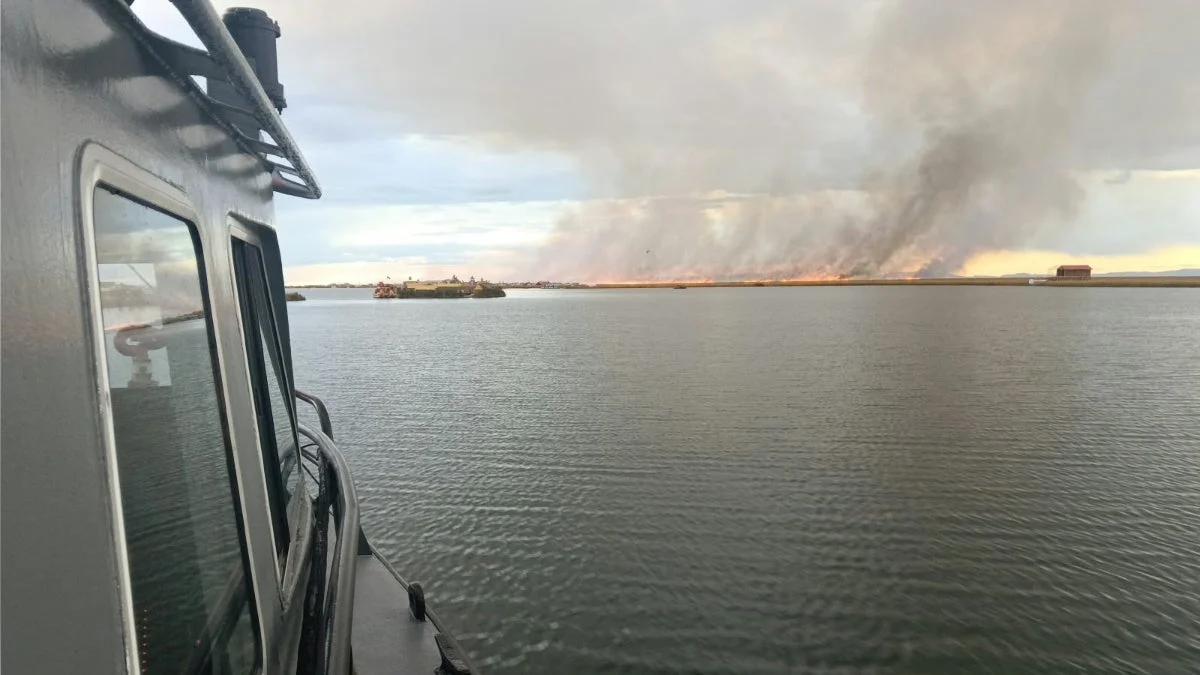
PUNO, PERU – The serene yet fragile ecosystem of Lake Titicaca, a crown jewel of Andean heritage, faces a renewed environmental challenge. As flames continue to threaten the iconic totorales (reed beds) surrounding the floating islands of the Uros, the Peruvian Ministry of Defense (Mindef) has escalated its emergency response. The Marina de Guerra del Perú (MGP) has deployed the lacustrine patrol vessel LP Ramis to the heart of the crisis, underscoring the severity of a fire that has proven difficult to contain due to the unique geography and vegetation of the region.
Main Facts: A Strategic Deployment in High Altitudes
The situation in Puno has prompted an immediate, high-stakes intervention. According to official reports, the LP Ramis is currently navigating toward the affected sector with a specialized crew of six personnel. This team is equipped with critical firefighting infrastructure, including an onboard fire suppression system and high-capacity motobombs equipped with specialized hoses designed to draw water directly from the lake to douse the blaze.
The fire, which initially surfaced on Tuesday and saw a localized containment effort, experienced a dangerous resurgence on Wednesday. This development necessitated the mobilization of the Dirección General de Capitanías y Guardacostas del Perú (DICAPI). The primary objective of the current mission is not merely to suppress active flames, but to establish a perimeter that prevents further encroachment into the sensitive floating island habitats that serve as both a cultural landmark and a vital ecological sanctuary.
Chronology of the Crisis: From First Report to Sustained Operations
The timeline of the disaster highlights the volatility of the lake’s ecosystem:
- Tuesday, [Date]: Initial reports of smoke and fire emerge from the totorales near the Uros Islands. Local residents and initial responding units from the Marina de Guerra perform immediate suppression maneuvers. By the end of the day, authorities tentatively report the fire as controlled.
- Wednesday Morning: The president of the Uros community raises the alarm once again. The fire has reactivated, fueled by strong winds and the dry nature of the totora reeds, which serve as highly combustible fuel during periods of low humidity.
- Wednesday Midday: The Ministry of Defense activates its emergency protocols. The LP Ramis is dispatched from the local port with specialized gear and a reinforced crew.
- Wednesday Evening: DICAPI personnel arrive on-site. Joint efforts between naval officers and local community members succeed in preventing the spread toward the main dwellings of the Uros.
- Thursday (Ongoing): While no casualties have been reported, the battle against "hot spots" continues. Authorities remain on high alert to ensure that the smoldering reeds do not reignite under the intense Andean sun.
The Ecological and Cultural Significance of the Totorales
To understand why this fire is treated with such gravity, one must understand the function of the totorales. These reed beds are not merely "weeds"; they are the foundational material for the Uros people’s entire way of life. The islands themselves, the boats (balsas), and the local economy are all intrinsically linked to the Schoenoplectus californicus (totora).
Furthermore, these reed forests act as a natural filtration system for Lake Titicaca and provide essential breeding grounds for endemic bird species and fish. A large-scale fire in this area causes long-term damage to the biodiversity of the world’s highest navigable lake. The environmental implications of losing these sections are profound, as they provide natural barriers against erosion and support a complex food web.
Official Responses and Tactical Coordination
The Ministry of Defense has been clear: the protection of the Uros community and the preservation of the lake’s environment are paramount. The coordination between the DICAPI, the Marina de Guerra, and the local leadership of the Uros demonstrates an integrated approach to disaster management.
"Our priority remains the safety of the inhabitants and the neutralization of the fire’s progress," stated a spokesperson for the Ministry of Defense. "The deployment of the LP Ramis represents a significant escalation in our ability to combat fires in areas where traditional land-based vehicles cannot operate."
The absence of human casualties is a testament to the swift evacuation protocols and the vigilance of the Uros community members, who were the first to identify the resurgence of the blaze. Investigations are currently underway to determine the cause of the fire. While human activity—often linked to agricultural clearing or accidental sparks—is a frequent cause in such regions, authorities are not ruling out environmental factors such as spontaneous combustion in highly dried-out vegetation, though this remains less likely.
Implications: A Vulnerable Ecosystem in a Changing Climate
The incident in Puno serves as a broader reminder of the vulnerability of Peru’s natural heritage. As climate change alters precipitation patterns in the Andes, the lake’s surrounding flora becomes increasingly susceptible to fires that were once rare or easily managed.
Implications for Tourism and Economy
The Uros Islands are a cornerstone of Puno’s tourism industry. Any threat to the integrity of these islands directly impacts the livelihoods of thousands of people who rely on eco-tourism. The visual and environmental scarring caused by this fire will require a period of recovery, potentially affecting the region’s appeal in the short term.
Challenges for Future Prevention
Moving forward, the Peruvian authorities face the challenge of implementing fire-prevention strategies that respect the traditional lifestyle of the Uros. How does one implement a "fire break" in a landscape that is constantly floating and changing? This is a question that regional governments, environmental scientists, and the Peruvian Navy will need to address collaboratively.
Increased patrols, the installation of early-warning sensors, and better education regarding fire safety in the reeds are among the proposed solutions being discussed by the Puno regional authorities.
Conclusion: A Resilient Community and an Unwavering Defense
As of the latest reports, the situation in the totorales is considered stable but critical. The persistence of the LP Ramis crew and the collaborative spirit of the Uros people highlight a strong front against the disaster. The investigation into the origins of the fire continues, with the government promising full transparency once the final report is synthesized.
For now, the focus is on total suppression. The world watches as the Peruvian authorities apply both modern naval technology and traditional knowledge to save a part of the world that is as fragile as it is beautiful. The resilience of the Uros—a civilization that has lived on these waters for centuries—is mirrored by the commitment of the Peruvian state to defend this unique, floating heritage. As the smoke clears, the focus must shift to restorative efforts, ensuring that the totorales can recover and continue to support the life, culture, and ecology of the high-altitude Andes.