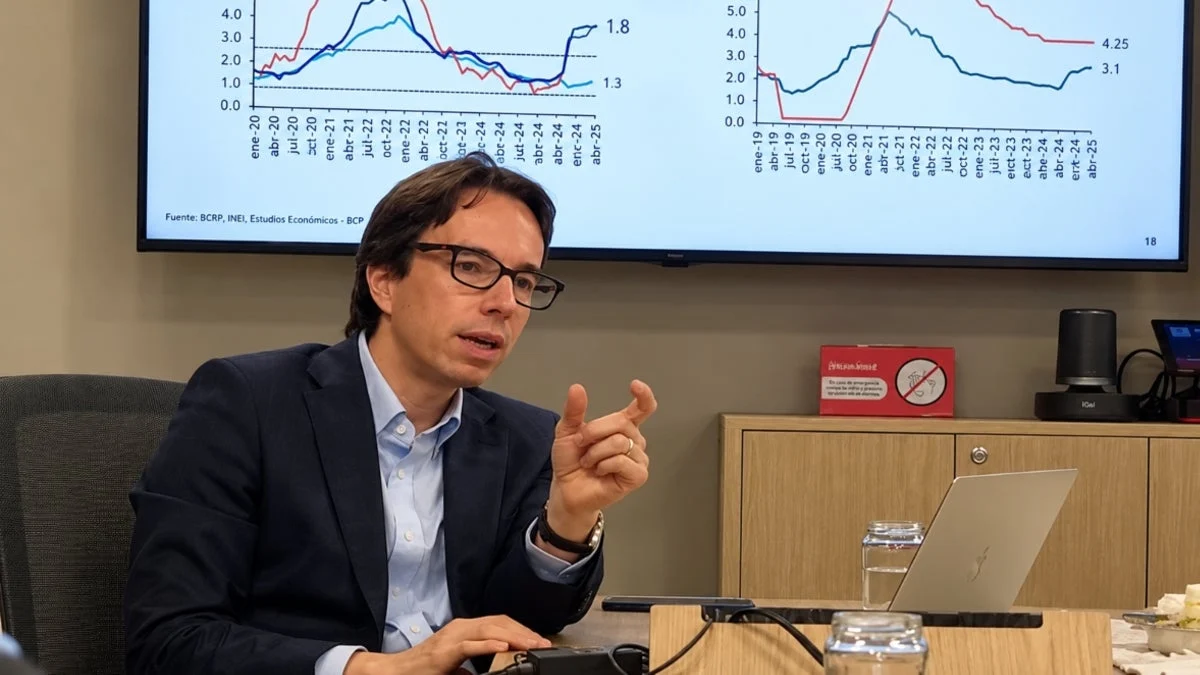
In a pivotal moment for the Peruvian economy, the administration of President Keiko Fujimori faces a critical window of opportunity to consolidate investor confidence and steer the nation through looming climatic and structural challenges. According to Daniel Velandia, Chief Economist at Credicorp Capital, the government’s success in the coming months will hinge on its ability to deliver "early victories"—specifically in the realm of public safety and institutional stability.
As the nation prepares for the potential intensification of the El Niño phenomenon, which threatens to disrupt supply chains and productivity, the private sector remains in a state of cautious anticipation. Velandia argues that while Peru boasts some of the strongest macroeconomic fundamentals in Latin America, these are currently overshadowed by the pervasive uncertainty surrounding the rule of law and the rising tide of criminality.
The Mandate for "Quick Wins"
The central thesis presented by Velandia is that the Fujimori administration cannot afford a slow start. In the complex landscape of modern governance, the "honeymoon period" is increasingly truncated by the demands of a volatile global market and an impatient domestic business sector.
"The government needs to produce quick wins," Velandia stated in a recent interview. For the business community, these are not merely symbolic gestures but essential signals that the state is capable of governing effectively. Business leaders are looking for concrete evidence that the executive branch and the Congress are aligned in their commitment to institutional stability.
The urgency stems from a decade of political turbulence. With a history of frequent presidential transitions and ministerial turnover, the predictability required for long-term capital investment has been severely eroded. Velandia emphasizes that investors are fundamentally risk-averse; when they cannot forecast the policy environment for the next three to five years, they pause their projects, leading to a stagnation of the national economy.
Chronology of Challenges: From Political Instability to Climatic Threat
The path ahead for the Fujimori administration is marked by a specific sequence of pressures that will define its inaugural year:
- Months 1-3 (The Foundation Period): This initial phase is dedicated to setting the tone. The government must establish a legislative agenda that prioritizes the reduction of bureaucratic red tape and provides clear, consistent signals regarding tax and regulatory stability.
- Months 4-6 (The Security Threshold): By the end of this period, the administration is expected to show measurable progress in crime reduction. Failure to suppress criminal activity during this window will likely solidify the perception that the state is losing control, further dampening investor sentiment.
- November 2026 – March 2027 (The Climatic Gauntlet): Credicorp Capital identifies this period as the most difficult for the economy. The El Niño phenomenon is expected to reach its peak impact, threatening agriculture, infrastructure, and logistics.
- The Post-Climatic Recovery (Mid-2027): Assuming the government successfully navigates the climate crisis, the latter half of 2027 will be the time to pivot toward long-term structural reforms and the acceleration of the $100 billion investment pipeline.
The Security Crisis as an Economic Impediment
Perhaps the most striking point in Velandia’s analysis is the inextricable link between public safety and macroeconomic performance. He notes that the rise of criminality—which has become a primary concern for the productive sector—is now a direct tax on investment.
"It is necessary to start delivering resounding blows in the short term," Velandia remarked, drawing parallels to the political rise of leaders like Keiko Fujimori herself, as well as regional counterparts such as José Antonio Kast in Chile or Abelardo de la Espriella in Colombia. For these leaders, security was not merely a social issue; it was the "lever" used to gain public trust.

When businesses are forced to invest in private security, insurance premiums rise, and operational hours are curtailed, the overall competitiveness of the Peruvian economy suffers. If the state fails to reclaim the streets and protect key economic corridors, the business sector will naturally shift toward defensive, rather than expansionary, strategies.
Structural Foundations and the $100 Billion Opportunity
Despite the prevailing headwinds, Peru’s economic potential remains vast. Credicorp Capital identifies a massive portfolio of potential investments totaling over US$100 billion. This figure includes:
- The Mining Sector (US$60 billion+): As the backbone of the Peruvian economy, the mining sector remains the primary engine for growth. However, these projects are highly sensitive to social license and regulatory stability.
- Infrastructure and Energy (US$40 billion): This includes vital upgrades to the nation’s transport, energy, and water management systems, all of which are essential for mitigating the future impacts of climate events.
Velandia stresses that this $100 billion is not a guarantee of future prosperity, but rather a "potential" that requires a specific enabling environment. The government’s role is to act as a facilitator. By reducing the "tramitología" (excessive red tape), the administration can unlock these funds. The current macroeconomic data—including low debt-to-GDP ratios, manageable fiscal deficits, and favorable terms of trade—positions Peru as the top performer in Latin America in terms of fundamental health. The missing link, therefore, is not capital or resources, but political execution.
Projections and Economic Implications
Credicorp Capital’s outlook for the next two years reflects a cautious optimism contingent on government performance. The firm projects a 3.2% growth rate for the Peruvian economy at the end of 2026, followed by a 3% expansion in 2027.
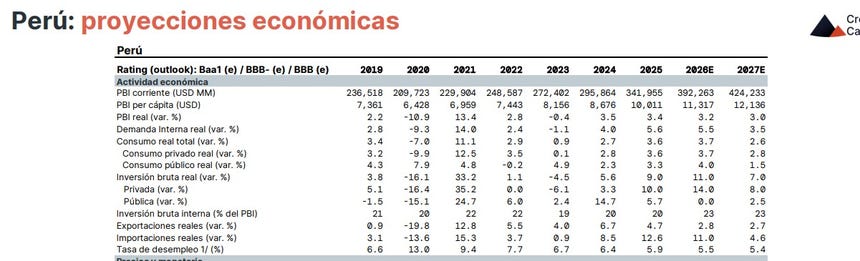
These figures, however, incorporate a significant "climate discount." Velandia estimates that the cumulative impact of El Niño over these two years will subtract approximately two percentage points from the country’s potential growth. In a worst-case scenario—characterized by extreme weather events and a failure to implement necessary mitigation measures—the GDP growth rate could potentially drop to 2.2% by 2027.
Implications for the Private Sector
For the business community, the message is clear:
- Risk Management: Investors should prioritize projects with high resilience to climate change and strong community engagement.
- Policy Monitoring: The focus should be on the legislative output of the Congress and the administrative consistency of the ministries. Frequent changes in leadership remain the biggest "red flag" for long-term capital commitment.
- Efficiency: Given the structural barriers, firms must focus on operational efficiency to buffer against the potential for decreased economic momentum in early 2027.
Conclusion: A Turning Point for the Administration
The Fujimori government finds itself at a crossroads where economic theory meets the harsh reality of domestic governance. The roadmap provided by Credicorp Capital is straightforward: secure the streets, stabilize the rules of the game, and prepare for the coming climate shock.
If the administration can move beyond rhetoric and deliver on the promise of "early victories," the investment community is poised to support a period of significant growth. However, if the government becomes mired in the same cycle of political volatility that has defined the last decade, the massive $100 billion pipeline will likely remain dormant. The next six months will not only define the success of this administration but will set the trajectory for Peru’s development for the remainder of the decade. The economic fundamentals are in place; it is now a matter of political will.