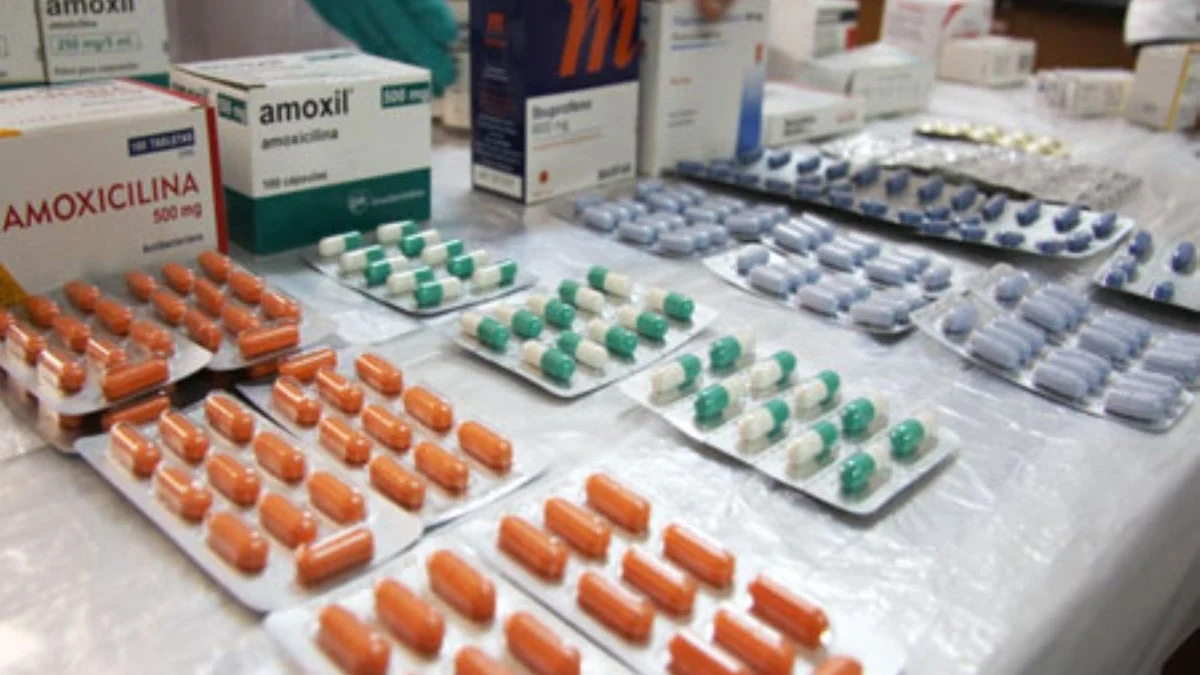
The landscape of private healthcare in Peru is currently undergoing a intense regulatory scrutiny as the Congressional Health Committee deliberates a transformative piece of legislation. The proposed bill seeks to dismantle the long-standing practice where private clinics utilize inflated reference prices for medications, a system that currently forces patients to pay up to 14 times more for essential drugs compared to retail pharmacies. With the Ministry of Health (Minsa) offering its formal support, the debate has moved beyond mere legislative posturing, forcing a reckoning regarding transparency, pricing transparency, and the ethics of medical billing.
The Core Conflict: A Systemic Pricing Distortion
At the heart of the controversy is the methodology used by private clinics to determine the price of medications sold to patients. Currently, many institutions rely on "Kairos"—a commercial database of pharmaceutical prices—as their primary benchmark for setting the cost of drugs administered during treatments or prescribed during hospitalizations.
The legislative proposal, championed by Congressman Diethell Columbus of the Fuerza Popular party, argues that this benchmark is fundamentally disconnected from market reality. By analyzing a series of price comparisons, the bill highlights that in 87 out of 93 instances, the average market price of drugs was significantly lower than the reference price used by clinics. In fact, the median difference between the two stands at a staggering 57.1% in favor of the market price, indicating that patients with insurance coverage are often penalized by the very metrics intended to provide them with "discounts."
The fundamental problem identified by the bill is that insurance discounts or copayments are applied to an artificially high "reference price." Consequently, even after a patient receives an 80% discount on a medication, they may still end up paying significantly more than the retail price available at a neighborhood pharmacy.
Chronology of a Regulatory Crisis
The movement toward this reform did not emerge in a vacuum. It is the culmination of years of consumer complaints and shifting regulatory priorities within the Peruvian healthcare sector.
- 2023–2025: Growing public outcry regarding the high cost of medical care in private clinics leads to increased oversight by consumer protection agencies.
- Early 2026: A comprehensive comparative analysis is conducted, documenting massive discrepancies between clinical pharmacy prices and the broader retail market. This data forms the bedrock of the current legislative proposal.
- Mid-2026: Congressman Diethell Columbus formally introduces the bill to the Health Committee, arguing that current pricing models are predatory and opaque.
- Late 2026: The Ministry of Health (Minsa) provides a formal favorable opinion on the project, signaling a paradigm shift in how the government intends to regulate private sector medical costs.
- Current Status: The bill is undergoing active debate within the Chamber of Deputies, with stakeholders from the medical community, the clinic association, and government regulators providing testimonies.
Supporting Data: The Case for Reform
The statistics presented in the project’s motivation are, by any measure, alarming. They illustrate a market where the lack of competition and the use of proprietary reference databases have created a vacuum of accountability.
Selected Price Discrepancies
The document highlights specific medications that serve as stark examples of the "14x" pricing phenomenon:
- Ceftriaxone (1g Injectable): A vital antibiotic used for bacterial infections. The average market price is S/10.83, while the clinic average reached S/158.88—a markup of nearly 15 times.
- Ondansetron (8mg/4ml Injectable): Used to prevent nausea and vomiting. While available for S/4.95 in the retail market, it carries a price tag of S/71.40 in private clinics (14.4 times higher).
- Ipratropium: A critical broncodilator. The market price sits at S/21.24, compared to a Kairos reference price of S/272.65.
- Atenolol: A common cardiovascular medication. It is available for S/0.19 in the market, but the reference price used by clinics is S/2.12.
These figures illustrate that the problem is not isolated to niche or specialty drugs; it permeates the most basic medications required for primary care. When a patient is hospitalized, they are often a "captive consumer," unable to shop around for the best price, which allows these price distortions to persist unchecked.
Official Responses and Stakeholder Positions
The legislative debate has drawn sharp lines between public interest, regulatory authorities, and private sector representatives.
The Ministry of Health (Minsa)
The Minsa has emerged as the primary advocate for the bill. María Cuba, the Vice Minister of Public Health, emphasized that the government does not intend to impose direct price controls—a move that would be legally complex and potentially market-disruptive. Instead, the bill aims to enforce "transparency of information." By mandating the use of the Digemid (General Directorate of Medicines, Supplies, and Drugs) price observatory as a reference point, the government hopes to eliminate the use of private, inflated databases. "We are not fixing prices," Cuba clarified. "We are empowering the consumer to make informed decisions by providing real, public market benchmarks."
The Peruvian Medical College
The Peruvian Medical College has adopted a nuanced stance. While they support the initiative to protect patients from excessive costs, they have called for a broader review of the ecosystem. They emphasize that any reform must consider not just the price, but the "quality and interchangeability" of medications, ensuring that efforts to lower costs do not inadvertently lead to the use of substandard products.
The Association of Clinics
Predictably, the Association of Clinics of Peru has raised concerns. Hernán Ramos Romero, the association’s General Manager, argues that the current pricing model is a result of "cross-subsidization." According to Ramos, contracts between insurance providers and clinics are complex; some services are billed below cost, and this deficit is recovered through higher markups on pharmaceuticals. The Association warns that if the bill is passed in its current form without adjusting the entire insurance-hospital billing architecture, it could threaten the financial viability of certain private healthcare services.
Implications: A New Era for Healthcare Transparency?
If passed, the implications of this legislation would be profound for both the private healthcare industry and the Peruvian patient.
1. Breaking the "Captive Patient" Cycle
For the average citizen, the legislation represents a long-awaited check on medical inflation. By aligning clinical drug pricing with retail benchmarks, the bill could substantially reduce out-of-pocket expenses for families facing medical emergencies. It effectively ends the practice of "reference price abuse," where patients are charged based on outdated or non-market databases.
2. The End of Cross-Subsidization?
The argument posed by the Association of Clinics—that they use medicine markups to subsidize other, less profitable medical services—is a critical point of contention. If the government forces these prices down, clinics will be forced to renegotiate their contracts with private insurance companies. This could lead to an increase in monthly insurance premiums, effectively shifting the cost from the "point of service" (the hospital bed) to the "point of payment" (the insurance premium).
3. Digital Transparency and Digemid
The mandate to use the Digemid Observatorio de Precios signals a move toward state-enforced transparency. By centralizing the data, the government is essentially saying that private medical institutions can no longer operate as "black boxes" regarding their supply chains and pricing structures.
4. A Precedent for Other Sectors
The outcome of this debate will likely set a precedent for other areas of the private healthcare sector, such as the costs of laboratory tests, surgical equipment, and specialized medical procedures. If the government successfully regulates the "reference price" of medication, it is only a matter of time before similar logic is applied to other medical services.
Conclusion: Balancing Sustainability and Equity
The debate currently unfolding in the Peruvian Congress is a microcosm of a global challenge: how to reconcile the profit-driven nature of private healthcare with the fundamental human right to affordable, equitable treatment. While the private clinics argue that the proposed bill ignores the nuances of complex medical billing and operational costs, the data suggests that the status quo is fundamentally inequitable for the patient.
Moving forward, the success of this legislation will depend on whether policymakers can find a middle ground—a system that ensures transparency and protects consumers from price-gouging, while simultaneously ensuring that private institutions remain financially stable enough to provide high-quality care. The Ministry of Health’s push for data transparency is a necessary first step, but the path ahead will require a complete recalibration of the relationship between insurers, providers, and the patients who pay the bill.