The global mining industry stands at a critical technological crossroads. While mining companies are aggressively investing in Artificial Intelligence (AI) and digital transformation, a persistent chasm remains between the successful completion of "proof-of-concept" pilot projects and their actual integration into daily operations. This "pilot purgatory" is not merely a technical hurdle; it is a structural, organizational, and cultural challenge that threatens the long-term sustainability of the sector.
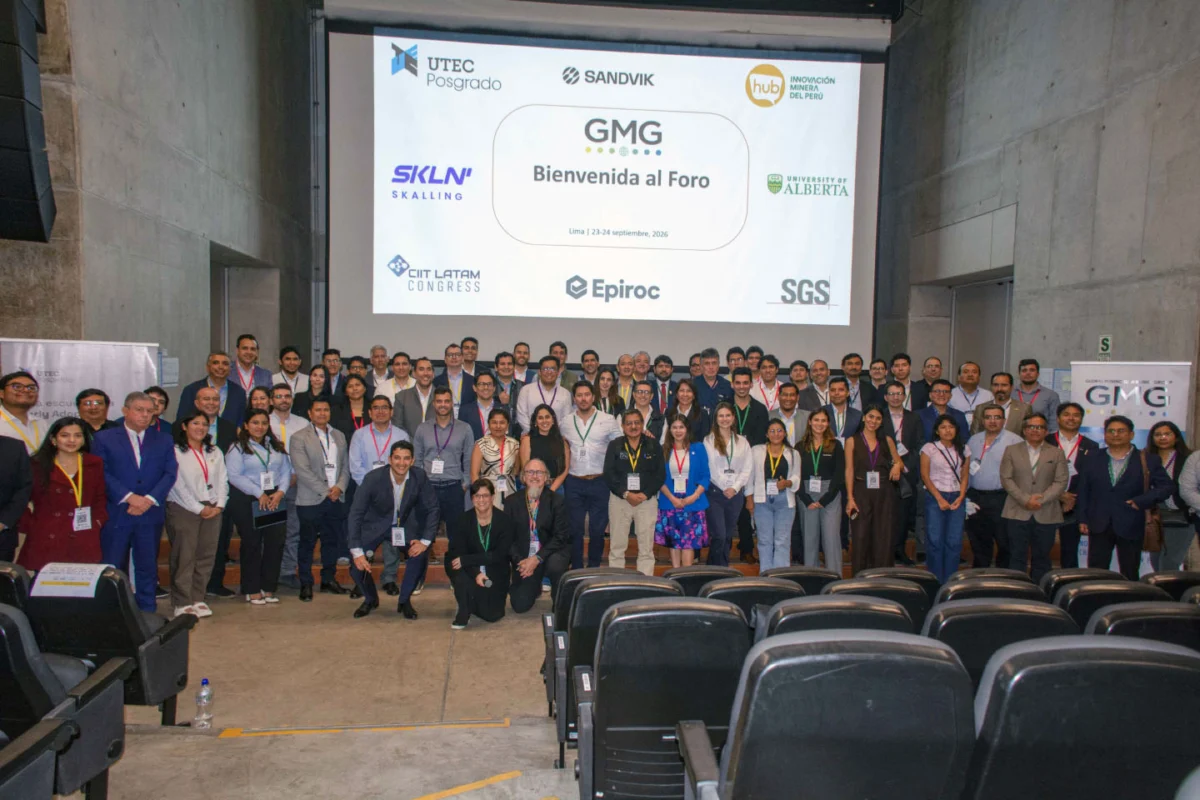
To address this, the Global Mining Guidelines Group (GMG) convened a landmark forum in Lima, Peru, on September 23 and 24, 2026. Hosted at the UTEC campus, the event brought together top-tier operators, technology integrators, and industry visionaries to dissect the disconnect between digital acquisition and operational reality.
The Core Challenge: Engineering the Decision-Making Process
The keynote address, delivered by Jaime Rebolledo of NTT DATA Chile, shifted the focus away from hardware and software, placing it squarely on human decision-making. Rebolledo argued that the industry’s obsession with "buying technology" often masks a deeper deficiency: the lack of clear architectural frameworks for how decisions are made on the ground.
"Buying technology and installing it is the easy part," Rebolledo stated. "The real complexity lies in teaching organizations how to make decisions based on that data. Often, even with superior technological options, decision-making remains trapped in the silos of individual human judgment. We must stop asking what technology we are missing and start engineering our operational decisions."
The Data Gap: Why Strategy Fails
Rebolledo’s presentation drew on a collaborative study conducted with the MIT, which surveyed mining executives across Latin America. The findings were stark:
- 68% of executives reported ongoing internal friction regarding the assignment of responsibility for autonomous or AI-assisted decisions.
- Only 32% admitted that their current technological infrastructure is even partially integrated, citing "information silos," the reliance on manual data entry, and a fundamental misalignment of Key Performance Indicators (KPIs) as primary roadblocks.
Chronology of the GMG Lima Forum
The two-day forum was structured to move from diagnosis to actionable solutions.
Day 1: September 23, 2026 – The Diagnosis
The morning sessions focused on the "State of Digital Mining in Latin America." Presentations from Nexa Resources and Hudbay Perú provided case studies on the transition from traditional processing to data-driven decision-making. These sessions established that while the industry has mastered data collection, it is struggling with data contextualization.
In the afternoon, the focus shifted to technical hurdles. Experts from SGS X Analytics and Genius Mining AI explored the limitations of current sensors and real-time analytical tools, emphasizing that if the "ground truth" (the raw data from the mine face) is flawed, the AI output will inevitably fail.
Day 2: September 24, 2026 – Actionable Frameworks
The second day was dedicated to the "Pre-Mortem Analysis" workshops. Participants were tasked with deconstructing failed pilot projects to identify "points of no return" where a project lost its momentum or its connection to the operational reality. This session culminated in the development of the "Minimum Specs" for industrial-grade AI deployment.
Panel Perspectives: Why Pilots Stay on the Bench
Moderated by Mónica Vega, Superintendent of Innovation at Stracon, the expert panel interrogated the persistent failures of AI scaling. The consensus among panelists highlighted three recurring themes:
- The "Shiny Toy" Syndrome: Executives often approve pilot projects to satisfy ESG or digital transformation mandates without providing a clear path for budget or personnel transition once the pilot ends.
- Process Ownership Vacuum: Many AI pilots lack a dedicated "Process Owner"—a person with the authority to bridge the gap between the IT department and the mine/plant operations. Without this bridge, technology remains a "black box" that operators distrust.
- Data Synchronicity: The gap between the speed of data collection (sensors) and the speed of lab validation (manual reporting) creates a latency that makes real-time AI optimization impossible in many existing operations.
The "Minimum Specs" for Industrial Scaling
The collaborative workshops led by the GMG produced a consensus on the "Minimum Specs" (Non-Negotiables) required for any AI project to move from an experimental state to permanent production. These specifications serve as a new standard for the industry:
1. Operational Alignment (The KPI Bridge)
No project should move to the pilot phase without an explicitly defined KPI that aligns with the business’s bottom-line goals. If an AI tool optimizes recovery by 0.5% but the plant operator is measured solely on throughput volume, the AI will be bypassed. The technology must be integrated into the existing incentive structure of the staff.
2. Data Integrity and Synchronicity
"Real-time" must mean "real-time." The workshops concluded that any pilot relying on manual data entry or delayed lab results is doomed to fail. The minimum requirement is an automated, high-frequency data stream that allows the AI to react to changes in ore variability or machine performance within the required operational window.
3. The "Human-in-the-Loop" Protocol
Technology should not aim to replace the decision-maker, but to augment them. Successful implementations must include a "Human-in-the-Loop" protocol that clearly defines at what stage the AI provides recommendations and at what stage a human must sign off. This creates trust and ensures that the technology remains a tool rather than a threat.
Implications for the Industry
The conclusions drawn at the Lima forum carry significant implications for the future of mining. As the industry faces declining ore grades and increasing social and environmental pressures, the transition to autonomous, data-driven operations is no longer optional.
However, the GMG Forum makes it clear that the next phase of mining evolution will not be driven by the adoption of more advanced AI algorithms. Instead, it will be driven by organizational design. The winners in this space will be the companies that treat "decision-making engineering" with the same level of rigor as they treat geological exploration or metallurgical processing.
Moving Forward: A Call to Action
For mining companies, the message is clear: if you are running a pilot project, stop. Re-evaluate if you have a defined Process Owner, if your KPIs are aligned, and if your data is truly synchronized. For technology providers, the focus must shift from "selling tools" to "partnering in operational outcomes."
The Global Mining Guidelines Group continues to act as the architect of these standards. By fostering these cross-industry discussions, the GMG is ensuring that the digital future of mining is not just a collection of disconnected experiments, but a cohesive, industrial-grade strategy that generates sustainable economic value for years to come.
Frequently Asked Questions (FAQ)
Q: Is the mining industry behind other sectors in AI adoption?
A: Not necessarily in data collection, but certainly in integration. Industries like manufacturing and logistics have had longer periods to refine their operational decision-making architectures. Mining’s complexity—due to the variability of ore and the harshness of the environment—adds a layer of difficulty that requires bespoke, rather than "off-the-shelf," solutions.
Q: What is the most common reason AI pilots fail in mining?
A: According to the GMG workshops, the primary culprit is a lack of operational ownership. When a project is treated as an "IT project" rather than an "operations project," the floor-level staff often view it as an intrusion or an unnecessary extra step, leading to poor adoption and eventual abandonment.
Q: How does the GMG plan to implement these "Minimum Specs"?
A: The GMG functions as a global collaborative body. By disseminating these "Minimum Specs" through their white papers and industry guidelines, they set the standard for what constitutes a "serious" project. Companies that align with these specs are finding greater success in securing internal budget and achieving measurable ROI.
Q: What role does culture play in digital transformation?
A: Culture is perhaps the biggest barrier. The shift from "experience-based" decision-making (intuition) to "data-based" decision-making requires a significant change in management style. Leaders must create an environment where the data is trusted, and where mistakes made during the learning process are treated as data points for further optimization rather than failures.