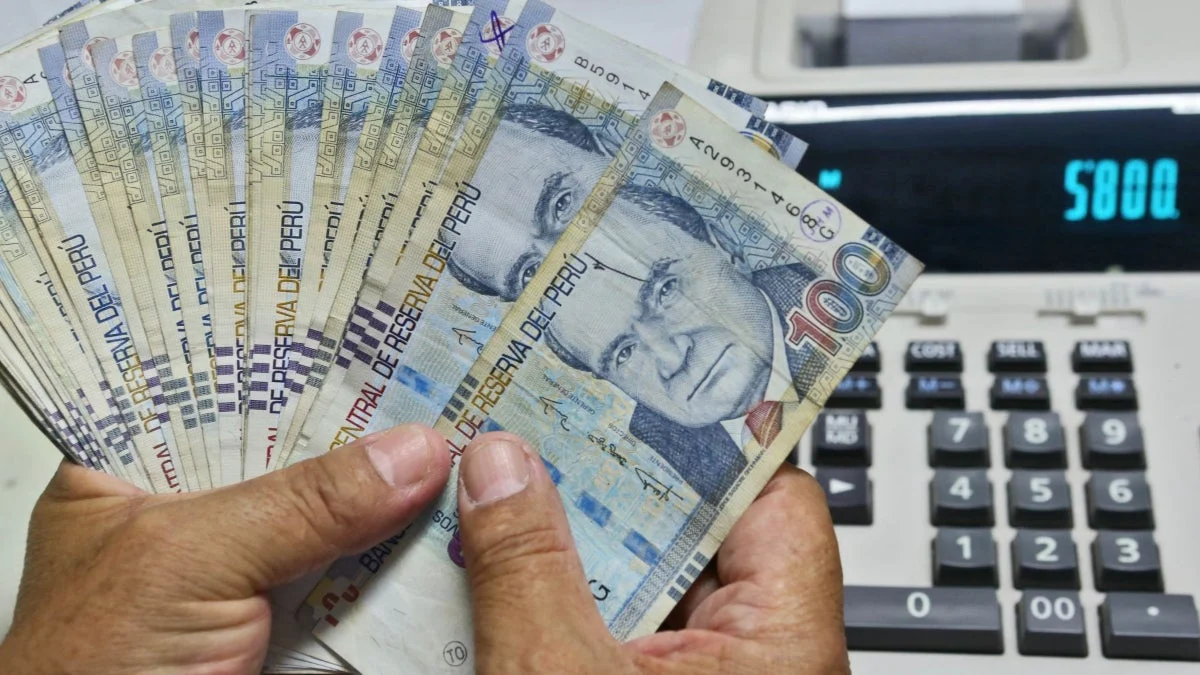
In a landmark decision aimed at recalibrating the purchasing power of the Peruvian workforce, the Executive Branch has officially sanctioned a significant increase in the Remuneración Mínima Vital (RMV). Through the issuance of Supreme Decree No. 015-2026-TR, published in an extraordinary edition of the official gazette El Peruano, the government confirmed a total upward adjustment of S/ 170. This move will shift the baseline salary for private-sector employees from the current S/ 1,130 to a terminal figure of S/ 1,300.
The policy, which underscores a strategic approach to economic recovery and social welfare, is designed to be implemented in two distinct phases. This staggered approach reflects a calculated effort to balance the immediate needs of workers against the logistical and budgetary realities of private enterprises, particularly small and medium-sized businesses (SMEs) that form the backbone of the Peruvian economy.
The Core Facts: A Two-Stage Transition
The adjustment process is meticulously structured to ensure stability. According to the official decree, the first phase involves an immediate increase of S/ 100, which will become effective on October 1, 2026. This initial injection of capital into the pockets of the lowest-earning formal workers will bring the monthly minimum wage to S/ 1,230.
The second phase, consisting of the remaining S/ 70, is scheduled to take effect during the first half of 2027. This second increment will finalize the total adjustment, bringing the RMV to the stipulated S/ 1,300. By spacing out the increase, the government aims to mitigate the inflationary shock that can sometimes accompany broad-based salary hikes, providing businesses with a "grace period" to adjust their cost structures and payroll projections.
Chronology of the Decision-Making Process
The path to this wage increase was neither instantaneous nor unilateral. It was the culmination of months of deliberation, economic modeling, and intense social dialogue.
- Initial Discussions (Q1-Q2 2026): As inflation and the cost of living indices began to show volatility, the Ministry of Labor and Employment Promotion (MTPE) initiated internal studies to determine the feasibility of an RMV hike.
- The Consensus Phase (August 2026): The government emphasized the necessity of a "tripartite" approach, involving the state, labor unions, and representatives of private enterprise.
- The CNTPE Plenary (September 3, 2026): The turning point occurred during the 49th Extraordinary Session of the National Council for Labor and Employment Promotion (CNTPE). It was here that a formal consensus was reached. Despite divergent views on the speed of implementation, all parties agreed that an adjustment was not only necessary but overdue to address the erosion of real wages.
- Formal Officialization (Late September 2026): President Keiko Fujimori and Minister of Labor Juan Sheput signed the Supreme Decree, providing the legal framework for the rollout starting in October.
Supporting Data and Economic Context
The decision to increase the minimum wage to S/ 1,300 is rooted in the constitutional mandate for a "remuneration that ensures a dignified standard of living for the worker and their family."
The Cost of Living Gap
Data from the National Institute of Statistics and Informatics (INEI) has historically indicated that the gap between the RMV and the "basic basket" of goods—the minimum set of services and food required for a household—has been widening. While S/ 1,300 is not viewed as a "living wage" in the absolute sense, it represents a necessary catch-up mechanism to account for cumulative inflation observed since the last major adjustment.
The Role of Productivity
Economists advising the Ministry have noted that the increase is also tied to productivity metrics. By setting the target at S/ 1,300, the government is attempting to signal to the market that it expects a corresponding increase in formalization. One of the primary risks of high minimum wages in emerging markets is the potential for an increase in informal labor, where employers bypass the law to avoid higher costs. By staggering the hike, the government hopes to encourage compliance rather than evasion.
Official Responses and Political Implications
The announcement has elicited a range of responses from the political and economic sectors.
The Executive Perspective
President Keiko Fujimori and Minister Juan Sheput have framed this decision as a triumph of "social peace." Minister Sheput, who has been vocal about the modernization of the labor market, noted that the increase is part of a broader strategy to protect workers in an era of rapid technological change. Sheput has recently warned that artificial intelligence and automation are displacing traditional roles—such as those in legal, administrative, and psychological sectors—making it all the more imperative that those who remain in the formal workforce have a robust safety net.
Business and Labor Unions
Labor unions have generally welcomed the move, though some leaders have argued that the S/ 1,300 figure should have been reached sooner. Conversely, business associations have expressed cautious optimism. They acknowledge the need for a wage hike to boost internal consumption but have emphasized that the government must pair this with measures to reduce the "non-wage" costs of hiring, such as simplifying bureaucratic requirements for SMEs.
Implications: What This Means for Peru
The implementation of the new RMV will have far-reaching consequences for the Peruvian landscape.
1. Impact on Consumption
With the minimum wage increasing, lower-income households are expected to see an immediate, albeit modest, improvement in their disposable income. In an economy heavily reliant on domestic demand, this increase is likely to stimulate retail, food services, and essential goods sectors.
2. The Formalization Challenge
The primary challenge remains the informal sector, which currently employs a significant portion of the Peruvian workforce. The government hopes that by establishing a clear, phased, and predictable wage path, more businesses will feel the security required to transition from the informal to the formal sector, thereby expanding the tax base and providing more workers with social security benefits.
3. Institutional Stability
The consensus reached at the CNTPE is a significant political victory for the current administration. In a country often characterized by political fragmentation, the ability to negotiate a tripartite agreement on such a sensitive issue as the minimum wage suggests a level of institutional maturity that investors often look for when assessing market stability.
4. Technological Displacement and Wage Protection
Minister Sheput’s recent comments regarding AI and professional displacement highlight a growing concern: that the labor market is becoming bifurcated. By raising the floor for the lowest earners, the government is attempting to buffer the impact of these structural changes. However, policymakers are already looking beyond the S/ 1,300 mark, suggesting that future labor reforms may need to focus more on re-skilling and vocational training rather than mere salary adjustments.
Conclusion: Looking Toward 2027
As the October 1 deadline approaches, the Ministry of Labor has launched an awareness campaign to ensure that employers are prepared for the mandatory payroll adjustments. The focus is now shifting toward the first half of 2027, when the final S/ 70 increment will be finalized.
While the increase to S/ 1,300 is a significant milestone, it serves as a snapshot of a larger, ongoing economic evolution. Peru remains at a crossroads where it must balance its competitiveness in the global market with the urgent need to provide its citizens with the dignity that comes from a fair and growing wage. For now, the administration has successfully navigated a delicate path, providing a predictable and incremental roadmap that offers a measure of relief to the nation’s workforce while attempting to maintain the delicate balance of the national economy.
As the country moves forward, the success of this policy will be measured not just by the numbers on a payslip, but by the ability of the Peruvian economy to foster a more inclusive, productive, and formal labor market in the face of the technological and global challenges of the coming decade.