By Global Investigative Desk
The lush, biodiversity-rich landscape of the Peruvian Amazon, specifically within the Loreto region, has become a epicenter of environmental and humanitarian concern. Indigenous nations, led by the Federation of the Achuar Nationality of Peru (FENAP) and the Autonomous Territorial Government of the Wampis Nation (GTANW), are sounding the alarm on a legacy of oil contamination that continues to ravage their ancestral territories.
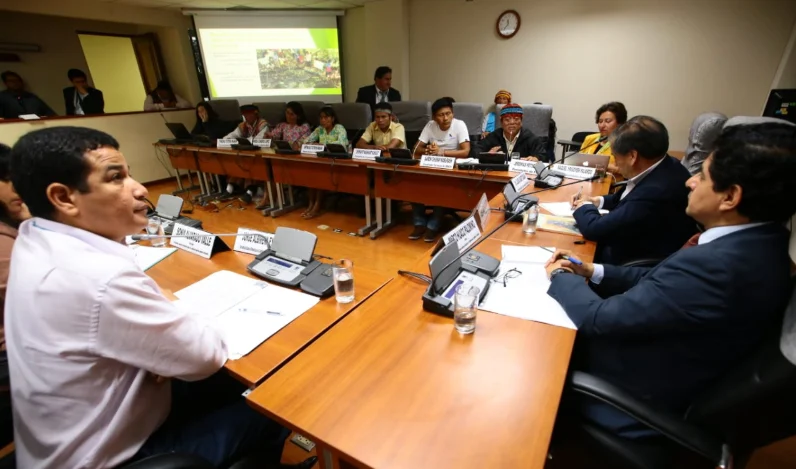
Following a high-level working session convened by the Commission for Andean, Amazonian, and Afro-Peruvian Peoples, Environment and Ecology of the Peruvian Congress, a stark reality has emerged: the state and private corporations have left behind a trail of unremediated environmental liabilities that are actively destroying the health and livelihoods of the people who call the rainforest home.
The Core of the Conflict: The Lote 64 Crisis
The focal point of the current mobilization is "Lote 64," a petroleum concession located in the heart of the Achuar territory. The conflict traces its roots back to 2012, when the company Talisman Energy conducted operations in the Situche Central sector, near the 2x and 3x oil wells in the community of Putuntsa.
When Talisman exited the project, it left behind significant environmental liabilities—oil spills and hazardous waste—that have remained largely unaddressed for over six years. The contamination has seeped into the very veins of the forest: the water sources that the Achuar people rely on for drinking, bathing, and supporting their livestock.
Shiwiant Mashiant, president of the AIM basin organization (part of FENAP), provided a harrowing account of the impact during the Congressional session. He described how the pollution is no longer confined to the immediate vicinity of the wells but has migrated into the broader ecosystem, poisoning the aquatic life and the soil upon which the community depends for food security.
The OEFA’s Commitment
Under intense pressure from indigenous leaders and legislative representatives, the Organismo de Evaluación y Fiscalización Ambiental (OEFA)—Peru’s environmental regulatory body—has announced plans to conduct comprehensive oversight actions in Lote 64 during the first quarter of 2019. While this announcement is viewed as a necessary step, community leaders remain skeptical, citing years of broken promises and delayed interventions.
Chronology of Neglect: A Pattern of Environmental Liability
To understand the severity of the situation, one must look at the timeline of events that has led the Wampis and Achuar nations to demand the total annulment of the Lote 64 concession.
- 2012: Talisman Energy concludes operations at Lote 64, leaving behind multiple sites of contamination in the Situche Central sector. These sites remain unremediated, effectively creating "dead zones" within the rainforest.
- 2012–2018: The contamination persists, worsening with seasonal rains that distribute the crude oil further into the river systems. During this period, the state fails to hold the operator accountable for a full cleanup.
- August 2018: The Wampis and Achuar nations formally escalate their campaign, demanding the nullification of the contract granted to GeoPark, the current operator of Lote 64. They argue that the concession was granted without the legally mandated Free, Prior, and Informed Consent (FPIC).
- December 2018: Indigenous leaders present formal testimonies to the Peruvian Congress regarding the persistent health crises in Chuintar and Uwinsta, linked to the Norperuano Pipeline.
- 2019 (Projected): OEFA scheduled to begin field inspections, a move the indigenous nations hope will finally lead to concrete remediation and the eventual cancellation of the GeoPark contract.
Beyond Lote 64: The Norperuano Pipeline Catastrophe
The crisis is not limited to the Lote 64 concession. Jeremías Petsein Peas, president of FENAP, has drawn attention to the widespread contamination caused by the Norperuano Pipeline, a massive piece of state-owned infrastructure managed by Petroperú.
Communities such as Chuintar and Uwinsta are suffering from what Petsein Peas describes as a public health emergency. The lack of proper maintenance and the aging state of the pipeline have led to chronic leaks that have been left untreated by the state oil company.
The Human Toll: A Health Crisis
The testimony provided to the Congressional commission detailed a harrowing array of health problems among the local population. Residents, particularly women and children, are reporting chronic stomach ailments, unexplained skin rashes, persistent headaches, and other symptoms associated with long-term exposure to hydrocarbons.
"There are problems identified by the population," Petsein Peas stated. "We are seeing children and women suffering the most. The contamination is not just an environmental statistic; it is a direct assault on the health and future of our people."
Official Responses and the Lack of Urgency
The presence of the Ministry of Health (MINSA) at the Congressional working session marked a pivotal moment. The Ministry’s delegates finally acknowledged the gravity of the situation and committed to conducting a comprehensive health diagnosis and providing medical care to the affected communities.
However, the response from the state regarding the underlying cause—the oil industry—has been characterized by what indigenous leaders call "institutionalized indifference."
Wrays Pérez, president of the Autonomous Territorial Government of the Wampis Nation (GTANW), delivered a scathing critique of the government’s priorities. "For the Amazon, there is no money to remediate the impact of these environmental liabilities," Pérez argued. "Petroperú knows it has a legal and moral obligation to remediate the Norperuano Pipeline, yet they do nothing. They wait for us to disappear before they decide to act."
The indigenous leadership is supported by the legal expertise of the International Institute for Law and Society (IIDS) and Peru EQUIDAD, both of which are assisting in the legal battle to invalidate the GeoPark contracts. The core of their legal argument is the lack of "social license" to operate. The nations maintain that the state has bypassed constitutional and international human rights frameworks, most notably the ILO Convention 169, which requires that indigenous peoples be consulted on any project affecting their lands.
Implications for the Future of the Amazon
The standoff between the Wampis/Achuar nations and the Peruvian state represents a broader conflict occurring across the Amazon basin. It pits the state’s desire for resource extraction and economic growth against the rights of indigenous nations to self-determination and environmental protection.
1. The Question of "Social License"
The Lote 64 case has become a litmus test for the concept of "social license." Without the approval of the communities whose lands are being leased, the legitimacy of the contract is fundamentally compromised. By continuing to support companies like GeoPark without this consent, the Peruvian government risks further alienating its indigenous populations and triggering widespread civil unrest.
2. Legal and Regulatory Precedents
If the IIDS and Peru EQUIDAD succeed in forcing the annulment of the Lote 64 contract, it would set a massive legal precedent. It would signal that international standards of human rights and environmental protection can supersede the interests of multinational oil corporations. Conversely, if the state continues to ignore these liabilities, it risks a complete breakdown in the relationship between the government and the Amazonian nations.
3. Environmental Justice as a Human Right
The inclusion of the Ministry of Health in the discourse is a crucial development. It shifts the narrative from a mere "environmental dispute" to a "human rights crisis." When environmental contamination leads to chronic disease, it is no longer just a regulatory failure; it is a violation of the fundamental right to life and health.
Conclusion: A Call to Action
The struggle of the Achuar and Wampis nations is far from over. As they await the OEFA’s inspections in 2019, they continue to demand transparency, accountability, and justice. They are not merely asking for cleanup; they are asking for the right to govern their own territories and to protect the Amazon from the irreparable damage caused by fossil fuel dependency.
For the international community, the situation in Loreto serves as a stark reminder of the hidden costs of oil. Every barrel extracted comes at a price—a price currently being paid in the form of poisoned rivers, suffering children, and the erosion of indigenous cultures that have served as the guardians of the world’s most important rainforest for centuries.
As the world looks toward a future of sustainable energy, the question remains: will the Peruvian government continue to sacrifice its people and its environment for the sake of the oil industry, or will it finally heed the call of the Wampis and Achuar nations and begin the difficult process of remediation and restoration? The eyes of the world are on the Amazon, and the time for meaningful action is now.