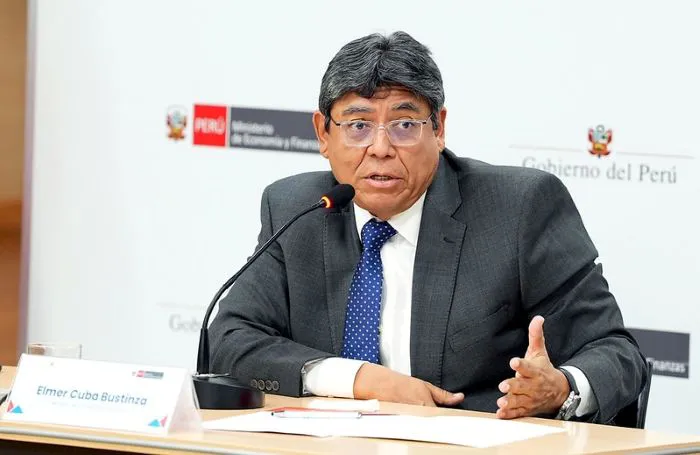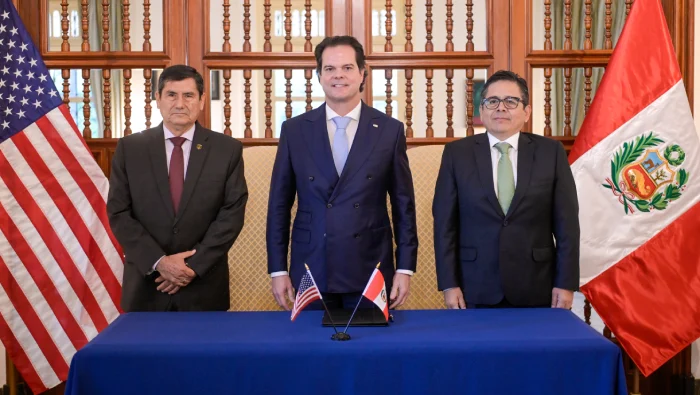
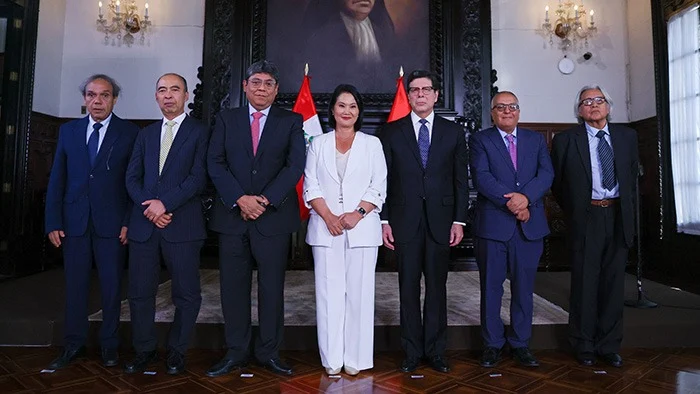
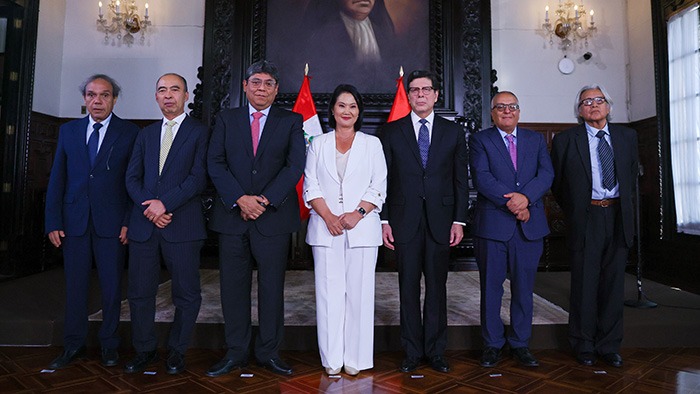
Lima, Peru – [Insert Date] – In a significant move to address persistent economic challenges and chart a course for future prosperity, the Peruvian government, under the leadership of President Keiko Fujimori, has officially inaugurated a High-Level Commission of distinguished experts. This pivotal initiative, unveiled at the Government Palace alongside Minister of Economy and Finance, Elmer Cuba Bustinza, aims to formulate technical proposals that will form the bedrock of Peru’s second-generation structural economic reforms. The commission will focus on four critical areas: labor formalization and productivity, access to financing, public investment management, and tax compliance.
The formation of this commission signifies a strategic commitment to tackling deep-seated structural issues that have historically hampered Peru’s economic potential. Minister Cuba emphasized that the proposed reforms are designed to invigorate the nation’s economic policy for the coming years, fostering a more inclusive and sustainable growth trajectory. The comprehensive mandate of the commission reflects a nuanced understanding of the interconnectedness of these economic pillars and their collective impact on the nation’s development.
Genesis of a Strategic Initiative: Addressing Peru’s Enduring Economic Hurdles
The establishment of the High-Level Commission is a direct response to several persistent challenges that have long cast a shadow over Peru’s economic landscape. Informality in the labor market, a pervasive issue, limits worker protections, stifles productivity, and deprives the state of significant tax revenue. Concurrently, limited access to financing, particularly for small and medium-sized enterprises (SMEs), restricts their ability to grow, innovate, and create jobs. Furthermore, inefficiencies in public investment management often lead to delays, cost overruns, and suboptimal utilization of resources, hindering the delivery of essential infrastructure and services. Finally, low tax compliance undermines the fiscal capacity of the state, limiting its ability to fund crucial public programs and investments.
Recognizing these interconnected challenges, the government has assembled a cadre of seven highly respected specialists, each bringing a wealth of experience and expertise to their respective domains. Their mandate is to deliver tangible, technically sound recommendations within a nine-month timeframe, with progress reports to be submitted quarterly. This structured approach ensures accountability and allows for iterative refinement of the reform proposals.
The commission’s work is underpinned by principles of technical independence, participation, plurality, transparency, and a results-oriented focus. A deliberate effort will be made to engage a broad spectrum of stakeholders, including public and private sector actors, as well as national and international experts. The commitment to public dissemination of key findings underscores a dedication to fostering informed public discourse and building consensus around the proposed reforms.
Commission Structure and Key Personnel: A Deep Dive into Expertise
The High-Level Commission is strategically divided into four specialized working groups, each tasked with a specific area of reform. The caliber of individuals appointed to these groups reflects the government’s seriousness in pursuing meaningful change.
I. Labor Formalization and Productivity
This critical area will be addressed by Gustavo Yamada and Miguel Jaramillo. Their collective expertise spans economics, labor markets, employment, informality, social protection, and productivity – all crucial elements for understanding and transforming Peru’s labor landscape.
- Gustavo Yamada: A distinguished academic and researcher, Yamada serves as the Vice-Rector of Research and a Principal Professor at the Universidad del Pacífico. His extensive background includes valuable experience at the Central Reserve Bank of Peru (BCRP) and the Ministry of Labor, providing him with both theoretical insights and practical policy exposure.
- Miguel Jaramillo: A Senior Researcher at GRADE (Grupo de Análisis para el Desarrollo), Jaramillo brings over three decades of experience in applied research on labor markets and public policy. His deep understanding of the complexities of informal employment and the drivers of productivity will be invaluable to this working group.
The objectives within this domain are multifaceted, aiming to elevate worker productivity, foster the creation of more formal and higher-quality employment opportunities, and ultimately enhance the overall competitiveness of the Peruvian workforce.
II. Inclusion and Access to Financing
Ensuring that businesses, particularly SMEs, have adequate access to financial resources is paramount for economic dynamism. This challenge will be tackled by Miguel Palomino and Martin Naranjo.
- Miguel Palomino: With a distinguished career in the financial sector, Palomino has held the position of Vice-President of the Board of Directors of the Central Reserve Bank of Peru (BCRP) and served as President of the Peruvian Economic Institute (IPE). His insights into monetary policy and financial system stability will be crucial.
- Martin Naranjo: Naranjo boasts significant experience in financial regulation and development, having served as the Superintendent of Banking, Insurance, and Private Pension Funds (Superintendencia de Banca, Seguros y AFP) and as the Executive Director of COFIDE (Corporación Financiera de Desarrollo). His tenure in these roles has provided him with a comprehensive understanding of Peru’s financial architecture and its potential for broader inclusion.
This working group will focus on developing strategies to broaden access to credit and financial services, thereby stimulating investment, entrepreneurship, and inclusive economic growth.
III. Improvement of Public Investment Management
The efficient and effective management of public investment is a cornerstone of national development, enabling the delivery of essential infrastructure and public services. The commission members tasked with this area are Milton Von Hesse and Miguel Prialé Ugás.
- Milton Von Hesse: A former Minister of Housing, Construction, and Sanitation, as well as Minister of Agriculture and Irrigation, Von Hesse brings a wealth of experience in public sector management and infrastructure development. His leadership roles at ProInversión, the Peruvian agency for the promotion of private investment, have provided him with deep insights into project execution and public-private partnerships.
- Miguel Prialé Ugás: Prialé Ugás has a strong background in public investment planning and execution. He has served as the Director General of Multiannual Investment Planning at the Ministry of Economy and Finance (MEF) and as the Director of Investments at the Ministry of Agriculture and Irrigation (MINAGRI). His expertise in public management, project evaluation, PPPs, and "Obras por Impuestos" (Works for Taxes) schemes will be vital.
Their recommendations will aim to enhance the efficiency of public spending, streamline project execution, and ensure that public investments deliver maximum value for the Peruvian people.
IV. Driving Tax Compliance
A robust and equitable tax system is fundamental to a nation’s fiscal health. The commission member dedicated to this crucial area is Manuel Estela.
- Manuel Estela: An economist with over five decades of experience in the public sector, academia, and economic policy formulation, Estela possesses unparalleled expertise in taxation. He previously served as the National Superintendent of SUNAT (Superintendencia Nacional de Aduanas y de Administración Tributaria), playing a key role in the design and implementation of Peru’s comprehensive tax reform. His experience also includes serving as a Director of the BCRP and as an alternate executive director at the International Monetary Fund (IMF) and the Inter-American Development Bank (IDB).
Estela’s mandate will be to propose strategies to increase tax revenue sustainably, thereby strengthening the fiscal capacity of the state and enabling greater investment in public services and development initiatives.
Chronology of Implementation and Expected Outcomes
The High-Level Commission’s operational timeline is structured to ensure a methodical and comprehensive approach to reform development. The nine-month period is divided into three-month intervals, each culminating in the submission of progress reports. This phased approach allows for continuous evaluation and adaptation of the reform strategies.
Phase 1 (Months 1-3): Diagnostic and Framework Development
During this initial phase, the commission members will conduct in-depth diagnostics of the current situation in their respective areas. This will involve reviewing existing policies, identifying key bottlenecks, and gathering data from various sources. The focus will be on establishing a clear understanding of the scope and nature of the challenges.
Phase 2 (Months 4-6): Policy Formulation and Stakeholder Consultation
Building upon the diagnostic phase, the commission will begin formulating concrete policy proposals. This will involve identifying potential reform measures, assessing their feasibility, and considering their potential impact. Crucially, this phase will also involve extensive consultation with relevant public and private sector stakeholders to gather feedback and build consensus.
Phase 3 (Months 7-9): Refinement, Finalization, and Submission
In the final phase, the proposed reforms will be refined based on stakeholder input and further analysis. The commission will work towards finalizing its recommendations, ensuring they are practical, implementable, and aligned with the overarching goals of economic modernization. The comprehensive report containing the proposed structural reforms will then be submitted to the government.
The expected outcomes of this initiative are far-reaching and designed to create a more robust and equitable economic environment for Peru. Specifically, the reforms are anticipated to:
- Increase Productivity: By formalizing labor and improving access to finance and efficient public services, the reforms aim to boost the productivity of both workers and businesses.
- Generate Quality Employment: The focus on labor formalization is expected to lead to the creation of more stable, secure, and better-paying jobs, contributing to improved living standards.
- Enhance Competitiveness: By addressing structural impediments and fostering a more conducive business environment, Peru’s overall economic competitiveness on the global stage is expected to improve.
- Strengthen Investment: Improved public investment management and greater access to financing will encourage both public and private sector investment, driving economic growth and development.
- Improve Public Spending Efficiency: The commission’s recommendations for public investment management are intended to ensure that taxpayer money is used effectively and delivers maximum public benefit.
- Boost Sustainable Tax Revenue: By promoting greater tax compliance, the government’s fiscal capacity will be strengthened, allowing for increased investment in social programs, infrastructure, and public services.
- Expand Opportunities: Ultimately, these reforms are designed to create a more inclusive economy that offers greater opportunities for all Peruvians to thrive.
Supporting Data and International Best Practices
The commission’s work will be grounded in rigorous analysis and evidence. While specific data points are not detailed in the initial announcement, it is implicit that the experts will draw upon a wealth of economic data and research pertaining to Peru and similar economies. This will likely include:
- Labor Market Statistics: Data on formal vs. informal employment, wage differentials, productivity levels, and participation rates.
- Financial Sector Data: Information on credit access by business size, interest rates, financial inclusion rates, and the performance of financial institutions.
- Public Investment Data: Records of public spending on infrastructure projects, their completion rates, cost overruns, and impact assessments.
- Tax Revenue Data: Information on tax collection rates, compliance levels, the structure of the tax system, and revenue-to-GDP ratios.
Furthermore, a key aspect of the commission’s mandate is to incorporate comparative evidence and best practices from reforms implemented in other countries. This international perspective is crucial for identifying successful strategies and avoiding common pitfalls. The commission will leverage the insights and experiences of countries that have successfully tackled similar challenges in labor formalization, financial inclusion, public investment, and tax administration.
Official Responses and Government Commitment
The high-level nature of the commission’s launch, presided over by President Fujimori herself and with the active participation of the Minister of Economy and Finance, underscores the government’s strong commitment to this initiative. Minister Cuba’s statements clearly articulate the strategic importance of the commission’s work in shaping Peru’s economic future.
"The technical proposals that these High-Level Commissioners will formulate will serve as the foundation for second-generation structural reforms that will guide economic policy in the coming years," stated Minister Cuba. He further elaborated, "The resulting proposals from this initiative will allow us to confront some of the main structural challenges of the Peruvian economy."
The government’s proactive approach in assembling a commission of such caliber and clearly defining its mandate reflects a strategic intent to move beyond ad-hoc solutions and implement comprehensive, long-term reforms. The emphasis on technical independence ensures that the recommendations will be based on sound economic principles rather than political expediency.
Implications for Peru’s Economic Future
The implications of this High-Level Commission’s work for Peru are potentially transformative. By focusing on these four critical pillars, the government is signaling an intent to address the root causes of economic stagnation and inequality.
- For Businesses: Enhanced access to financing will empower businesses to invest, expand, and innovate, leading to job creation and increased economic activity. Streamlined public investment management will improve the delivery of essential infrastructure, reducing operational costs and improving market access.
- For Workers: Labor formalization will translate into better working conditions, access to social security, and improved career prospects. Increased productivity, driven by better training and access to resources, will likely lead to higher wages.
- For the Government: Improved tax compliance will strengthen the state’s fiscal position, enabling greater investment in social programs, education, healthcare, and infrastructure, thereby improving the quality of life for all citizens.
- For the Economy: The cumulative effect of these reforms is expected to foster a more dynamic, competitive, and inclusive economy, capable of sustained growth and greater resilience to external shocks.
The success of this initiative will hinge on the government’s willingness to implement the commission’s recommendations effectively and to foster broad public and private sector support. The commission’s commitment to transparency and public dissemination of its findings is a positive step towards building the necessary consensus for meaningful reform. As Peru navigates the complexities of the global economic landscape, the strategic direction set by this High-Level Commission could well define its trajectory towards a more prosperous and equitable future.