
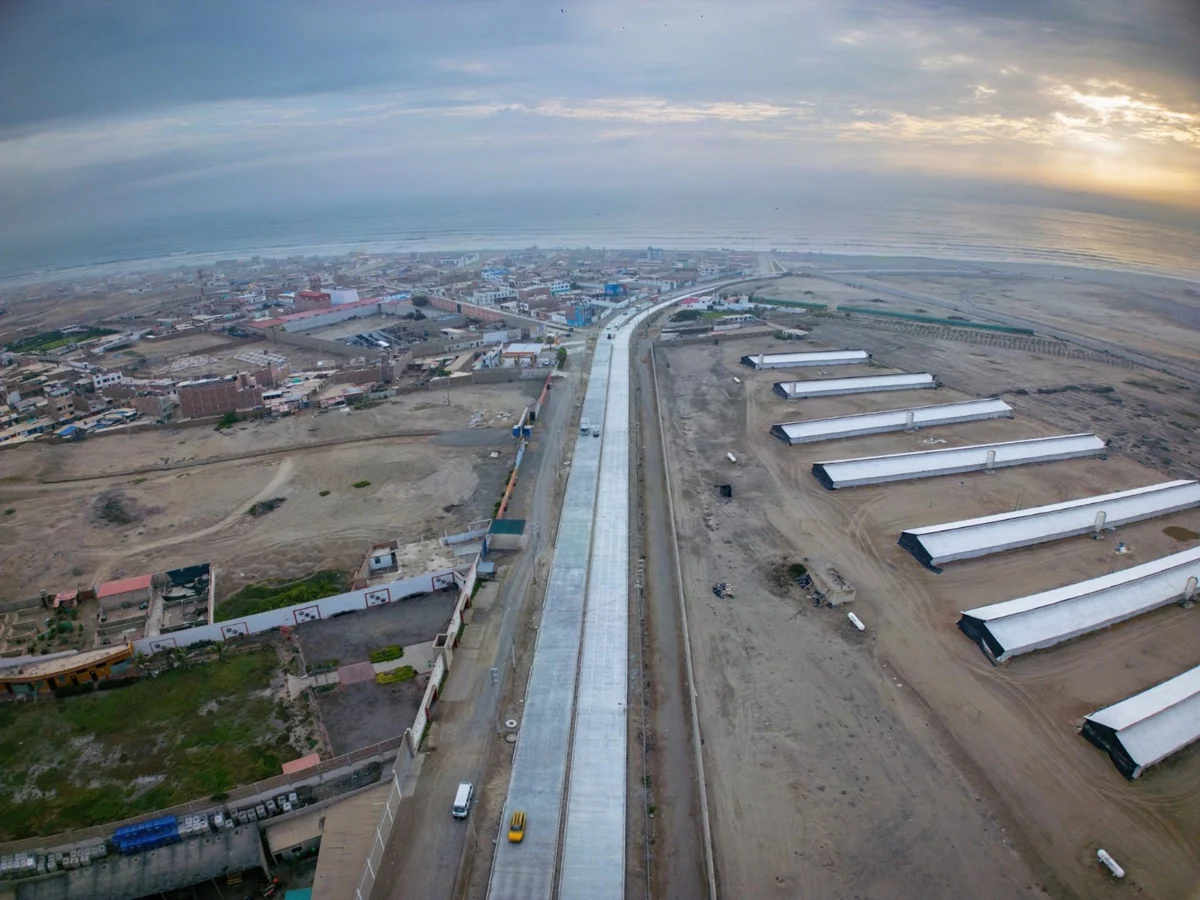
The regional government of La Libertad is set to breathe new life into the stalled Trujillo-Huanchaco coastal highway project, opting for the "Obras por Impuestos" (Works for Taxes) mechanism to complete the remaining construction. This strategic shift comes after the contract with the original consortium was terminated due to persistent non-compliance, with authorities aiming to ensure the project’s continuity and eventual completion by the next regional administration.
The vital infrastructure project, connecting the historic city of Trujillo with the popular tourist destination of Huanchaco, has faced significant setbacks. The regional government’s proactive approach, however, involves leveraging a precautionary measure that safeguards the project from being indefinitely delayed by ongoing arbitration proceedings with the former contractor. This legal safeguard empowers the regional administration to efficiently determine the outstanding work and secure its timely execution.
Project Overview and Contractual Challenges
The Trujillo-Huanchaco corridor is a critical piece of infrastructure designed to enhance connectivity, boost tourism, and stimulate economic development in the La Libertad region of Peru. The project, intended to modernize and expand the existing road network, promised to improve travel times, increase safety, and unlock greater potential for businesses and residents alike.
However, the initial phase of construction, entrusted to a specific consortium, was plagued by significant delays and a lack of progress. Despite repeated attempts by the regional government to address these shortcomings, the contractor failed to meet its contractual obligations. This led to a formal review and, ultimately, the decision to terminate the agreement.
A Legal Pathway to Progress: The Precautionary Measure
To circumvent the potential paralysis of the project during protracted legal battles, the Gobierno Regional de La Libertad secured a crucial precautionary measure. This legal instrument is designed to allow the continuation of essential public works, even in the face of contractual disputes and arbitration. By obtaining this measure, the regional government has gained the authority to proceed with the assessment of the remaining work and to initiate the process of securing a new contractor, effectively insulating the project’s progress from the lengthy arbitration timeline.
This legal provision is instrumental in ensuring that public funds invested in the corridor are not rendered unproductive. It allows for the determination of the exact scope of unfinished work and the necessary contractual steps to bring it to completion.
"Obras por Impuestos": A Solution for Accelerated Development
The chosen mechanism, "Obras por Impuestos" (Works for Taxes), represents a dynamic approach to public infrastructure development in Peru. This framework enables private companies to undertake public works projects in exchange for tax credits. By engaging the private sector through this mechanism, the regional government aims to attract investment and expertise, thereby accelerating the completion of the Trujillo-Huanchaco corridor.
This approach offers several advantages. Firstly, it injects private capital into public projects, reducing the direct financial burden on the regional government. Secondly, it often brings efficiency and innovation from the private sector to project execution. Thirdly, it provides a clear pathway to completing projects that might otherwise languish due to public funding constraints or contractor defaults.
Timeline of Events: From Default to Resolution
The decision to terminate the contract with the original consortium was not made lightly. It followed a rigorous and documented process of identifying and addressing the contractor’s non-compliance.
- Initial Identification of Deficiencies: The process began with a thorough verification of outstanding work. The regional government identified specific construction tasks that had been allocated but not executed by the contractor.
- Formal Notification and Demand for Rectification: Following the initial assessment, a formal demand was issued via a notarized letter. The contractor was given a strict 15-day calendar period to recommence all activities, reactivate previously cleared work fronts, and rectify identified shortcomings.
- Physical Inspection and Partial Reactivation: Upon the expiry of the initial notice period, a physical inspection was conducted on August 5th. This inspection revealed that the reactivation of work was only partial. While paving activities had resumed, other crucial elements, such as the construction of curbs (sardineles), drainage systems (alcantarillas), and safety features, remained stalled.
- Second Warning and Continued Non-Compliance: In response to the insufficient progress, a second formal warning was issued, granting an additional 15 days for the contractor to fully comply.
- Final Verification and Contract Termination: A subsequent site visit on August 22nd confirmed the continued lack of reactivation across various work areas. Furthermore, the absence of essential specialists and key personnel was noted. This persistent failure to meet contractual obligations led the Gobierno Regional de La Libertad to issue its final report.
- Formal Resolution: Based on the documented non-compliance, the regional government prepared and issued the letter of contractual resolution on September 1st, officially notifying the company of the termination on September 2nd, 2026.
Private Sector Interest and Future Outlook
The regional administration has indicated a positive response from the private sector regarding the "Obras por Impuestos" initiative for the Trujillo-Huanchaco corridor. Several companies have expressed keen interest in taking over the project. The current projection is that a new company will be selected and begin managing the outstanding work by December or January, with the actual construction resuming thereafter.
This proactive engagement from potential private partners underscores the viability and attractiveness of the "Obras por Impuestos" model for significant infrastructure development. The regional government’s commitment to expediting this selection process is a testament to their determination to see the project through.
Implications for Regional Development and Public Trust
The successful revival of the Trujillo-Huanchaco corridor project through the "Obras por Impuestos" mechanism holds significant implications for the La Libertad region.
- Economic Stimulation: The completion of the corridor will undoubtedly boost local economies by improving transportation efficiency for goods and services, fostering tourism, and potentially attracting new investments.
- Enhanced Connectivity and Quality of Life: Residents will benefit from improved travel times, safer roads, and a more accessible connection between two key areas of the region.
- Restoration of Public Trust: By taking decisive action to resolve the contractor default and implement an effective solution, the regional government is demonstrating its commitment to fulfilling its developmental promises and ensuring the responsible use of public resources. This can help restore and strengthen public trust in governmental capacity to deliver essential infrastructure.
- Precedent for Future Projects: The successful implementation of "Obras por Impuestos" for this project could set a valuable precedent for future infrastructure initiatives in La Libertad and potentially other regions in Peru, showcasing a viable alternative to traditional contracting models when facing challenges.
The Gobierno Regional de La Libertad maintains that the primary objective is to ensure the Trujillo-Huanchaco corridor is not left in a state of perpetual limbo. By strategically navigating legal complexities and embracing innovative public-private partnership models, the administration is diligently working to secure the project’s technical and legal foundations, paving the way for its eventual completion and the significant benefits it will bring to the population. The project, once a symbol of stalled progress, is now poised to become a beacon of efficient public-private collaboration and regional development.