
The legislative landscape in Peru faces a significant impasse as the Chamber of Deputies’ Economic Commission has failed to reach a consensus regarding the government’s request for extraordinary legislative powers. In a high-stakes session characterized by intense debate and procedural maneuvering, the Commission decided to postpone the final vote until Wednesday, September 16. At the heart of the conflict lies the government’s push to dismantle the current ceiling on interest rates—a policy fiercely defended by its proponents as a necessary market correction and labeled by critics as an abandonment of consumer protection.
The Core of the Dispute: The "Anti-Usury" Law
The primary point of contention involves the government’s proposal to eliminate the interest rate caps, which currently prevent financial institutions from charging interest rates exceeding 114%. Known colloquially as the "anti-usury" law, this regulation was established to protect micro, small, and medium-sized enterprises (MSMEs) and retail consumers from predatory lending practices.
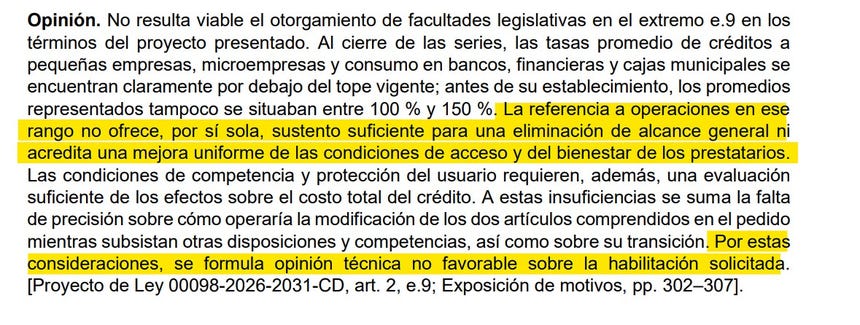
The Executive branch argues that the current cap is an artificial distortion of the market that hinders financial inclusion and limits credit accessibility. However, the Commission’s technical report paints a starkly different picture. According to the document, current market data does not support the government’s narrative. The commission notes that average interest rates across banks, financial companies, and municipal credit unions are already performing well below the 114% threshold.
"In the period prior to the establishment of these caps, average rates did not fluctuate between 100% and 150%," the report states. "Consequently, the Commission disagrees with using the Executive’s justification—which cites that range as a baseline—as sufficient evidence to warrant a widespread liberalization of the market."
Chronology of the Legislative Standoff
The road to the current impasse has been marked by a series of failed attempts to streamline the legislative process.
- Early September: The Executive branch formally requested broad legislative faculties, seeking to bypass standard debate to implement rapid economic changes, including tax reforms and the removal of interest rate caps.
- September 14: The Economic Commission convened for a session expected to yield a decisive recommendation. Instead, over two hours of heated discussion, members remained deeply divided.
- The Procedural Maneuver: During the session, Congresswoman Rosángela Barbarán (Fuerza Popular) attempted to break the deadlock by proposing a "previous question" (cuestión previa). Her goal was to decouple the controversial interest rate issue—along with concerns regarding environmental remediation and new financial products for minors—from the rest of the legislative package. This would have allowed the Commission to approve non-contentious issues while isolating the "anti-usury" debate.
- The Rejection: The motion to vote on the topics separately was rejected by the Commission. This forced the contentious items to remain part of the omnibus report.
- The Postponement: Recognizing that a vote on the entire package would likely fail, Commission President José Marcelo ordered an adjournment, rescheduling the definitive vote for Wednesday, September 16.
Economic Analysis: Will Deregulation Benefit Consumers?
The Commission’s technical assessment poses a fundamental question: Does the removal of interest rate caps translate into cheaper credit? The findings are skeptical.

The report explicitly warns that the elimination of these limits does not guarantee lower interest rates or improved access to credit for the most vulnerable segments of the population. The commission argues that if the current rates are already below the cap, removing the cap serves no logical purpose other than to potentially allow for future increases.
Furthermore, the report highlights the danger of "over-indebtedness." While the government argues that removing caps will increase the supply of credit, the Commission counters that an increase in credit volume is not synonymous with an increase in economic well-being. If the additional credit comes at the cost of higher interest burdens, it could lead to a systemic rise in defaults and a precarious financial situation for households and small businesses.
Perspectives from Political Stakeholders
The debate in the Commission has transcended mere technicalities, reflecting deep ideological divides within the Chamber.
Congresswoman Paola Martínez Paitán (Renovación Popular) has been one of the most vocal critics of the current proposal. During the hearing, she emphasized that her faction is categorically opposed to several aspects of the government’s request. "There are points that we, as a caucus, have said ‘no’ to, and I reiterate: removing the interest rate cap, implementing open finance for minors from the age of 12, and changing business tax regimes are off the table," Martínez Paitán declared.
Her position is echoed by Congressman César Olguín (Ahora Nación), who expressed concern regarding the lack of rigor in the government’s proposal. Olguín pointed out that even in areas where there is theoretical consensus—such as the urgent need for measures to combat the effects of the El Niño phenomenon—the government’s proposal suffers from "imprecisions and incoherencies."
The government, represented by the administration of Keiko Fujimori, maintains that these reforms are part of a broader strategy to revitalize the national economy. However, as the legislative deadline approaches, the administration finds itself struggling to convince a skeptical Congress that these measures are in the best interest of the citizenry.
Broader Implications and Future Outlook
The outcome of the September 16 vote will have far-reaching implications for Peru’s economic policy. A rejection of the requested powers would represent a significant political setback for the Executive, signaling a potential breakdown in the relationship between the Presidency and the legislative body.
Conversely, should the Commission or the plenary of Congress eventually approve the removal of the interest rate caps, it would represent a significant shift toward a more deregulated financial market. Critics warn that such a move could trigger a return to the high-interest environments of the past, disproportionately affecting the micro-lending sector.
Moreover, the dispute highlights a recurring issue in the Peruvian legislative process: the use of "delegated faculties." By requesting the power to legislate via executive decree, the government is attempting to avoid the scrutiny of the legislative chamber. However, as this week’s events demonstrate, the Commission is increasingly asserting its oversight role, demanding greater transparency and evidence-based policy before granting such broad authorities.
As Wednesday approaches, the pressure on both sides is mounting. The Commission remains in a state of suspended animation, with the same contentious document awaiting a final verdict. Whether the Executive will choose to negotiate and withdraw the most unpopular elements of their proposal, or whether they will attempt to force a vote on the full package, remains to be seen. What is clear, however, is that the balance between financial market liberalization and consumer protection will remain the defining struggle of this legislative cycle.