Lima, Peru – In a significant stride towards modernizing its educational infrastructure, the Peruvian government has officially awarded a monumental project aimed at the comprehensive reconstruction and enhancement of 13 educational institutions across the districts of Villa El Salvador and San Juan de Miraflores in Lima Metropolitana. This ambitious undertaking, valued at S/1.118 billion (approximately $300 million USD), is poised to benefit over 29,000 children and adolescents, promising a transformative learning environment for a new generation.
The winning bid, presented by the Spanish firm Ortiz Construcciones y Proyectos, encompasses a holistic approach, including the demolition of existing structures, the complete rebuilding of educational facilities, and their subsequent operation and maintenance over an extended period. This Public-Private Partnership (APP) model, championed and facilitated by PROINVERSIÓN, underscores a strategic commitment to leveraging private sector expertise and investment for public good, particularly in critical areas like education.
The project’s scope extends far beyond mere structural repairs. It involves the construction of 679 new classrooms, designed to be modern, safe, and conducive to effective learning. Furthermore, the new facilities will incorporate state-of-the-art amenities such as advanced libraries, cutting-edge science and technology laboratories, innovative learning spaces, creative workshops, and robust athletic facilities. These additions are intended to foster a more dynamic and engaging educational experience, equipping students with the skills and knowledge necessary to thrive in the 21st century.
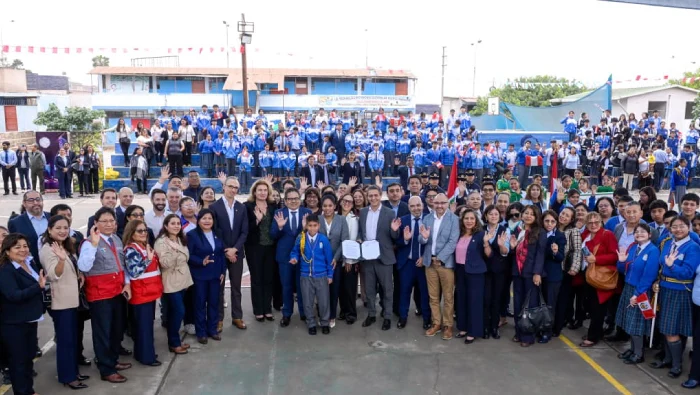
The official announcement and awarding ceremony, attended by key government officials, representatives from international financial institutions, and community stakeholders, marked a pivotal moment. Luis Del Carpio, Executive President of PROINVERSIÓN, articulated the profound significance of the project, emphasizing its potential to convert a long-held aspiration for modern and secure school environments into a tangible reality. His remarks highlighted the collaborative effort involving the Ministry of Education, the Ministry of Economy and Finance, and crucial support from the World Bank, underscoring the broad consensus and commitment driving this initiative.
"Today, we witnessed the joy of children, knowing they will soon have modern and secure schools," stated Del Carpio. "From PROINVERSIÓN, we have worked to turn that dream into a reality, with the invaluable support of the Ministry of Education, the Ministry of Economy and Finance, and the World Bank, which is also joining this project. An APP is not just about constructing infrastructure; our commitment is to ensure that the schools function and are equipped with all necessary services throughout the concession period. We want every student to have the infrastructure they need, and for it to be maintained in excellent condition, always operational."
The presence of notable figures such as Rosangella Barbarán, a Congresswoman of the Republic, district authorities, principals of the beneficiary schools, students, and parents further underscored the community’s vested interest and optimism regarding the project’s impact. Ivanna Fernandes Duarte, Country Manager for IFC, the World Bank Group’s private sector arm in Peru, also participated, reaffirming the institution’s commitment to supporting the project’s development and financing from its inception to completion. This international backing signals a strong vote of confidence in Peru’s ability to execute large-scale, impactful infrastructure projects.
A New Era of Educational Opportunity: Project Scope and Impact
The concession awarded to Ortiz Construcciones y Proyectos is comprehensive, covering the entire lifecycle of the educational facilities. This includes the design, financing, construction, and subsequent maintenance of the infrastructure for a period of 20 years. Beyond the physical structures, the agreement mandates the provision and timely replacement of furniture and equipment, ensuring that learning environments remain up-to-date and functional.
Moreover, the project incorporates a suite of complementary services designed to enhance the operational efficiency and safety of the schools. These services include regular cleaning, effective waste management, pest control, vigilant security, and overall site management. This integrated approach aims to create a seamless and secure educational ecosystem, allowing educators and students to focus on teaching and learning without the burden of operational concerns.

A critical component of the project is the implementation of a Temporary Relocation Plan. This plan is designed to ensure the uninterrupted continuity of academic activities during the construction phase, minimizing disruption to students’ education. The meticulous planning around this aspect demonstrates a commitment to safeguarding the learning process while essential upgrades are underway.
Fostering Technical Skills and Future Employability
A cornerstone of this transformative project lies in its dedication to strengthening technical education through specialized "Education for Work" workshops. Students will gain access to purpose-built spaces equipped for a diverse range of technical disciplines, including robotics, electronics, computer science and IT, electrical engineering, mechanics, the garment industry, carpentry, personal aesthetics, and the management of micro and small enterprises, among other specialized areas.
This focus on technical and vocational training is a strategic imperative, aimed at equipping students with practical, in-demand skills that enhance their employability and entrepreneurial potential. By offering these specialized programs, the project seeks to bridge the gap between education and the labor market, fostering a more skilled workforce and contributing to the nation’s economic development. The modern, well-equipped workshops will provide hands-on learning experiences, allowing students to develop proficiency in cutting-edge fields and prepare them for future career paths.
It is crucial to note that the educational provision itself will remain free of charge and under the responsibility of the State and the Ministry of Education. The concession focuses solely on the infrastructure and associated services, ensuring that access to education remains a fundamental right, unhindered by the project’s private sector involvement.
Chronology of a Transformative Initiative
The journey from identifying a critical need for educational infrastructure reform to the official awarding of this ambitious project has been a testament to strategic planning and collaborative effort. While the article does not provide a precise timeline of the bidding and evaluation process, the adjudication signifies the culmination of several key stages:
- Needs Assessment and Planning: Recognizing the deficiencies in existing school infrastructure, particularly in densely populated urban areas like Villa El Salvador and San Juan de Miraflores, the government, through the Ministry of Education and PROINVERSIÓN, identified the need for a comprehensive rebuilding program. This phase would have involved detailed assessments of current conditions, projected student population growth, and the specific requirements for modern educational facilities.
- Project Structuring and Feasibility Studies: PROINVERSIÓN, as the government agency responsible for promoting private investment in strategic sectors, would have undertaken the complex task of structuring the project under the Public-Private Partnership (APP) model. This would have included conducting thorough feasibility studies, defining the technical specifications, and determining the optimal contractual framework to attract private sector interest.
- Tendering and Bid Process: Once the project was defined and structured, a transparent and competitive tendering process would have been initiated. This would have involved advertising the opportunity to potential investors and construction firms, allowing them to submit their proposals detailing their technical capabilities, financial plans, and operational strategies.
- Evaluation and Adjudication: Submitted bids would have undergone rigorous evaluation by PROINVERSIÓN and relevant government ministries, assessing their compliance with technical requirements, financial viability, and overall value proposition. The Spanish firm Ortiz Construcciones y Proyectos emerged as the successful bidder, demonstrating its capacity to meet the project’s demanding criteria.
- Contract Signing and Project Commencement: Following the adjudication, formal contracts would have been signed, officially granting Ortiz Construcciones y Proyectos the concession. This marks the beginning of the project’s implementation phase, commencing with detailed design work and subsequent demolition and construction activities.
The involvement of the World Bank, particularly through IFC, suggests that the project may have undergone stringent due diligence and alignment with international standards for development projects, further reinforcing its credibility and long-term sustainability.
Supporting Data and Economic Ramifications
The S/1.118 billion investment represents a substantial commitment to the future of education in Lima. This figure is not merely an expenditure but a strategic investment with far-reaching economic and social implications.
- Job Creation: The construction phase alone is expected to generate significant employment opportunities, both directly within Ortiz Construcciones y Proyectos and indirectly through its supply chain. This injection of economic activity will provide immediate benefits to local communities.
- Enhanced Human Capital: By providing superior educational facilities and a more engaging learning environment, the project aims to improve educational outcomes. This, in turn, will lead to a more skilled and knowledgeable workforce, boosting productivity and innovation in the long run.
- Reduced Social Costs: Deteriorating school infrastructure can lead to safety hazards, health issues, and decreased student engagement, potentially resulting in higher dropout rates and increased social costs. Investing in modern, safe, and stimulating learning environments can mitigate these risks.
- Economic Multiplier Effect: The improved educational attainment and enhanced skill sets of graduates will contribute to a more robust and competitive economy. This can attract further investment, foster entrepreneurship, and ultimately improve the quality of life for Peruvian citizens.
- Attracting Future Investment: Successful execution of such large-scale public-private partnerships can enhance Peru’s reputation as an attractive destination for foreign investment, signaling a commitment to infrastructure development and a stable investment climate.
The scale of the project, with 679 new classrooms alone, indicates a significant increase in educational capacity and a modernization of learning spaces. This addresses potential overcrowding and outdated facilities that may have hampered the learning process in the past. The 20-year concession period for maintenance and operation also ensures a long-term commitment to the quality and functionality of the infrastructure, moving beyond the traditional model of one-off construction projects.

Official Responses and Community Engagement
The sentiments expressed by Luis Del Carpio, Executive President of PROINVERSIÓN, encapsulate the government’s vision and commitment. His emphasis on the holistic nature of the APP, extending beyond mere construction to encompass operational excellence and ongoing maintenance, signals a departure from previous infrastructure development models that sometimes faltered due to a lack of long-term upkeep. The inclusion of international partners like the World Bank adds a layer of assurance regarding project governance and adherence to best practices.
Rosangella Barbarán’s presence as a representative of the legislative branch highlights the cross-party support and recognition of the project’s importance for the nation’s development. The involvement of local authorities, school principals, students, and parents is crucial for ensuring that the project is aligned with the community’s needs and aspirations. This participatory approach fosters a sense of ownership and collective responsibility for the success of the new educational facilities.
Ivanna Fernandes Duarte’s participation from the IFC of the World Bank signifies a global endorsement of Peru’s strategy to utilize private sector financing and expertise for critical public services. Her statement about the IFC’s commitment to accompany the project from its initial stages to completion underscores the institution’s role in providing not only financial support but also technical guidance and advisory services, further enhancing the project’s likelihood of success.
The focus on "Education for Work" and specialized technical training programs reflects a forward-thinking approach to education, recognizing the evolving demands of the global economy. By investing in these areas, the government is not only improving the immediate learning experience but also actively shaping the future workforce, preparing young Peruvians for a competitive job market and empowering them to contribute to the nation’s economic growth.
Implications for Lima’s Future and Beyond
The successful implementation of this project has profound implications for Lima Metropolitana and serves as a potential model for educational infrastructure development across Peru.
- Improved Educational Equity: By focusing on districts that may have historically faced underinvestment in educational infrastructure, the project aims to promote greater equity in access to quality education. Modern, well-equipped schools can level the playing field for students from diverse socio-economic backgrounds.
- Enhanced Learning Outcomes: The provision of state-of-the-art facilities, including science labs, libraries, and technology-equipped classrooms, is expected to directly translate into improved learning outcomes, higher academic achievement, and increased student engagement.
- Economic Revitalization: The investment in skilled trades and technical education can contribute to the local economy by producing a more qualified workforce, fostering entrepreneurship, and potentially attracting new businesses to the areas surrounding the improved schools.
- A Model for Future Development: The success of this large-scale APP in the education sector can pave the way for similar initiatives in other critical areas, such as healthcare, transportation, and urban development, demonstrating the viability of public-private collaboration in addressing complex societal needs.
- Empowerment of Future Generations: Ultimately, the most significant implication is the empowerment of over 29,000 young individuals. By providing them with safe, inspiring, and technologically advanced learning environments, the government is investing in their potential, equipping them with the tools to succeed, and fostering a generation of informed, skilled, and engaged citizens who will shape Peru’s future.
The government’s decisive action in adjudicating this project marks a significant turning point for the educational landscape in Lima. It represents a tangible commitment to modernizing learning environments, fostering technical skills, and ensuring that the promise of quality education is accessible to all children and adolescents in Villa El Salvador and San Juan de Miraflores. This initiative, backed by strong public and private partnerships, is poised to leave a lasting legacy of educational excellence and opportunity for years to come.