Main Facts: The Formal Withdrawal of Support
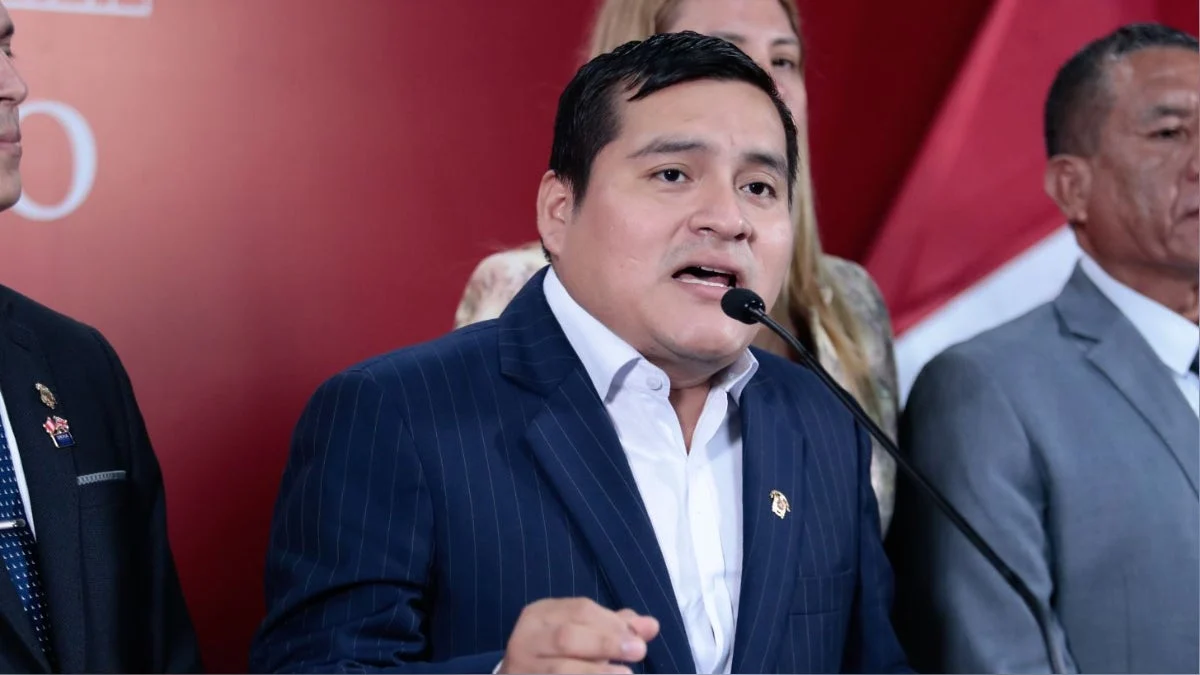
In a move that highlights the shifting allegiances within the Peruvian legislative branch, Congressman Marlon Aguirre, a member of the "Juntos por el Perú" (Together for Peru) bench, has officially requested to withdraw his signature from the motion of interpellation against the Minister of the Interior, César Astudillo. The formal notification was delivered to the Office of the Chief Clerk (Oficialía Mayor) of the Chamber of Deputies, signaling a potential cooling of relations between the legislator and the opposition bloc that initiated the proceedings.
Despite Aguirre’s withdrawal, the legislative machinery set in motion against Minister Astudillo remains largely unaffected. The motion currently maintains the backing of 30 legislators, comfortably exceeding the 20-signature threshold mandated by the Chamber’s internal regulations. This ensures that the political scrutiny of the Minister of the Interior will proceed as scheduled, notwithstanding the individual vacillations of any single member.
The interpellation is rooted in a series of severe allegations regarding the Minister’s performance. Specifically, the motion cites questionable personnel appointments within the Ministry of the Interior and, more broadly, criticizes the Minister’s inability to stem the tide of rising criminality and insecurity plaguing the nation. As the country faces a volatile period regarding public safety, the demand for transparency from the executive branch has reached a boiling point.
Chronology: A Cascade of Internal Tensions
To understand the significance of Aguirre’s decision, one must look at the timeline of events that led to this moment of fracture within the Juntos por el Perú bench.
- Early September: The opposition, sensing weakness in the government’s approach to national security, began drafting a motion of interpellation against Minister César Astudillo.
- Mid-September: The document reached the requisite threshold of signatures, formalizing the threat to the Minister’s tenure.
- Late September (The Turning Point): Tensions erupted within Juntos por el Perú. Congressman Aguirre engaged in a public spat with the group’s spokesperson, Ernesto Zunini, primarily regarding the distribution of prestigious and influential parliamentary committee chairmanships.
- The Formal Request: Following the internal dispute, Aguirre formally submitted his request to the Office of the Chief Clerk to remove his name from the motion against Astudillo.
- Current Status: The motion continues its trajectory toward a plenary debate, with 30 signatures still intact, rendering the withdrawal of one signature politically symbolic rather than legally decisive.
Supporting Data and Procedural Context
The procedural integrity of interpellation motions is governed strictly by the Chamber’s rules. The requirement of 20 signatures is designed to ensure that such measures represent a substantive, collective effort by the legislature rather than the whim of a small minority.
The current situation is not unprecedented, though it serves as a stark reminder of how fragile legislative coalitions can be. Recently, a similar motion against the Minister of Energy and Mines, Guillermo Shinno, collapsed entirely. In that instance, the withdrawal of support from Deputy Luis Ángel Jibaja caused the total count to drop to 19—falling below the legal requirement. Consequently, that motion was archived and the Minister was spared the necessity of appearing before the plenary.
The fact that the motion against Astudillo remains standing indicates that the opposition’s dissatisfaction with the current administration’s security policy is deep-seated and broad. With 30 signatures, the motion remains significantly shielded from the "Jibaja effect," proving that the political pressure on Minister Astudillo is not dependent on the support of a single dissenting voice.
Internal Discrepancies: The Struggle for Influence
The controversy surrounding Marlon Aguirre is not merely about a single interpellation; it is a symptom of a larger struggle for power within the Juntos por el Perú party. Representing the Junín region, Aguirre has been vocal about his dissatisfaction with the party’s internal hierarchy.
The dispute with Ernesto Zunini, the party’s lead spokesperson, highlights a classic struggle between regional representatives and the central party apparatus. Aguirre has publicly criticized the leadership for what he perceives as a biased distribution of committee assignments, which he feels marginalizes certain legislators in favor of party loyalists.
The situation was further complicated by rumors of "political poaching." Aguirre admitted to receiving overtures from other benches, including the powerful Fuerza Popular, which has been aggressively expanding its influence within the Chamber. While Aguirre has publicly committed to remaining with Juntos por el Perú, the mere existence of these discussions underscores a volatile legislative environment where party discipline is increasingly treated as an option rather than a mandate.
Official Responses and Ministerial Conduct
Minister César Astudillo has found himself in the crosshairs of both the public and the legislature. His recent acknowledgment that he "expressed himself poorly" during his previous testimony before Congress regarding homicide statistics in Peru has only served to embolden his critics.
The Ministry of the Interior has not issued a formal rebuttal to the withdrawal of Aguirre’s signature, maintaining a stance of procedural detachment. However, behind closed doors, there is an active effort by the executive branch to lobby key legislators to prevent the interpellation from leading to a subsequent motion of censure.
The government’s primary defense remains its focus on the appointment of the new General Commander of the National Police (PNP), General Freddy López, scheduled for September 16. The government hopes that the infusion of new leadership within the security forces will quell the public outcry and demonstrate to the Chamber that the administration is capable of proactive reform.
Implications for the Future of the Government
The implications of this episode are twofold:
1. The Erosion of Executive Confidence: The fact that 30 legislators have formally demanded an explanation for the security crisis suggests that the government has lost the "benefit of the doubt" even among its potential allies. If Minister Astudillo cannot provide a compelling roadmap for combating crime during the interpellation, he risks a motion of censure, which could potentially force his resignation.
2. The Reconfiguration of the Bench: The internal divisions within Juntos por el Perú are a microcosm of the current Peruvian political landscape. With the 2026 elections on the horizon, legislators are increasingly calculating their next moves. Whether Aguirre remains in his party or eventually defects, his actions demonstrate a growing trend of transactional politics, where support for ministerial actions is bartered for committee power and personal political capital.
Furthermore, the stability of the current legislative period depends heavily on the government’s ability to manage its own base. If the administration continues to lose control over its benches, as evidenced by the internal fighting in Juntos por el Perú, the legislative agenda will grind to a halt, leading to further executive-legislative gridlock.
Conclusion
The formal request by Congressman Marlon Aguirre to withdraw his signature from the motion against Minister César Astudillo is a nuanced political maneuver that has ultimately failed to halt the legislative process. By keeping 30 signatures intact, the opposition has ensured that the Minister will be required to face the Chamber and account for the Ministry’s performance.
As the nation waits for the upcoming interpellation, the focus remains on whether the government can navigate the growing dissatisfaction within the ranks of its own supporters. For Minister Astudillo, the days leading up to his plenary appearance will be critical. He must prove that the administration’s strategy—including the appointment of new police leadership—is sufficient to address the public’s mounting fear of violence.
Ultimately, this episode underscores the volatile nature of the current Congress. In a system where signatures and allegiances can shift overnight, the only constant is the pressure on the executive to deliver results. Whether this interpellation results in a shake-up of the cabinet or serves as a mere public venting of frustrations remains to be seen, but one thing is certain: the era of unified party blocks is fading, and the influence of individual legislators like Aguirre is on the rise.