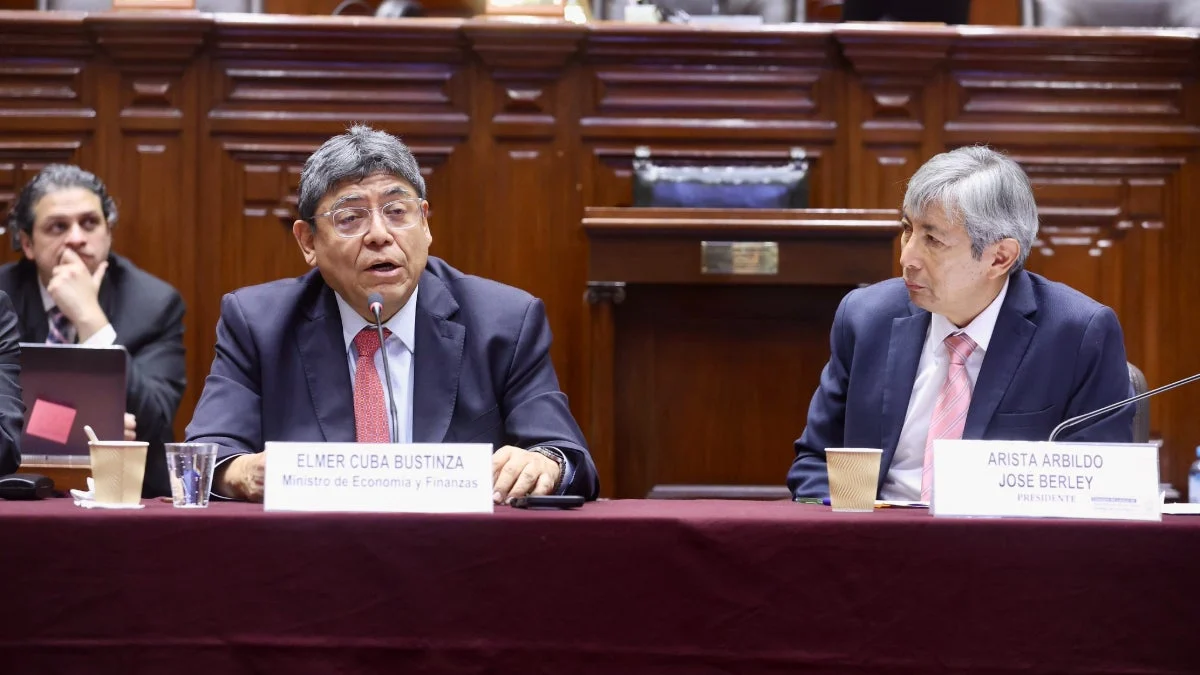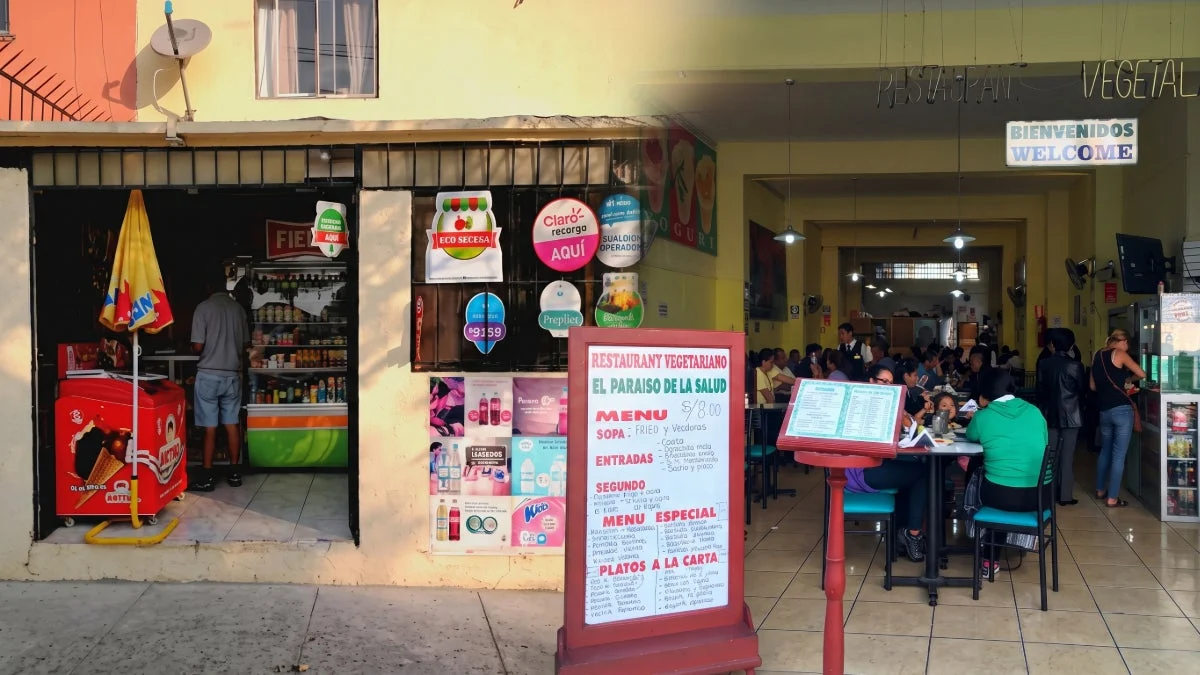
In the corridors of power and the bustling streets of Peru’s commercial districts, a silent crisis has reached a boiling point. A landmark study conducted by Ipsos for ComexPerú has unveiled a sobering reality: the fundamental right to conduct business is being eroded by a lethal combination of organized crime, systemic corruption, and suffocating state bureaucracy. For the nation’s micro-entrepreneurs—the backbone of the economy—the path to growth is no longer blocked merely by market forces, but by the existential threat of violence.
Main Facts: The Triple Threat to Survival
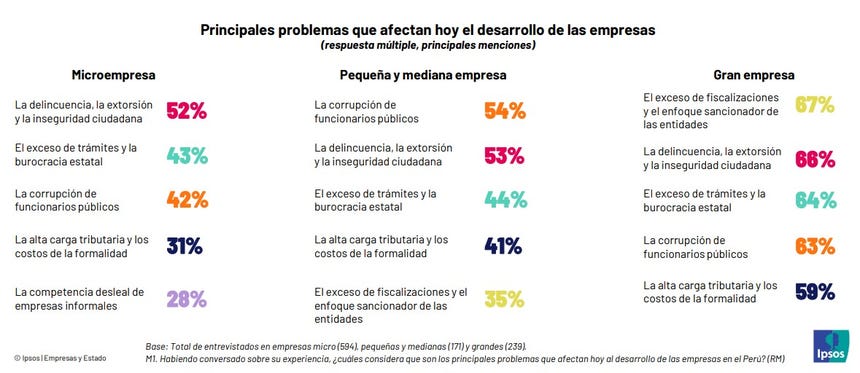
The data is unequivocal. According to the Ipsos report, 52% of micro-enterprises identify crime and extortion as the single greatest barrier to their development. These businesses, which often operate as "door-to-the-street" storefronts, find themselves in a precarious position where their daily revenue is not just a measure of success, but a target for criminal syndicates.
This is not a localized issue. The contagion of insecurity spans the entire business ecosystem. While micro-enterprises bear the brunt of the violence, small and medium-sized enterprises (SMEs) report that 53% of their operational struggles are rooted in the same criminal environment. For large corporations, the situation is equally dire; 66% cite security threats as a primary concern, eclipsed only by the aggressive and often punitive nature of state fiscalization.
The most damning indictment of the current business climate came from Jaime Dupuy, Executive Director of ComexPerú, who described the current reality of a micro-entrepreneur in stark, harrowing terms: "Micro-enterprises are forced to manage three separate ‘boxes’ of cash on a daily basis. One for the legitimate costs of business, one for the corrupt demands of compromised officials, and a third, non-negotiable budget for the extortion payments demanded by criminals. It is an entirely unsustainable model."
Chronology: A Progressive Erosion of Stability
To understand how the business sector arrived at this breaking point, one must look at the recent trajectory of institutional decay and the rise of criminal gangs in urban centers.
- Early 2024: Public reports began to surface linking the rise in transport sector attacks—averaging 26 incidents per month—to a broader trend of organized extortion targeting retail and service-oriented businesses.
- Mid-2024: The "fear factor" began to manifest in investment data. As crime syndicates expanded their reach, the cost of protection (or "cupos") became a fixed overhead expense for thousands of small businesses.
- Late 2024 – Early 2025: As businesses struggled to keep pace with these criminal taxes, the state’s response—characterized by increased, often heavy-handed, administrative fiscalization—created a "pincer movement" effect. Businesses found themselves squeezed between the criminal underworld and an unsupportive, bureaucratic state.
- Current Status: The latest Ipsos study marks a climax in this timeline, confirming that the combination of extortion and regulatory burden has effectively stalled the transition from the informal to the formal economy.
Supporting Data: The Disparity of Formalization
The correlation between insecurity and informality is not merely anecdotal; it is statistically significant. The study provides a breakdown of formal private employment across different tiers of the economy, revealing a stark divide:
- Micro-enterprises: Only 10% of employment is formal.
- SMEs: 55% of employment is formal.
- Large Enterprises: 81% of employment is formal.
This data suggests that the "cost of entry" into the formal sector is being driven up by more than just taxes. When a business enters the formal sphere, it becomes visible—visible to the tax authority, visible to the municipal inspector, and, most dangerously, visible to extortionists. For many micro-entrepreneurs, remaining informal is no longer a choice born of tax evasion, but a survival strategy designed to minimize their profile in a predatory environment.
Furthermore, the perception of the "social contract" is broken. Three out of every four businesses believe they receive far less from the State than what they contribute in taxes. Among large corporations, this sentiment is held by nine out of ten. As Patricia Rojas, Director of Public Affairs at Ipsos Peru, noted, "If the majority of companies feel they receive less than they contribute, the challenge is not just to fiscalize, but to provide tangible services in exchange for compliance."
Official Responses and Political Implications
The political establishment has begun to acknowledge the crisis, though the solutions proposed remain under intense scrutiny.
Eduardo Castillo, President of the Labor Commission of the Chamber of Deputies, recently addressed the need for a shift in strategy. "To the informal, we should not be a force of persecution, but a source of facilitation," Castillo stated. His proposed approach emphasizes providing mechanisms to transition to formality rather than relying solely on punitive measures. He further conceded that the "extortion and insecurity" crisis must be integrated into national economic policy, noting that regional stability is impossible if local businesses are forced to shutter under the threat of violence.
However, the disconnect remains. While the government discusses "facilitating formalization," businesses are reporting that municipal inspections—specifically those targeting small businesses—have become a source of harassment rather than support. For 73% of micro-enterprises, municipal oversight is viewed as a primary point of friction, proving that even the most well-intentioned legislative reforms can be undermined by local-level bureaucratic dysfunction.
Implications: The High Cost of Inaction
The implications of this study are profound and potentially catastrophic for the Peruvian economy.
1. The Human Cost of Business
When restaurants, corner stores, and local barbershops—the lifeblood of neighborhoods—are forced to pay protection money, the cost is passed down to the consumer. This fuels inflation and discourages local investment. Furthermore, the constant threat of violence forces business owners to live in a state of perpetual anxiety, leading to a "brain drain" of the most entrepreneurial minds who choose to exit the market or emigrate.
2. The Erosion of the Rule of Law
When a business owner finds themselves paying a "corruption box" to state officials, the legitimacy of the state itself is undermined. This creates a cycle where citizens lose faith in the police, the judiciary, and the municipal authorities. If the state cannot protect the productive classes from extortion, it loses its primary claim to authority.
3. Economic Stagnation
The low rate of formalization among micro-enterprises (10%) represents a massive loss of potential tax revenue and a lack of access to credit and social security for workers. By failing to create a secure environment, the state is inadvertently incentivizing a permanent state of informality, which leaves the economy vulnerable to shocks and limits the potential for innovation and scale.
4. A Call for Holistic Reform
The consensus from industry leaders is clear: fiscalization without security is a futile exercise. A comprehensive solution requires a dual-track approach:
- Security Intervention: Intelligence-led policing aimed specifically at dismantling the criminal networks that target small-business clusters.
- Regulatory Reform: A simplification of the tax and administrative burden that turns the state from a "predator" into a "partner."
Conclusion: A Turning Point
The findings from Ipsos and ComexPerú serve as a final warning. The "triple box" reality described by Jaime Dupuy is a structural failure that cannot be solved by incremental policy tweaks. It requires a fundamental re-evaluation of the relationship between the state and the private sector.
If Peru is to foster a robust and growing economy, the government must prove that it is capable of providing the one thing every business owner pays their taxes for: security. Until the streets are safe from extortion and the corridors of power are cleared of petty corruption, the path to prosperity for the country’s micro-entrepreneurs will remain blocked. The time for empty rhetoric has passed; the business sector is waiting for the state to fulfill its end of the social contract.