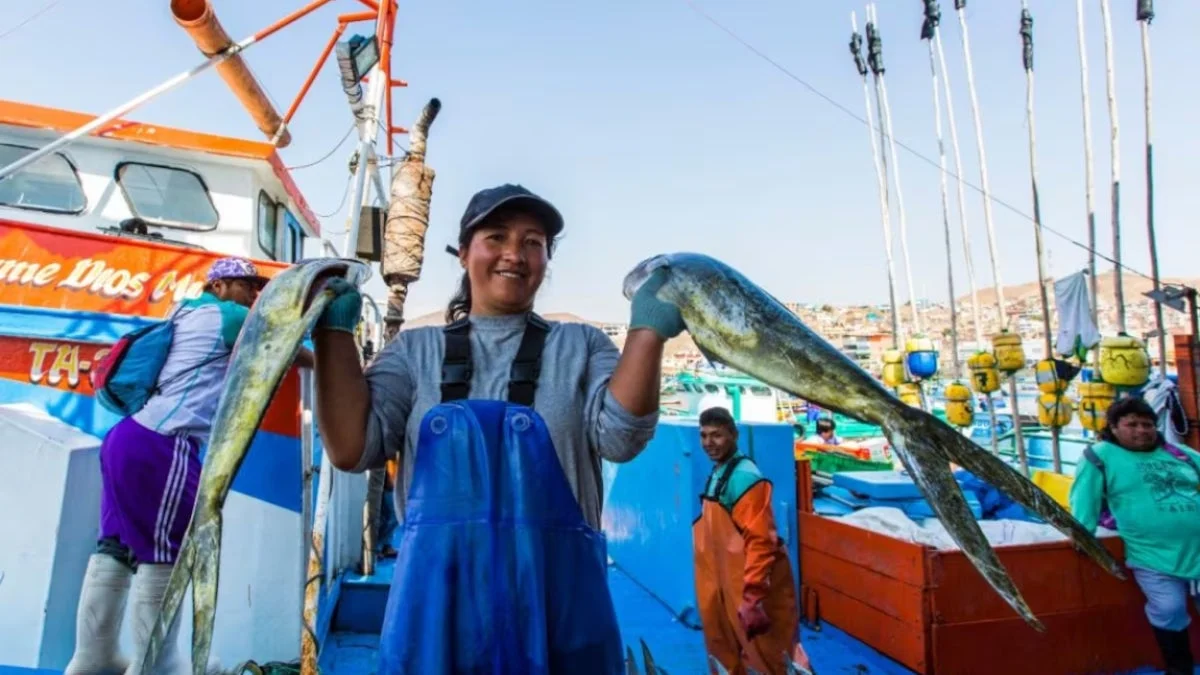
The Peruvian Ministry of Production (Produce) has officially authorized the commencement of the 2026-2027 mahi-mahi (Coryphaena hippurus) fishing season, setting a strategic course for one of the nation’s most vital artisanal industries. Starting September 1, this move represents a calculated response to shifting oceanographic conditions and underscores the delicate balance between capitalizing on natural resources and ensuring long-term ecological stability.
Main Facts: A Strategic Opening
The decision to open the season comes as a direct consequence of the unique environmental conditions induced by the El Niño phenomenon. As sea surface temperatures fluctuate and influence migratory patterns, the availability of mahi-mahi within Peru’s maritime domain has increased, prompting the government to act.
For the initial phase of this cycle, the Ministry of Production has established a Maximum Total Catch Limit (LMTC) of 7,375 metric tons for the first month of activity. This conservative figure serves as a "bridge" measure while the Instituto del Mar del Perú (Imarpe) continues its comprehensive scientific assessment to determine the definitive quota for the remainder of the season, which is scheduled to conclude on April 30, 2027.
The regulation mandates that only artisanal vessels holding valid, active permits may participate in the extraction process. This ensures that the fishery remains within the purview of registered operators who are subject to oversight, traceability requirements, and gear restrictions designed to minimize bycatch and protect juvenile populations.
The Chronology of Decision-Making
The road to this announcement was paved by weeks of observation and inter-agency dialogue.
- Late July 2026: Preliminary oceanographic reports from Imarpe indicated a shift in current patterns consistent with El Niño, suggesting an unusual influx of mahi-mahi into the Peruvian Exclusive Economic Zone (EEZ).
- Early August 2026: The Ministry of Production initiated consultations with regional artisanal fishing cooperatives to gauge the readiness of the fleet and the potential socioeconomic impact of an early or expanded season.
- Mid-August 2026: Scientific committees reviewed biological indicators, emphasizing the need for a precautionary approach despite the increased biomass availability.
- September 1, 2026: The formal start of the 2026-2027 season was inaugurated, transitioning the fishery from a period of biological rest to active exploitation under strict monitoring.
- Future Milestones: The Ministry has committed to a rolling review process, where catch data will be analyzed every 30 days to determine if the LMTC needs to be adjusted, suspended, or maintained.
Supporting Data: The Economic Weight of Mahi-Mahi
To understand why the government is prioritizing the management of this resource, one must look at the economic footprint of the mahi-mahi industry. It is not merely a food source; it is a pillar of the coastal economy.
Recent data from the Ministry of Production reveals that the mahi-mahi sector has consistently posted impressive figures. In the years leading up to this season, landings have surpassed 61,000 metric tons. More importantly, the value chain associated with this fish—encompassing artisanal harvesters, processing plants, logistics providers, and export firms—has generated upwards of US$117 million in annual export revenue.
This economic activity directly sustains the livelihoods of thousands of Peruvian families. In coastal regions, the "perico" (as it is locally known) is the backbone of the artisanal fleet, providing a predictable source of income during months when other species might be scarce or subject to different regulatory closures. The challenge for the government is to ensure that this financial windfall does not lead to the "tragedy of the commons," where over-extraction in the short term depletes the resource for the following year.
Official Responses and Governance
Minister of Production, Juan Carlos Requejo, defended the government’s decision by framing it as a missed-opportunity prevention strategy. "The start of this season responds to a window of opportunity that we must take advantage of with the utmost responsibility," Requejo stated during the launch. "The oceanographic conditions associated with El Niño are creating a greater availability of mahi-mahi in our waters. If we do not act with the necessary scientific backing to harvest this surplus, we lose a vital economic engine for our artisanal fishers."
However, the administration acknowledges that the "opportunity" carries risks. The Ministry has emphasized that this is not a free-for-all. By conditioning the season on Imarpe’s "permanent monitoring," the government is attempting to move away from rigid, static quotas toward a dynamic, adaptive management model.
Imarpe’s role is central to this governance. They are tasked with:
- Biological Sampling: Measuring the length, weight, and maturity of landed fish to ensure that the fleet is not harvesting a disproportionate number of juveniles.
- Tracking Effort: Utilizing satellite vessel monitoring systems (VMS) to ensure boats stay within authorized zones and do not encroach upon sensitive habitats.
- Data Synthesis: Providing the Ministry with bi-weekly reports that allow for "real-time" adjustments to fishing intensity.
Implications: The Challenge of Enforcement
While the regulatory framework is robust on paper, the practical implementation faces significant hurdles. Recent reports from landing sites, such as the port of Pucusana, have highlighted ongoing concerns regarding the sale of species during prohibited periods and the lack of consistent municipal oversight.
The transition into a new, permitted season does not automatically resolve the issue of illegal, unreported, and unregulated (IUU) fishing. The implication for the current administration is clear: authorization is only as effective as the enforcement on the docks. The Ministry of Production has signaled that it will be coordinating with the Peruvian Navy and local port authorities to increase inspections at key landing points.
Sustainability and Environmental Impact
The long-term health of the mahi-mahi population is linked to broader environmental stressors. Climate change and the volatility of El Niño cycles mean that the "normal" parameters for migration and reproduction are constantly shifting. By tethering the 2026-2027 season to scientific indicators rather than fixed dates, the government is essentially admitting that climate uncertainty is the new status quo.
If the monitoring programs detect a collapse in recruitment or a change in the average size of the fish, the Ministry has the legal mandate to shut down sectors or lower the quotas instantly. This level of agility is required to protect the species from the dual pressures of intense artisanal demand and shifting marine ecosystems.
Social and Economic Consequences
For the artisanal fishing communities, the 2026-2027 season is seen as a lifeline. Many communities are still recovering from the economic disruptions of previous years, and the Mahi-mahi export market remains a vital source of foreign currency. However, there is a growing consensus among environmental NGOs that the government must do more to support the traceability of the product. International markets, particularly in Europe and North America, are increasingly demanding proof that the fish they purchase were caught in a sustainable and legal manner.
The Ministry’s decision to mandate strict compliance for the current season may inadvertently help Peruvian exporters meet these international standards, provided that the enforcement is transparent and verifiable.
Conclusion
The opening of the 2026-2027 mahi-mahi season is a microcosm of the challenges facing the modern Peruvian state. It is a balancing act that pits the immediate need for economic growth against the existential necessity of environmental stewardship. By setting an initial catch limit, empowering Imarpe to act as the scientific watchdog, and committing to ongoing monitoring, the government has created a framework that is cautious yet proactive.
As the season progresses toward April 2027, the success of this initiative will not be measured solely by the tonnage landed or the millions of dollars generated. Instead, it will be judged by the health of the mahi-mahi stock upon the season’s conclusion and the ability of the state to enforce its own rules in the bustling, often chaotic, artisanal ports of the Peruvian coast. For now, the fleet has the green light, but the eyes of both the scientific community and the industry are firmly fixed on the results of the next seven months.