A perfect storm of volatile climate patterns, rising production costs, and a deeply entrenched system of supply chain inefficiencies is driving a sharp escalation in food prices across Peru. As households in Lima and beyond grapple with the sudden spike in the cost of a basic market basket, experts and agricultural leaders are warning that this is not merely a transient fluctuation, but a symptom of a systemic fragility that threatens to worsen in the coming months.
According to data from the Ministry of Agrarian Development and Irrigation (Midagri) and analysis by industry experts, the upward trend in prices has reached alarming levels. In the last month alone, wholesale markets have recorded price hikes as high as 123% for specific staples, while retail consumers are facing increases of up to 65%. This inflationary pressure on the dinner table is placing a heavy burden on the average Peruvian family, raising urgent questions about food security and the future of the nation’s agricultural sector.
The Anatomy of the Price Hike: A Snapshot of Market Volatility
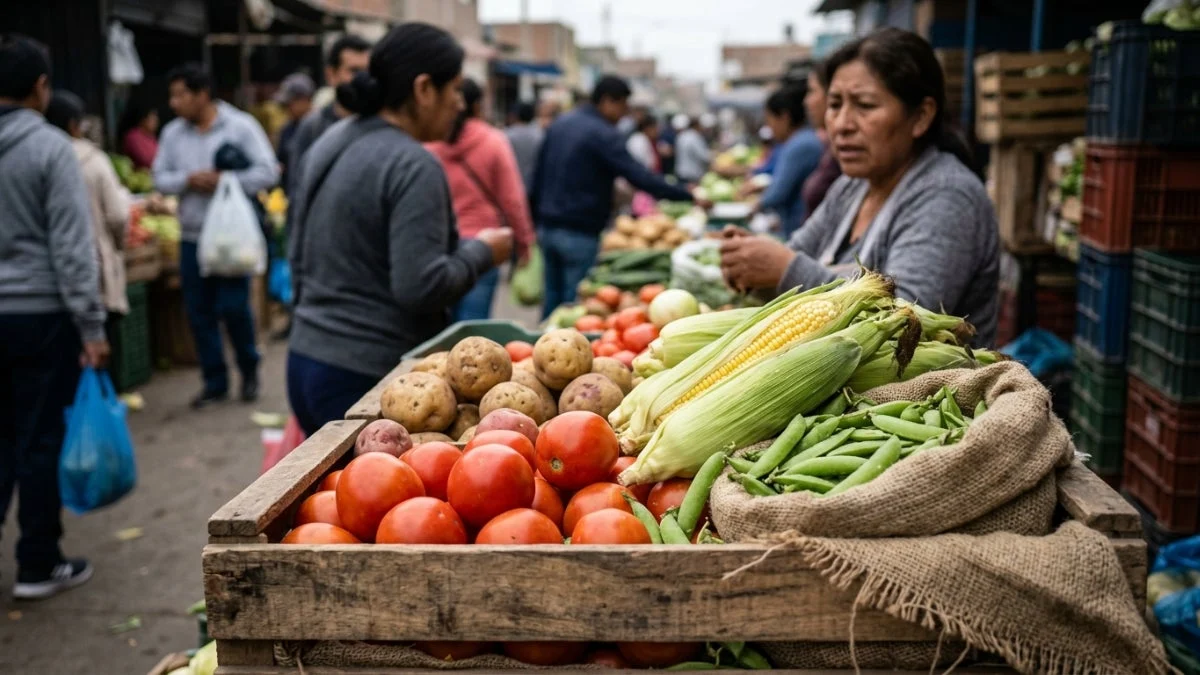
The surge in prices is not uniform, but it is widespread enough to impact almost every household budget. Between August 1st and September 4th, the wholesale price of tomatoes saw a staggering increase of 123%, jumping from S/2.08 to S/4.63 per kilogram. By the time this product reached the retail markets in Lima, the average price had hit S/7.59, a 65% increase for the end consumer.
The green pea, another staple in the Peruvian diet, saw a wholesale jump of 93%, climbing from S/2.20 to S/4.25 per kilo. At the retail level, the price rose to S/7.34. The data regarding potatoes—a cornerstone of the national diet—reveals a more complex picture. While varieties like the Canchan potato saw a 79% increase at the wholesale level, other varieties like Blanca and Yungay actually saw price reductions of 15%. This divergence highlights how different varieties, characterized by varying resilience to climate and input requirements, are reacting uniquely to the current crisis.
Furthermore, the price of corn (choclo) surged 67% in wholesale markets, while carrots experienced a 38% increase. These are not merely statistics; they represent a significant contraction in the purchasing power of the most vulnerable segments of the population.
The Drivers of Inflation: A Multi-Factor Dilemma
Luis Cruz Cuadros, General Manager of the National Convention of Peruvian Agriculture (Conveagro), explains that these price spikes are the result of a "perfect storm" of variables.
The Shadow of El Niño
While the country has not yet faced the full-blown catastrophic flooding or droughts typically associated with the El Niño phenomenon, the mere presence of increased sea temperatures has been sufficient to alter the vegetative cycles of many crops. "The increase in temperatures is already affecting the development of crops, reducing the yield and, consequently, the total volume of produce hitting the markets," says Cruz Cuadros.
The Fertilizer Crisis
The agricultural sector remains shackled by the high cost of fertilizers. These inputs are heavily indexed to global fuel prices. As the international cost of hydrocarbons fluctuates, the burden is passed directly to the farmer. For small-scale producers, this creates a situation where the cost of cultivation becomes prohibitive. When the input cost rises, farmers either reduce their acreage—leading to a smaller harvest—or pass the costs onto the market, contributing to the inflationary cycle.
Vulnerability to Pests
The warming climate does not just affect plant growth; it creates a more favorable environment for the proliferation of pests. Crops such as the tomato are highly vulnerable to these biological threats. With a reduction in planted areas and an increase in pest-related crop loss, the market is witnessing a supply contraction of roughly 50% for this vegetable alone, inevitably leading to the price spikes observed in recent weeks.
The Chain of Speculation: The Middleman Problem
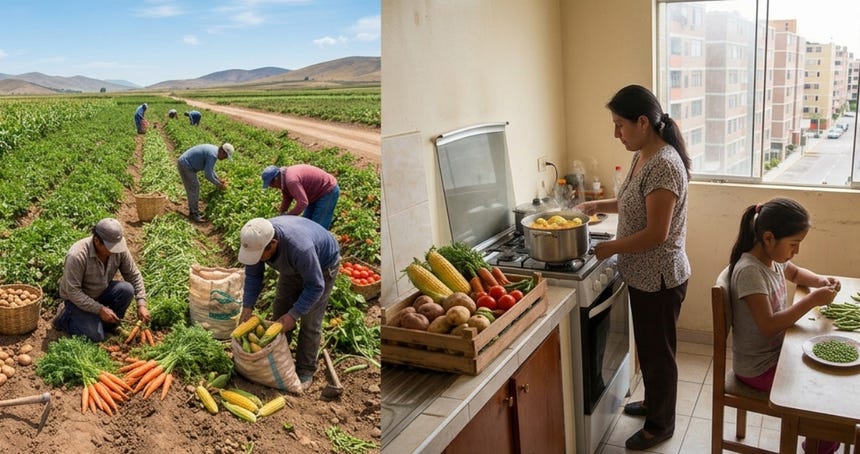
A critical takeaway from the current crisis is the disconnect between the price the farmer receives at the "chacra" (farm) and the price the consumer pays in the city. The agricultural supply chain in Peru is notoriously fragmented.
"The price that reaches the consumer in Lima is not necessarily high because the farmer increased their margins," notes Cruz Cuadros. "It is the intermediaries who fix the price. There is excessive intermediation. For a bag of potatoes to travel from Andahuaylas to a kitchen in Lima, it can pass through as many as seven different hands."
This multi-tiered distribution system acts as a tax on both the producer and the consumer. The farmer receives a meager fraction of the final retail price, while the consumer pays a premium that covers the markup of every middleman in the chain. During periods of scarcity, this system becomes highly susceptible to speculative behavior, where intermediaries inflate prices based on rumors of future shortages rather than actual market demand.
Implications for Food Security and Agricultural Stability
The outlook for the coming months remains grim. Conveagro has issued a stern warning: if the current climatic conditions intensify—specifically if the anticipated rains fail to arrive in the southern highlands or if severe droughts persist—the agricultural output could drop even further.
The Threat to Small-Scale Producers
The most immediate danger is the potential for the total loss of the upcoming planting season. Many farmers in the southern Andes rely entirely on seasonal rainfall. If the rains are delayed or insufficient, these producers will not be able to plant their crops, leading to a loss of livelihood and the threat of bankruptcy for thousands of families.
The Risk of Social Instability
Beyond the economic impact, there is the growing risk of food insecurity. As the cost of basic food items continues to rise, the ability of low-income families to access nutritious food is severely compromised. This leads to a degradation of the quality of life and potentially fuels social unrest.
"Our concern is twofold," Cruz Cuadros emphasizes. "First, the impoverishment of the farmer, because the weather will either destroy their crops or prevent them from planting. Second, the threat to national food security. We are seeing a decrease in supply and a rise in prices, which drastically reduces the purchasing power of the average citizen."
A Call for Strategic Intervention
While the government cannot control the El Niño phenomenon, agricultural leaders argue that more can be done to "soften the blow." This includes better management of agricultural insurance, credit lines that protect farmers from total loss, and, crucially, a push for better infrastructure to reduce the reliance on excessive intermediaries.
The government has attempted to implement various agricultural insurance programs to face the potential effects of the climate crisis, but industry experts argue that these efforts must be scaled up and better targeted toward the small-scale producers who are most at risk.
Conclusion: A System in Need of Reform
The current food price crisis in Peru is a wake-up call. It highlights the vulnerability of a food system that is heavily reliant on volatile global input prices, is highly sensitive to climatic shifts, and is structurally inefficient due to a bloated middleman system.
As the nation looks toward the next few months, the focus must shift from reactive crisis management to building long-term resilience. This includes investing in irrigation technology to combat drought, creating shorter supply chains that connect farmers directly to markets, and providing the financial stability that farmers need to weather the coming seasons. Without these structural changes, the current inflationary pressure on food is unlikely to be a temporary phenomenon; rather, it may become the new, difficult reality for the Peruvian economy.
The story of the tomato, the potato, and the green pea is, ultimately, the story of the Peruvian farmer struggling against the odds. Addressing their challenges is not only a matter of economic policy; it is a matter of ensuring that every Peruvian has access to the food they need to survive.